


Blog
Best Practices for Cleaning High-Gloss Tiles Without Streaks

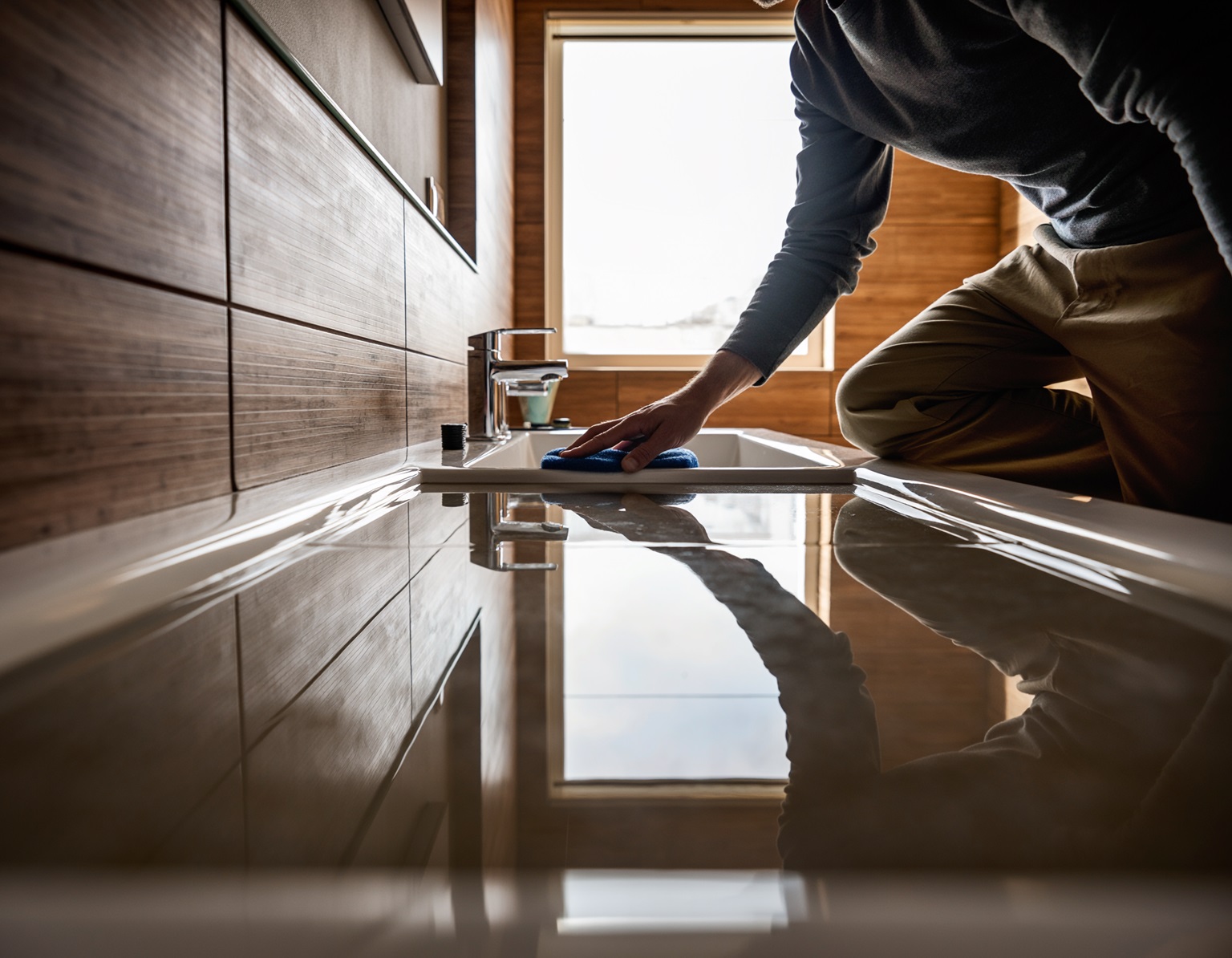
High-gloss tiles look stunning when they’re clean. But the moment water dries on them, or a mop leaves behind a film, those beautiful reflective surfaces turn into a streaky mess that’s impossible to ignore.
The challenge with high gloss tile cleaning isn’t removing dirt-it’s removing dirt without leaving behind residue, watermarks, or that cloudy haze that dulls the shine. Professional cleaners understand that the finish itself demands a different approach than matte or textured surfaces. The same techniques that work on standard ceramic won’t deliver the flawless results high-gloss tiles require.
Facility managers often spend years fighting streaks on polished lobby floors, whilst homeowners try numerous products only to end up with tiles that look worse after cleaning than before. The solution isn’t about finding a miracle product. It’s about understanding why streaks form in the first place and adjusting your method accordingly.
Why High-Gloss Surfaces Show Every Imperfection
The reflective finish that makes polished tiles so attractive is also what makes them unforgiving. When light hits a matte surface, it scatters in multiple directions, masking minor imperfections. On a high-gloss surface, light bounces back in a uniform direction, highlighting every streak, smudge, and residue particle.
Most streaking comes from three sources: mineral deposits in water, cleaning product residue, and improper drying techniques. Hard water contains calcium and magnesium that leave visible marks as water evaporates. Many cleaning solutions contain soaps, waxes, or additives that create a thin film. Even pure water, if left to air-dry, will leave mineral streaks on a glossy finish.
Think of it like cleaning a mirror versus cleaning a brick wall. The brick wall hides imperfections in its texture. The mirror reveals everything. High-gloss tiles operate on the same principle-they’re essentially horizontal mirrors underfoot.
This fundamental property means high gloss tile cleaning requires different standards than other flooring types. A cleaning method that produces acceptable results on matte tiles will show obvious flaws on polished surfaces. The reflective nature of the material becomes both its greatest aesthetic advantage and its most demanding maintenance requirement.
The Right Tools Make the Difference
Achieving streak-free results requires appropriate equipment. Standard cotton mops absorb liquid but release it unevenly, leaving too much water on the surface. Sponge mops often contain residue from previous cleaning sessions, transferring old dirt and cleaning solution back onto your tiles.
Microfibre is non-negotiable for high-gloss surfaces. The split fibres in quality microfibre trap dirt and absorb moisture more effectively than traditional materials, and they release that moisture more uniformly. The Enduro Microfibre Mop Head maintains consistent contact with the surface and doesn’t degrade quickly with repeated washing, making it ideal for commercial applications.
A proper squeegee and mop system gives you control over water application and removal. Professional window cleaners use squeegees because they remove liquid completely, leaving no chance for evaporation marks. The same principle applies to floors-removing water mechanically rather than letting it evaporate prevents streak formation.
For larger commercial spaces, a Polystar Orbital Floor Scrubber changes the equation entirely. The orbital action cleans without leaving directional marks, and the integrated vacuum system removes dirty water immediately. No water left behind means no streaks.
Equipment Maintenance Matters
Clean tools produce clean results. Dirty equipment transfers contaminants back onto freshly cleaned surfaces, undoing your efforts. Mop heads should be laundered after each use in commercial settings, or at minimum after every three uses in residential applications.
Microfibre requires specific washing procedures. Hot water and regular detergent work well, but avoid fabric softener-it coats the fibres and reduces their cleaning effectiveness. Never use bleach on microfibre, as it breaks down the split fibres that make the material effective.
Equipment storage also affects performance. Mops stored whilst damp develop bacterial growth that creates odours and reduces cleaning power. Hang mop heads to dry completely between uses. Replace them when fibres become matted or the material starts to smell even after washing.
Water Quality Matters More Than You Think
The water itself often causes more problems than the dirt being removed. Areas with hard water-and most of Perth certainly qualifies-essentially wash tiles with a solution that deposits minerals as it dries.
Facilities sometimes invest heavily in premium cleaning products whilst using tap water straight from the mains. The products work perfectly, but the water quality undermines every effort. The calcium and magnesium in hard water don’t just cause streaks; they build up over time, creating a dull film that requires aggressive treatment to remove.
Distilled or demineralised water eliminates this variable completely. For residential cleaning, purchasing a few litres of distilled water for your final rinse costs less than a coffee and solves the problem immediately. For commercial operations, a water filtration system pays for itself by reducing chemical usage and labour time.
Some cleaners add a small amount of methylated spirits or isopropyl alcohol to their rinse water. Alcohol evaporates faster than water and doesn’t leave residue, which helps prevent streaking. A ratio of roughly 100ml of alcohol to 5 litres of water works well for most applications. The alcohol also cuts through any remaining soap film from the cleaning stage.
Understanding Water Hardness
Water hardness varies significantly by location and even by suburb within the same city. Perth’s groundwater typically contains 150-200 parts per million of dissolved minerals, classifying it as moderately hard to hard. These minerals don’t pose health concerns, but they create significant challenges for cleaning reflective surfaces.
Testing your water hardness provides valuable information for choosing cleaning methods. Simple test strips available from hardware stores indicate whether you’re dealing with soft, moderate, or hard water. Hard water doesn’t make high gloss tile cleaning impossible-it just requires different techniques and usually a purified water rinse.
Some commercial buildings have water softening systems installed, which remove calcium and magnesium through ion exchange. If your facility has softened water, you’ve already eliminated one major cause of streaking. However, softened water still contains sodium, which can leave faint residue on some surfaces if not dried properly.
Choosing Products That Don’t Leave Residue
Most household floor cleaners contain soap, and soap leaves a film. That film might not be visible on textured surfaces, but on high-gloss tiles it creates a cloudy appearance that dulls the shine and attracts dirt. Even products labelled “rinse-free” can leave behind trace amounts of surfactants that cause streaking.
pH-neutral cleaners designed for professional use typically contain fewer additives and rinse away more completely. They’re formulated to break down dirt without relying on heavy soaps or waxes. For general maintenance, a pH-neutral solution removes everyday grime without building up over time.
Mr. Bean 5L All-Purpose Cleaner works well for routine cleaning because it doesn’t contain heavy detergents that leave residue. The formulation breaks down oils and dirt whilst rinsing clean-essential for maintaining that mirror-like finish.
For areas requiring sanitisation, like healthcare facilities or food preparation spaces, stronger products are necessary. Comet Foaming Cleaner & Sanitiser provides disinfection without leaving the sticky residue that many sanitisers create. The foaming action clings to vertical surfaces whilst the formula rinses cleanly from horizontal ones.
Avoid products containing oils, waxes, or “shine enhancers.” These additives create an artificial gloss that looks good immediately after application but attracts dirt and eventually builds up into a streaky, uneven coating. Genuine high-gloss tiles don’t need enhancement-they need to be clean.
Reading Product Labels Effectively
Ingredient transparency varies widely among cleaning products. Professional-grade cleaners typically list active ingredients and concentrations, whilst consumer products often use vague terms like “cleaning agents” or “surfactants.” This lack of specificity makes it difficult to assess whether a product will leave residue.
Look for products that specifically state “residue-free” or “designed for high-gloss surfaces.” These formulations undergo testing to ensure they don’t leave visible films. Products designed for windows or automotive glass also work well on high-gloss tiles because they’re engineered for streak-free performance on reflective surfaces.
Concentration matters significantly. Highly concentrated products offer better value and allow precise dilution control. Premixed solutions often contain more water than necessary and may include preservatives or fragrances that contribute to residue. Concentrated products let you mix only what’s needed, reducing waste and ensuring optimal cleaning strength.
The Two-Bucket Method Prevents Recontamination
Professional cleaners rarely use a single bucket. The moment a dirty mop dips into cleaning solution, that entire bucket becomes contaminated. Each subsequent pass spreads progressively dirtier water across your floor, leaving behind the very residue being removed.
The two-bucket system keeps clean water clean. One bucket contains your cleaning solution, the other contains rinse water. Clean a section with solution from the first bucket, then rinse your mop thoroughly in the second bucket before returning to the first. This prevents dirt from contaminating your cleaning solution.
A quality 16L mop bucket with a wringer gives you better control over moisture levels. Too much water on a mop means too much water on the floor, which increases drying time and streak potential. The wringer removes excess liquid before each pass.
For high-traffic commercial spaces, change your water frequently. What appears to be clean water often contains suspended particles and dissolved dirt that will redeposit on your tiles. Changing water every 50-75 square metres maintains consistent results. It takes more time initially, but it eliminates the need to re-clean streaky areas.
Advanced Three-Bucket Techniques
Some professional cleaning operations use a three-bucket system for particularly demanding environments. The first bucket contains cleaning solution, the second holds initial rinse water for removing the bulk of contamination from the mop, and the third contains final rinse water for a cleaner mop before returning to the solution bucket.
This approach might seem excessive, but it extends the usable life of cleaning solution significantly. The initial rinse bucket captures most dirt, preventing it from contaminating either the cleaning solution or the final rinse water. For large areas or heavily soiled floors, this method reduces the frequency of water changes and maintains more consistent cleaning quality.
Commercial facilities with multiple cleaning staff can assign specific buckets to specific zones. Restroom cleaning buckets never mix with kitchen buckets, preventing cross-contamination between areas with different hygiene requirements. Colour-coded buckets and mops help staff maintain proper separation without extensive training.
The Cleaning Pattern That Prevents Streaks
Random mopping patterns leave overlapping areas with inconsistent moisture levels. Those inconsistencies show up as streaks once the floor dries. Professional cleaners use systematic patterns that ensure even coverage and controlled drying.
The figure-eight pattern works well for residential spaces. Move the mop in continuous figure-eights, overlapping each pass by roughly half the mop head width. This technique distributes cleaning solution evenly and prevents the distinct lines that straight-line mopping creates.
For commercial spaces, a back-and-forth pattern with proper overlap proves more efficient. Start at one end of the room and work backward toward your exit, mopping in straight lines perpendicular to your direction of travel. Overlap each pass by a third to ensure no areas are missed. This methodical approach works well with microfibre flat mops.
Drying technique is just as important as cleaning technique. After mopping with cleaning solution and rinsing with clean water, make a final pass with a dry microfibre mop or towel. This removes the thin film of water that would otherwise evaporate and leave mineral deposits.
Some facilities use air movers or fans to accelerate drying. This works, but only if using purified water or a streak-free cleaning solution. With tap water containing high mineral content, faster evaporation just means faster streak formation. The air movement concentrates minerals as water evaporates, potentially making streaks worse.
A professional window-cleaning squeegee, used with proper technique, removes water completely with each pass. Hold the squeegee at a consistent angle and use overlapping strokes. Wipe the blade after each pass to prevent transferring water back onto the surface.
Dealing with Existing Streaks and Build-Up
Sometimes the starting point isn’t clean tiles-it’s fixing existing problems. Streaks that have been there for weeks or months often involve more than just water marks. They include soap residue, wax build-up, and embedded minerals that won’t respond to regular cleaning.
Vinegar solutions can dissolve mineral deposits, but they’re acidic and can damage certain tile finishes or grout if used incorrectly. For high-gloss porcelain or ceramic, a solution of one part white vinegar to three parts water removes calcium deposits without harming the surface. Apply it, let it sit for a few minutes, then rinse thoroughly with clean water and dry immediately.
Never use vinegar on natural stone tiles like marble or travertine. The acid will etch the surface, creating permanent dull spots. For stone, use a pH-neutral cleaner specifically formulated for natural stone.
Soap scum and wax build-up require a degreaser or a product specifically designed to remove old floor finish. These products break down the polymer chains in wax and strip away layered residue. After stripping, clean the floor with fresh water multiple times to remove all traces of the stripping agent. Any residue left behind will cause new streaks.
Identifying the Type of Build-Up
Different types of residue require different removal approaches. Testing small areas helps identify what’s causing the problem before committing to a treatment method for the entire floor.
Soap build-up feels slightly sticky or tacky to the touch when wet. It often appears as a cloudy film that moves or smears when rubbed with a wet finger. Hot water and a mild degreaser typically remove soap residue effectively.
Mineral deposits feel rough or gritty. They don’t dissolve in plain water but respond to mild acid treatments. White or grey patches that look like dried water spots are usually mineral deposits from hard water.
Wax build-up appears as yellowed or discoloured areas, particularly in corners or along edges where wax application was heavier. It may feel smooth but slightly raised compared to the bare tile. Wax requires alkaline strippers specifically formulated for floor finish removal.
Commercial cleaning services sometimes encounter multiple layers of different products applied over years. In these cases, complete stripping back to bare tile might be necessary. This intensive process removes all coatings and residues, providing a clean slate for proper maintenance going forward.
Maintenance Schedules That Preserve the Shine
Prevention beats correction every time. Once streak-free high-gloss tiles are achieved, maintaining them takes far less effort than repeatedly fixing problems.
Daily maintenance for commercial spaces should include dust mopping or sweeping to remove loose particles. Grit acts like sandpaper underfoot, gradually dulling the finish. A dust control mop with treated fibres captures dust rather than pushing it around, preventing it from being ground into the surface.
Damp mopping with a pH-neutral cleaner should happen as needed based on traffic levels. High-traffic areas might need daily mopping, whilst residential bathrooms might only need it weekly. The key is addressing spills and marks promptly before they have time to dry and bond with the surface.
Deep cleaning every few months removes any build-up that regular maintenance misses. This might involve more thorough cleaning with slightly stronger products, followed by multiple rinse passes to ensure no residue remains. For commercial facilities, this deep clean can be accomplished quickly with the right machine settings.
Keep a hand caddy stocked with microfibre cloths and a small spray bottle of your cleaning solution. When you spot a mark or spill, you can address it immediately rather than letting it sit until the next scheduled cleaning. This spot-cleaning approach prevents problems from accumulating.
Creating Sustainable Routines
Consistency in cleaning routines produces better results than sporadic intensive cleaning. Daily light maintenance prevents the heavy soiling that requires aggressive cleaning methods. Aggressive cleaning increases the risk of residue and streaking whilst also shortening the lifespan of the tile finish.
Commercial facilities benefit from written cleaning protocols that specify exactly which products to use, at what dilution, with which equipment, and in what sequence. This documentation ensures consistency across different staff members and shifts. It also provides a reference point when troubleshooting cleaning problems.
Tracking cleaning frequency by zone helps optimise resource allocation. High-traffic entrances might need attention three times daily, whilst low-traffic corridors might only need daily cleaning. Recording which areas were cleaned when prevents both over-cleaning (wasting time and resources) and under-cleaning (allowing dirt accumulation).
Residential cleaning schedules can be simpler but should still follow consistent patterns. Cleaning the same day each week makes it routine. Many homeowners find that maintaining a schedule prevents procrastination-when cleaning happens every Tuesday, it simply gets done without decision-making.
Common Mistakes That Guarantee Streaks
Some cleaning habits seem logical but actually create more problems than they solve. Using too much cleaning product is perhaps the most common error. More soap doesn’t mean more cleaning power-it means more residue left behind. Most concentrated cleaners only need 20-30ml per 5 litres of water. Using more than that doesn’t improve cleaning performance; it just makes rinsing more difficult.
Dirty cleaning tools transfer grime back onto your tiles. Mop heads should be washed after each use and replaced regularly. A mop head that smells musty or looks dingy isn’t going to produce clean, streak-free floors regardless of what products are used. Having multiple mop heads in rotation ensures a clean one is always ready.
Cleaning in direct sunlight or in very hot conditions accelerates evaporation, giving water less time to be removed mechanically. The faster water evaporates, the more concentrated the mineral deposits become. If possible, clean during cooler parts of the day or ensure adequate ventilation without excessive heat.
Mixing different cleaning products can create unexpected chemical reactions that leave residue or even damage tiles. Stick with one product line and method rather than combining multiple approaches. If switching products, thoroughly rinse the floor with clean water first to remove all traces of the previous product.
The Over-Cleaning Trap
Ironically, cleaning too frequently with improper techniques causes more problems than cleaning too infrequently. Each cleaning cycle that leaves residue adds another layer of build-up. Over time, multiple thin layers create a thick coating that dulls the finish significantly.
Patience during the cleaning process prevents this trap. Rushing through cleaning with too much product and insufficient rinsing saves time initially but creates long-term problems. Proper high gloss tile cleaning takes time because it requires both a cleaning pass and a thorough rinse pass, ideally with purified water.
Some facilities fall into a cycle where they clean more frequently because floors look dirty, not realising that the “dirt” is actually residue from previous cleaning. More frequent cleaning with the same flawed method simply accelerates build-up. Breaking this cycle requires stripping back to bare tile and starting fresh with correct techniques.
When to Call for Professional Help
Sometimes DIY methods aren’t enough. After trying proper techniques and quality products without achieving streak-free results, the problem might be with the tiles themselves rather than your cleaning method.
Tiles with damaged sealant or compromised glaze will absorb moisture and cleaning products, making streaks nearly impossible to prevent. In these cases, the surface might need professional restoration or resealing. Attempting to clean damaged tiles with increasingly aggressive products often makes the problem worse.
Extremely heavy build-up from years of improper maintenance might require professional stripping equipment and expertise. Standard cleaning equipment isn’t designed for removing thick layers of old wax or deeply embedded residues.
Water damage or subsurface moisture can also cause persistent streaking that no amount of surface cleaning will resolve. If tiles are lifting, grout is crumbling, or there’s a musty smell, structural issues need professional assessment before cosmetic cleaning will be effective.
Recognising Damage vs. Dirt
Surface damage appears as dull spots that don’t respond to any cleaning method. These areas have lost their reflective coating through wear, chemical damage, or improper cleaning. No amount of cleaning will restore gloss to damaged areas-they require professional refinishing or tile replacement.
Etching from acidic substances creates permanently dull patches. Lemon juice, vinegar used incorrectly, or acidic cleaners on sensitive surfaces create chemical damage that can’t be reversed through cleaning. Prevention is the only solution-once etching occurs, professional restoration becomes necessary.
Scratching from abrasive cleaning or gritty debris creates countless tiny marks that scatter light and reduce gloss. Heavy scratching requires professional polishing to restore the surface. Light scratching might be minimised with polish compounds, but prevention through proper cleaning technique and regular dust removal is far more effective.
The Science Behind Streak-Free Cleaning
Understanding why certain methods work helps adapt techniques to specific situations. Streaks form when dissolved substances in water become concentrated as the water evaporates. The slower the evaporation, the more time those substances have to spread out, making streaks less visible. But slow evaporation also means longer drying times and greater risk of foot traffic disrupting the surface.
Surfactants in cleaning products reduce water’s surface tension, allowing it to spread more evenly and penetrate dirt more effectively. But surfactants themselves can leave residue if not rinsed away completely. Professional-grade cleaners use surfactants that rinse more cleanly than those in consumer products, which often prioritise foam and fragrance over rinsing performance.
The contact angle between water and the tile surface affects how water behaves during cleaning. On a truly clean high-gloss surface, water should sheet off rather than beading up. If water beads, some kind of coating or residue is present-possibly from previous cleaning products, possibly from the tile’s original sealant breaking down.
Microfibre works because the split fibres create millions of tiny hooks that mechanically grab and hold particles. Unlike cotton, which relies primarily on absorption, microfibre actively traps dirt within its structure. When you rinse a microfibre mop, trapped particles are released rather than just squeezing out dirty water.
Chemical Interactions With Tile Surfaces
Different tile materials respond differently to cleaning chemicals. Porcelain is highly resistant to most chemicals and can tolerate slightly acidic or alkaline cleaners without damage. This makes porcelain the most forgiving material for high gloss tile cleaning.
Ceramic tiles vary in composition and glaze quality. High-quality ceramic with a proper glaze resists chemical damage well, but cheaper tiles may have thinner glazes that can be damaged by harsh chemicals or abrasives.
Natural stone requires the most careful chemical selection. Marble, limestone, and travertine are calcium-based and react with acids, causing permanent etching. Even some pH-neutral cleaners contain ingredients that can damage or discolour stone over time. Always use cleaners specifically formulated for natural stone.
Glass tiles resist chemical damage well but show water spots and streaks more prominently than any other material. The same techniques used for cleaning windows work well for glass tiles-distilled water, minimal product, and thorough drying.
Products to Avoid on High-Gloss Tiles
Not all cleaning products are suitable for reflective surfaces. Abrasive cleaners containing particles like silica or pumice will scratch high-gloss finishes, creating permanent dull spots. Even “soft scrub” products marketed as gentle can damage polished surfaces with repeated use.
Bleach-based cleaners can discolour grout and may interact with some tile glazes, particularly on coloured tiles. Whilst bleach itself rinses fairly clean, many bleach products contain thickeners and fragrances that leave residue.
Oil-based products, including furniture polish, automotive cleaners, or products containing mineral oil, create films that attract dirt and are difficult to remove. These products work through coating surfaces, which is exactly what you don’t want on tiles meant to be reflective.
Ammonia-based cleaners can damage some tile finishes and create a harsh smell. Whilst ammonia evaporates without leaving residue, it’s unnecessary for routine tile cleaning and poses greater health risks than pH-neutral alternatives.
All-purpose cleaners with added shine boosters or floor polishes build up over time. These products deposit polymers or waxes that create artificial gloss. On tiles that already have natural gloss, these additives just create cloudiness and streaking.
The Vinegar Controversy
Vinegar deserves special mention because it’s widely recommended for cleaning yet can cause significant damage to certain surfaces. On acid-resistant materials like porcelain, diluted vinegar effectively removes mineral deposits without leaving residue. The acetic acid dissolves calcium and magnesium, and the solution evaporates cleanly.
However, vinegar should never touch marble, limestone, travertine, or other natural stone tiles. The acid etches these materials, creating dull spots that can’t be removed through cleaning. Even a single application can cause permanent damage to natural stone.
Some sources recommend vinegar for grout cleaning, but this advice is problematic. Grout contains cement, which is alkaline. Acid breaks down cement structure over time, weakening grout and potentially causing it to crumble or crack. Whilst vinegar won’t immediately destroy grout, regular use accelerates deterioration.
If using vinegar on appropriate surfaces, always rinse thoroughly with clean water afterwards. Don’t let vinegar dry on tiles-the dissolved minerals will redeposit as streaks. Never use undiluted vinegar on any flooring surface, as concentration increases the risk of damage.
Professional Techniques for Large Areas
Commercial spaces require efficient techniques that maintain quality whilst covering large square footage. Microfibre flat mops with extendable handles allow workers to cover ground quickly without bending or stooping. These systems typically use disposable or washable mop pads that can be changed quickly when they become soiled.
Auto-scrubbers with vacuum systems revolutionise large-area cleaning. These machines apply cleaning solution, scrub with brushes or pads, and vacuum dirty water in a single pass. No water remains on the floor to evaporate and cause streaks. Modern auto-scrubbers also recycle cleaning solution, reducing water and chemical usage.
Proper equipment sizing matters for efficiency. A 15-inch floor machine works well for residential bathrooms but proves inefficiently small for a 1,000-square-metre lobby. Commercial spaces need appropriately sized equipment to make the work practical.
Staff training on equipment operation prevents damage and ensures consistent results. Auto-scrubbers, orbital machines, and even microfibre mop systems have specific operating techniques that maximise their effectiveness. Taking time to train staff properly pays dividends in cleaning quality and equipment longevity.
Efficiency Without Compromise
Production rates in commercial cleaning balance speed with quality. Industry standards suggest approximately 300-400 square metres per hour for damp mopping with a flat mop system, less for areas requiring careful attention to detail.
Attempting to exceed these rates usually compromises quality. Rushing leads to inadequate rinsing, uneven product application, and insufficient drying. The time saved initially gets spent re-cleaning streaky areas, eliminating any efficiency gain.
Team cleaning approaches work well for large areas. One person handles cleaning solution application, another follows with rinse water, and a third uses a dry mop or squeegee for final water removal. This assembly-line method maintains consistent results whilst covering ground efficiently.
Environmental Considerations
Eco-friendly cleaning products have improved dramatically in recent years. Early “green” cleaners often sacrificed performance, but modern formulations rival traditional products whilst reducing environmental impact. Many pH-neutral cleaners now use plant-based surfactants that rinse cleanly and biodegrade rapidly.
Water conservation matters in commercial cleaning. Traditional mopping uses surprisingly large volumes of water, most of which ends up contaminated and unusable. Auto-scrubbers with water recycle systems reduce consumption by 70% or more compared to mop-and-bucket methods.
Chemical concentration affects both cost and environmental impact. Highly concentrated products ship with less packaging and water weight, reducing transport emissions. Proper dosing prevents overuse, which saves money whilst reducing the chemicals entering wastewater systems.
Some facilities use microfibre cleaning with water only for daily maintenance, adding cleaning chemicals only when needed for deeper cleaning or sanitisation. This approach works well for residential settings and low-soil commercial areas, though high-traffic or greasy environments still benefit from appropriate cleaning products.
Specialty Situations and Solutions
Outdoor high-gloss tiles face additional challenges from weather, UV exposure, and organic matter. These tiles may require more frequent cleaning and different products than indoor tiles. Mildew and algae growth require appropriate biocides, whilst leaf tannins and tree sap need solvent-based removers.
Textured high-gloss tiles with raised patterns or slight texture clean differently than completely smooth surfaces. The texture traps dirt but also hides some streaking. These tiles often tolerate slightly more aggressive cleaning without showing marks.
Large-format tiles with minimal grout lines showcase the reflective surface more prominently, making streak prevention even more critical. The expansive uninterrupted surface area reveals every imperfection. Conversely, smaller tiles with more grout lines somewhat disguise minor streaking.
Coloured high-gloss tiles may show water spots and residue less obviously than white tiles, but the streaking is still present. Dark tiles often show water spots more prominently than light tiles due to the mineral contrast. Each colour presents slightly different cleaning challenges.
Matching Solutions to Situations
Entry areas with high traffic and constant dirt introduction need more frequent cleaning than interior spaces. Installing effective matting systems reduces the cleaning burden significantly by capturing dirt before it reaches tile surfaces.
Wet areas like shower surrounds and pool decks deal with constant moisture that accelerates mineral deposit formation. These areas benefit from squeegee use after each water exposure to prevent standing water from evaporating on surfaces.
Food service areas combine grease, organic matter, and high traffic-a challenging combination for maintaining high-gloss finishes. These spaces typically require daily cleaning with degreasers, plus weekly or monthly deep cleaning to prevent build-up.
Healthcare facilities must balance appearance with sanitisation requirements. Many hospital-grade disinfectants leave residue that dulls tile finishes. Using appropriate sanitisers followed by thorough rinsing maintains both hygiene and appearance.
Long-Term Tile Protection
Penetrating sealers on grout prevent staining and make cleaning easier, but they don’t affect the tile surface itself. High-gloss tiles typically don’t need sealing because their vitrified surface is already impermeable. Applying topical sealers to glossy tiles usually makes them look worse by creating an artificial coating that dulls the natural shine.
Anti-slip treatments for high-gloss tiles reduce slipping hazards but also reduce gloss. These treatments work by creating microscopic texture on the surface. Consider whether slip resistance or appearance is the priority before applying such treatments.
Regular maintenance is the best protection for high-gloss tiles. Preventing dirt accumulation and chemical build-up preserves the finish far better than any protective coating. Tiles maintained properly will retain their gloss for decades.
Addressing damage promptly prevents small problems from becoming major issues. A single cracked tile can be replaced easily. Wait too long, and moisture infiltration may damage the substrate or surrounding tiles, requiring extensive repairs.
Getting Professional Guidance
Selecting appropriate products and techniques for specific tile types can be complex. Professional guidance ensures you’re using methods compatible with your particular installation.
If you need advice on high gloss tile cleaning products or equipment, Weskleen Supplies can help. Our range includes professional-grade cleaners, microfibre mops, and floor machines designed specifically for maintaining reflective surfaces without leaving streaks or residue.
You can contact us for specific recommendations based on your tile type, water quality, and usage patterns. The right products and techniques make high-gloss tile maintenance straightforward rather than frustrating.
Achieving and Maintaining Perfection
High gloss tile cleaning requires more attention to detail than cleaning other flooring types, but the results justify the effort. Properly maintained high-gloss tiles create impressive spaces that reflect light, enhance perceived space, and make powerful design statements.
Success comes from understanding the fundamental causes of streaking-water quality, product residue, and improper drying-and addressing each systematically. Use appropriate equipment, particularly quality microfibre mops and adequate buckets. Choose cleaning products formulated to rinse cleanly. Employ consistent cleaning patterns and thorough drying techniques.
Prevention through regular maintenance beats correction every time. Daily dust removal prevents scratching. Prompt spill cleanup prevents staining. Appropriate cleaning frequency based on actual traffic prevents heavy soiling that requires aggressive treatments.
The investment in proper tools, quality products, and effective techniques pays continuous dividends through easier maintenance and consistently beautiful results. High-gloss tiles maintained correctly will look as stunning in ten years as they did when first installed-provided you follow practices that preserve rather than degrade their reflective finish.