


Blog
Smart Sensors and Iot in Modern Janitorial Equipment

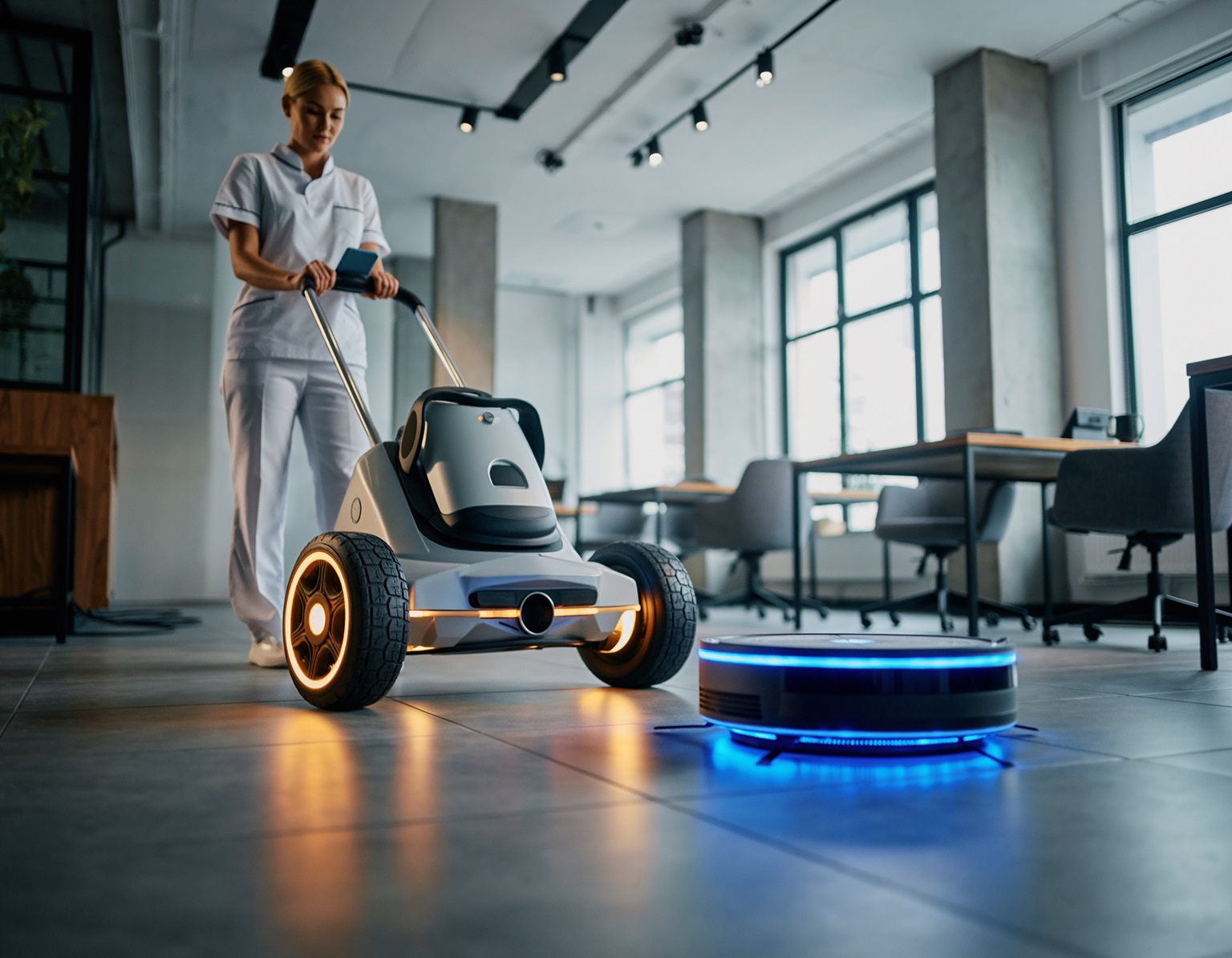
The professional cleaning sector has shifted from manual guesswork to data-backed precision. Equipment that once relied on visual inspection and routine schedules now communicates real-time performance metrics, predicts maintenance needs, and optimises resource allocation without human intervention.
We’ve watched this evolution firsthand at Weskleen Supplies, where facility managers who previously tracked cleaning schedules on clipboards now receive automated alerts when a floor scrubber’s battery hits 15% charge or when a vacuum’s filter requires replacement. This isn’t about adding complexity – it’s about removing the constant mental load of tracking dozens of variables across multiple pieces of equipment.
Smart sensors janitorial equipment systems monitor everything from chemical concentration levels to brush wear patterns. These sensors feed data to cloud-based platforms that analyse usage patterns, flag inefficiencies, and generate maintenance schedules based on actual wear rather than arbitrary timeframes. The result?
Equipment lasts longer, consumables get used more efficiently, and cleaning teams spend less time troubleshooting problems that shouldn’t have occurred in the first place.
How Sensors Actually Function in Cleaning Machines
Modern floor scrubbers contain multiple sensor types working simultaneously. Pressure sensors monitor water flow and detect blockages before they cause pump failure. Accelerometers track movement patterns to calculate actual coverage area versus estimated square footage.
Temperature sensors prevent motor overheating during extended use.
A facility manager at a Perth shopping centre recently told us their old scrubber would overheat during Saturday deep cleans, forcing staff to stop work for 30-minute cooling periods. After upgrading to a sensor-equipped model, the machine now automatically adjusts motor speed based on internal temperature readings, maintaining consistent performance throughout eight-hour shifts.
The sensors themselves are surprisingly robust. Most use industrial-grade components designed to withstand chemical exposure, vibration, and temperature fluctuations. They’re not delicate consumer electronics – these are purpose-built devices that function reliably in harsh environments where moisture, dust, and cleaning chemicals are constant factors.
Optical and Motion Detection
Optical sensors detect dirt levels in real-time, allowing machines to adjust brush speed and water flow automatically. When a Polystar Orbital Floor Scrubber encounters a heavily soiled area, sensors trigger increased brush pressure and slower forward movement without operator input.
The machine essentially thinks through the problem and responds accordingly.
Motion detection goes beyond simple GPS tracking. Gyroscopic sensors measure machine angle and detect whether equipment is being used on level floors or inclines. This data helps optimise battery consumption and motor performance based on actual working conditions rather than manufacturer estimates based on ideal scenarios.
Proximity sensors prevent collisions and equipment damage in tight spaces. These sensors alert operators when they’re approaching walls, furniture, or other obstacles, reducing accidental impacts that compromise equipment longevity. In autonomous or semi-autonomous equipment, these sensors trigger automatic stops or course corrections.
The sensor fusion approach – combining data from multiple sensor types simultaneously – creates comprehensive situational awareness that exceeds what any single sensor could provide. The system understands not just where the equipment is, but what it’s doing, how well it’s working, and what adjustments would optimise performance.
Real-Time Data Collection and Analysis
IoT-connected equipment doesn’t just collect data – it processes information and makes decisions. A battery-powered backpack vacuum like the Pacvac Superpro 700 Battery Kit tracks runtime per charge, suction power fluctuations, and filter saturation levels across multiple cleaning sessions.
This data gets transmitted to management dashboards that display equipment health at a glance. Green indicators mean everything’s functioning optimally. Yellow flags suggest upcoming maintenance needs.
Red alerts demand immediate attention before equipment failure occurs.
We’ve seen cleaning contractors reduce equipment downtime by 40% simply by responding to yellow-flag alerts before they escalate to red. It’s the difference between scheduling a filter replacement during off-hours versus having a vacuum fail mid-shift in a client’s office.
Fleet-Wide Analytics
The analysis extends beyond individual machines. When you’re running a fleet of carpet cleaning machines, IoT platforms identify usage patterns across your entire operation. Which machines get used most frequently?
Which ones sit idle? Are certain operators consistently harder on equipment than others? The data answers questions you didn’t know to ask.
Historical data analysis reveals long-term trends that weekly or monthly reporting would miss. Equipment performance degradation happens gradually – a floor scrubber doesn’t suddenly lose 20% efficiency, it deteriorates incrementally over months. IoT systems track these subtle changes and alert managers before performance drops to unacceptable levels.
Comparative analysis identifies outliers in your fleet. When 14 of your 15 backpack vacuums show similar runtime patterns but one consistently underperforms, you’ve identified a problem requiring attention. Maybe that unit needs maintenance, or perhaps the operator using it needs additional training on proper technique.
The data integration with billing and contract management systems creates comprehensive operational visibility. You’ll know exactly how much machine time went into each client site, which equipment handled which contracts, and whether your pricing accurately reflects actual resource consumption. This granularity supports better business decisions and more accurate cost estimation for new contracts.
Predictive Maintenance Changes Everything
Traditional maintenance schedules operate on fixed intervals: change filters every 30 days, replace brushes every 90 days, service motors annually. This approach either wastes money replacing parts with remaining life or risks breakdowns from worn components that should’ve been replaced earlier.
Predictive maintenance uses sensor data to determine actual component condition. A floor scrubber’s brush might need replacement after 60 days of heavy use in a warehouse or last 120 days in a lightly trafficked office.
IoT systems track actual wear and schedule maintenance accordingly.
Think of it like changing your car’s oil based on engine condition sensors rather than blindly following a 5,000-kilometre schedule. Some driving conditions demand more frequent changes; others allow longer intervals. The same principle applies to smart sensors janitorial equipment.
Cost Savings Through Precision
A commercial cleaner we work with manages 15 backpack vacuums across multiple sites. Before implementing IoT monitoring, they replaced all filters on the first Monday of each month – regardless of actual condition. Now, sensors trigger replacement alerts based on airflow restriction measurements.
Some filters last six weeks; others need changing after three. Overall filter costs dropped 25% while maintaining optimal suction performance across the fleet.
The system also predicts catastrophic failures before they happen. Unusual vibration patterns in a motor might indicate bearing wear. Gradual pressure drops in a scrubber’s water system suggest developing seal leaks. Addressing these issues early prevents expensive emergency repairs and eliminates the operational disruption of unexpected equipment failure.
Battery health monitoring extends power source lifespan significantly. Lithium-ion batteries degrade faster when repeatedly discharged to zero or charged in extreme temperatures. Smart charging systems monitor cell voltage, temperature, and charge cycles, adjusting charging protocols to maximise battery life. Users report 30-40% longer battery lifespan compared to conventional charging approaches.
Warranty compliance tracking provides another benefit. Many commercial equipment warranties require documented maintenance at specified intervals. IoT systems automatically generate and store this documentation, ensuring warranty validity without the administrative burden of manual record-keeping.
Chemical Dispensing Accuracy and Cost Control
Manual chemical dilution is notoriously inconsistent. One operator mixes solutions too weak to clean effectively; another creates overly concentrated mixtures that waste product and potentially damage surfaces. IoT-connected dispensing systems eliminate this variability entirely.
Automated dilution controls use sensors to measure water flow and inject precise chemical amounts based on pre-programmed ratios. The system ensures every batch matches specifications exactly, whether you’re mixing Mr. Bean 5L All-Purpose Cleaner for daily maintenance or preparing Comet Foaming Cleaner & Sanitiser for high-hygiene areas.
A Perth hotel we supply reduced their monthly chemical spend by 18% after installing smart dispensers. The savings came entirely from eliminating over-dilution – they weren’t using less product; they were using the correct amount consistently.
Staff training time also dropped because new employees couldn’t accidentally create incorrect mixtures.
Inventory Management Integration
The sensors track consumption patterns too. If chemical usage suddenly spikes, the system alerts managers to investigate. Perhaps a dispenser is malfunctioning, or maybe a staff member needs retraining on proper equipment use.
Either way, you’ll know immediately rather than discovering the problem when you’re unexpectedly out of product mid-week.
Advanced systems integrate with inventory management platforms, automatically generating purchase orders when supplies reach predetermined thresholds. You’ll never run out of essential cleaning products mid-job because the system reordered before stock depleted. This automation reduces administrative overhead while ensuring consistent supply availability.
Cost allocation becomes precise and defensible. When clients question chemical consumption charges, you can provide detailed reports showing exactly how much product went into cleaning their facilities. This transparency builds trust and justifies pricing that might otherwise face scrutiny.
Quality control improves when dilution is consistent. Cleaning results become predictable and repeatable, eliminating the performance variability that comes from manual mixing. Staff can trust that properly applied solutions will deliver expected results, reducing callbacks and rework.
Coverage Mapping and Efficiency Tracking
GPS and motion sensors embedded in equipment create detailed coverage maps showing exactly where machines have cleaned and where they haven’t. This technology, borrowed from robotic vacuum manufacturers, now appears in commercial-grade walk-behind and ride-on equipment.
The maps display on tablets or smartphones in real-time, allowing supervisors to verify work completion without physical inspection. Colour-coded overlays show single-pass areas versus sections that received multiple passes, highlighting potential efficiency issues or areas where operators struggled with heavy soiling.
One facility manager described this feature as “finally having proof” of work completed. When a building tenant complained about inadequate cleaning, the coverage map showed their area received standard service – the issue was actually a leaking HVAC unit creating persistent puddles that required maintenance attention, not additional cleaning.
Productivity Optimisation
The efficiency insights extend beyond simple completion verification. Heat maps reveal which areas consistently require extra attention, informing staffing decisions and equipment deployment. If the main entrance always needs multiple passes due to tracked-in dirt, you might station dedicated equipment there during peak traffic times rather than including it in regular cleaning rotations.
Route optimisation algorithms analyse historical coverage data and suggest more efficient cleaning patterns. The system might identify that starting in the northwest corner saves 15 minutes per shift compared to the current southeast-start approach, simply due to better traffic flow and reduced backtracking.
Time-and-motion studies become automatic rather than requiring clipboard-wielding supervisors timing operations. The system tracks how long each area takes to clean, which operators work most efficiently, and where bottlenecks consistently occur. This objective data supports performance discussions with concrete evidence rather than subjective impressions.
Missed areas get flagged immediately rather than discovered during quality inspections or client complaints. If an operator skips a section – whether intentionally or accidentally – the supervisor knows before the shift ends and can dispatch someone to complete the work immediately.
Battery Management and Power Optimisation
Battery-powered equipment has transformed commercial cleaning by eliminating cords and the time wasted managing them. But batteries introduce new management challenges that smart sensors janitorial equipment addresses comprehensively.
Individual battery monitoring tracks charge level, health status, charge cycle count, and even individual cell voltage in multi-cell packs. This granular data identifies failing batteries before they strand operators mid-shift. You’ll replace batteries showing degradation signs during convenient downtime rather than experiencing unexpected failures during critical cleaning windows.
Charge scheduling optimises battery life and availability. The system knows which batteries are needed for tomorrow’s 6 AM shift and prioritises their charging accordingly. Batteries not needed immediately charge at slower rates that extend longevity. This intelligent scheduling ensures you always have sufficient charged batteries available while maximising pack lifespan.
Fleet Coordination
Fleet operators benefit from centralised battery management across multiple machines. The system tracks which batteries are charging, which are in use, and which are ready for deployment. This visibility eliminates the chaos of managing dozens of batteries across various equipment types and charging stations.
Thermal management prevents battery damage from temperature extremes. Smart charging stations monitor battery temperature and adjust charging rates to prevent overheating. Cold batteries charge more slowly until they reach optimal temperature ranges. These protections significantly extend battery life compared to conventional charging approaches.
Usage prediction helps right-size your battery fleet. Historical data reveals peak demand periods and actual battery consumption patterns. You might discover you’re maintaining 40 batteries when 32 would suffice with optimised rotation, or that you need six additional units to eliminate charging bottlenecks during busy periods.
Lifecycle tracking documents battery history for warranty claims and replacement planning. When a battery fails, you’ll have complete records showing whether the failure results from manufacturing defects or operational factors beyond warranty coverage. This documentation prevents disputes and facilitates smooth warranty claims.
Data Security and Network Considerations
IoT connectivity introduces cybersecurity considerations that didn’t exist with standalone equipment. Commercial cleaning machines now represent potential network access points requiring proper security protocols.
Reputable manufacturers implement encrypted data transmission and secure authentication requirements. Equipment connects to dedicated networks separate from primary business systems, limiting potential exposure if a device is compromised.
Regular security updates address emerging vulnerabilities before they’re exploited.
We recommend working with IT departments to establish appropriate network segmentation and access controls. IoT equipment should operate on isolated VLANs with restricted internet access. Management platforms require strong authentication – ideally multi-factor verification – and role-based permissions limiting data access to authorised personnel only.
Protecting Operational Data
The data itself requires protection too. Equipment usage patterns, facility maps, and cleaning schedules constitute sensitive operational information. Ensure your equipment supplier’s cloud platforms comply with relevant data protection regulations and implement appropriate encryption for stored data.
Local data processing reduces some security concerns. Modern equipment contains sufficient computing power to analyse sensor data on-device, transmitting only summary information rather than raw data streams. This approach minimises network bandwidth requirements while limiting exposure of detailed operational information.
Physical security matters as well. Equipment containing data storage should be protected from theft, and stolen devices should have remote data-wipe capabilities. Access to equipment settings should require authentication to prevent tampering or unauthorised configuration changes.
Regular security audits verify that protections remain effective as threats evolve. IoT security isn’t a one-time implementation – it requires ongoing attention and updates to address new vulnerabilities and attack vectors.
Cost Analysis and Return on Investment
IoT-enabled equipment typically costs 15-30% more than conventional alternatives. That premium buys capabilities that generate measurable operational savings, but the return timeline varies based on usage intensity and operational scale.
A single smart floor scrubber in a small facility might take three years to recoup its additional cost through reduced chemical consumption and extended component life. A facility managing 20 machines across multiple sites could achieve payback in under 12 months through labour optimisation, reduced downtime, and bulk consumables savings from accurate usage tracking.
The less obvious benefits often justify the investment even when direct cost savings don’t. Equipment utilisation data helps right-size your fleet – you might discover you’re operating six machines when four would suffice with optimised scheduling.
Or perhaps you need two additional units to eliminate bottlenecks during peak cleaning periods.
Intangible Value Drivers
Liability reduction represents another difficult-to-quantify benefit. Detailed equipment logs and coverage maps provide documentation of cleaning activities, potentially protecting against unfounded complaints or liability claims. When a slip-and-fall incident occurs, data showing that area received proper floor maintenance within the previous two hours carries significant weight in dispute resolution.
Staff retention improves when operators work with reliable, well-maintained equipment. Cleaning is physically demanding work; equipment failures that force manual completion of tasks meant for machines contribute to job dissatisfaction and turnover. IoT systems that prevent these frustrations support workforce stability.
Contract renewal rates improve when you can demonstrate service quality through objective data. Clients appreciate transparency and documentation that proves you’re delivering promised cleaning standards. Smart sensors janitorial equipment provides the evidence that subjective inspection reports can’t match.
Competitive differentiation helps win new contracts in markets where multiple qualified bidders compete primarily on price. The ability to offer real-time service verification, detailed reporting, and guaranteed quality through technology-enabled oversight justifies premium pricing that pure labour-based competitors can’t command.
Implementation Challenges and Practical Solutions
The technology sounds impressive until you’re actually deploying it across an established operation. We’ve watched plenty of implementations stumble over predictable obstacles that proper planning could’ve avoided.
Network infrastructure causes the most common problems. Older buildings lack WiFi coverage in mechanical rooms, loading docks, and other areas where cleaning equipment operates. Installing additional access points or implementing cellular-connected equipment solves the coverage issue but adds complexity and cost to the project.
Staff resistance emerges when operators perceive monitoring as surveillance rather than support. Clear communication about how data will be used – improving equipment reliability and identifying training needs, not punishing individual performance – reduces anxiety.
Involving operators in the implementation process and soliciting their feedback on system features builds buy-in.
Managing Complexity
Data overload overwhelms managers who suddenly have access to dozens of metrics per machine. Start by tracking three to five key indicators: battery health, maintenance alerts, and consumable usage. Add complexity gradually as your team develops comfort with the platform.
Integration complexity increases when you’re mixing equipment from multiple manufacturers. Each brand uses proprietary platforms and data formats. Third-party integration solutions exist but add another layer of cost and complexity.
When possible, standardising on a single equipment ecosystem simplifies management considerably.
We recommend pilot programmes before full deployment. Start with two or three machines in a single facility, work through the inevitable technical issues, and develop operational procedures before expanding fleet-wide. The lessons learned during piloting prevent expensive mistakes during broader implementation.
Budget for ongoing costs beyond initial purchase. Cloud platform subscriptions, cellular data plans for connected equipment, and software updates all represent recurring expenses that affect total cost of ownership. Factor these into your ROI calculations to avoid surprises.
Training Requirements for Connected Equipment
Operating IoT-enabled equipment requires different skills than traditional machines. Operators need basic digital literacy – understanding how to interpret dashboard indicators, respond to alerts, and navigate mobile applications.
The learning curve isn’t steep, but it exists. We’ve found that hands-on training with actual equipment works better than classroom instruction. Let operators use the machines, trigger various alerts deliberately, and practise responding to different scenarios.
Muscle memory develops faster than theoretical knowledge.
Maintenance staff need deeper technical training. They’re troubleshooting not just mechanical problems but also connectivity issues, sensor calibration, and software glitches. Manufacturer-provided technical training is essential; generic equipment maintenance knowledge doesn’t translate directly to smart systems.
Building Analytical Capability
Management training focuses on data interpretation and decision-making. What does it mean when chemical consumption increases 12% over three months? Is that a problem requiring investigation or normal variation?
Training should develop analytical skills, not just platform navigation.
Documentation matters more than you’d expect. Create clear procedures for common scenarios: what to do when equipment won’t connect to the network, how to respond to specific alert types, who to contact us when problems exceed operator authority. Laminated quick-reference guides attached to equipment eliminate the need to remember rarely used procedures.
Ongoing education addresses system updates and new features. IoT platforms evolve continuously, adding capabilities and changing interfaces. Regular refresher training ensures staff maintain proficiency and adopt new features that could improve operations.
Cross-training creates redundancy in critical skills. When only one person understands how to troubleshoot connectivity issues or interpret advanced analytics, that person’s absence creates operational vulnerability. Develop expertise across multiple team members to maintain capability during vacations, illness, or turnover.
Future Developments in Smart Cleaning Technology
Current IoT capabilities represent early adoption phase technology. The systems work reliably but remain relatively simple compared to what’s coming.
Artificial intelligence will move beyond simple data collection to predictive operation. Machines will learn optimal cleaning patterns for specific environments, automatically adjusting their operation based on accumulated experience. A floor scrubber might recognise that the cafeteria requires extra attention on Monday mornings after weekend events, adjusting its cleaning intensity without operator input.
Computer vision will enable more sophisticated dirt detection. Current optical sensors measure surface reflectivity; future systems will use cameras and image recognition to identify specific soil types and select appropriate cleaning approaches automatically. The equipment will distinguish between tracked-in mud requiring wet cleaning and dry dust better handled with sweeping.
Autonomous Operation Advances
Autonomous cleaning equipment will expand beyond simple robotic vacuums to full-size commercial machines. These systems will handle routine maintenance cleaning independently, freeing human operators for detail work, problem areas, and tasks requiring judgement that machines can’t replicate.
The technology won’t eliminate cleaning jobs – it’ll change them. Operators will manage fleets of autonomous equipment, handle complex cleaning challenges, and focus on quality verification rather than spending hours on repetitive tasks. This shift could make cleaning work more interesting and less physically demanding, potentially attracting workers who’ve avoided the industry due to its physical demands.
Integration with building management systems will create truly smart facilities. Cleaning equipment will coordinate with HVAC systems, lighting controls, and occupancy sensors to optimise operations around building usage patterns. Cleaning might automatically intensify in areas with confirmed contamination while scaling back in spaces showing low traffic and good air quality.
Edge computing will process more data locally, reducing reliance on cloud connectivity and enabling faster response times. Equipment will make sophisticated decisions independently, communicating only summary information to management systems rather than streaming continuous data.
Regulatory and Compliance Benefits
Smart sensors janitorial equipment simplifies regulatory compliance in industries with stringent hygiene requirements. Healthcare facilities, food processing plants, and pharmaceutical manufacturers face detailed documentation requirements that IoT systems satisfy automatically.
Automated logging creates audit trails showing exactly when cleaning occurred, which products were used, and at what concentrations. This documentation meets regulatory requirements while eliminating the manual record-keeping that’s both time-consuming and prone to errors or omissions.
Temperature monitoring for cleaning solutions ensures compliance with protocols requiring specific temperature ranges for effective sanitisation. The system alerts operators when solution temperature falls outside acceptable ranges, preventing ineffective cleaning that could result in compliance failures.
Quality Assurance Documentation
Contact time verification ensures sanitisers remain on surfaces for required durations. This matters enormously in healthcare and food service environments where insufficient contact time compromises pathogen elimination. Sensors confirm compliance rather than relying on operator discipline and judgement.
Chain of custody documentation traces cleaning activities from task assignment through completion verification. When regulatory inspectors question whether specific areas received required attention, you’ll have timestamped data showing exactly what happened rather than relying on manual logs that might be questioned.
Corrective action documentation captures how issues were addressed when problems occurred. If a sensor detected inadequate chemical concentration, the system logs the alert, records the corrective action taken, and verifies that subsequent checks confirmed proper concentration. This comprehensive documentation demonstrates robust quality management.
Environmental Sustainability Impact
Smart sensors janitorial equipment significantly reduces environmental impact through multiple mechanisms. Precise chemical dilution eliminates overuse that sends excess chemicals into wastewater systems. Water consumption drops when equipment uses exactly what’s needed rather than erring toward excess.
Energy efficiency improves when equipment operates at optimal parameters rather than fixed high-output settings. Motors run at speeds matched to actual cleaning needs, extending runtime on battery charges and reducing electricity consumption. Over fleet-wide operations, these incremental savings compound into substantial energy reductions.
Extended equipment lifespan reduces manufacturing impact. When machines last 30% longer due to predictive maintenance preventing catastrophic failures, fewer units need manufacturing, shipping, and eventual disposal. The embedded environmental cost of equipment production gets amortised over more years of productive use.
Resource Optimisation
Consumables waste decreases dramatically. Filters get replaced based on actual saturation rather than arbitrary schedules, eliminating premature disposal of components with remaining useful life. Brush replacement follows actual wear patterns, preventing both premature replacement and continued use of ineffective worn brushes.
Route optimisation reduces vehicle fuel consumption for mobile cleaning operations. When equipment tracks coverage and suggests efficient routing, service vehicles drive fewer kilometres between jobs. Over a fleet of vehicles making multiple stops daily, the fuel savings become substantial while reducing emissions.
Documentation supports sustainability reporting for organisations with environmental commitments or reporting requirements. Detailed data on chemical consumption, water usage, and energy consumption enables accurate calculation of cleaning operations’ environmental footprint. This transparency supports continuous improvement efforts and demonstrates progress toward sustainability goals.
Choosing the Right Smart Equipment
Not all IoT-enabled cleaning equipment offers equivalent capabilities. Evaluating options requires understanding which features deliver genuine value versus which represent marketing differentiators with limited practical utility.
Sensor reliability and accuracy matter more than sensor quantity. A machine with three reliable, well-calibrated sensors provides more value than one with ten sensors that generate false alerts or miss actual problems. Ask about sensor specifications, calibration procedures, and field reliability data.
Platform usability determines whether staff will actually use available features. Elegant dashboards that require minimal training and provide immediately actionable information get used; complex systems requiring extensive training to interpret get ignored. Request demonstration access to evaluate platforms before committing.
Long-Term Support Considerations
Manufacturer support and update commitment separate equipment that improves over time from systems that remain static or degrade as platforms evolve. Verify that manufacturers commit to ongoing security updates, feature enhancements, and technical support. Equipment with abandoned platforms becomes obsolete liability rather than appreciating asset.
Data portability matters if you might change platforms or consolidate systems. Ensure you can export your historical data in standard formats rather than proprietary structures that lock you into a specific vendor’s ecosystem. Ownership of operational data represents valuable business intelligence that shouldn’t be held hostage by platform choices.
Scalability allows growth without platform changes. A system that works for five machines might not handle 50 effectively. Verify that platforms scale gracefully and that per-unit costs don’t increase dramatically with fleet size.
Integration capabilities determine whether IoT equipment can connect with your existing business systems or whether it operates in isolation. Equipment that integrates with your accounting, scheduling, and customer management platforms delivers more value than standalone systems requiring manual data transfer.
Making the Transition
Moving from conventional to IoT-enabled equipment requires thoughtful planning to maximise benefits while minimising disruption. A staged approach typically works better than attempting wholesale fleet replacement.
Start with high-value applications where the benefits are most obvious and immediate. Large, expensive equipment with high utilisation rates and significant maintenance costs offers the clearest ROI for IoT enhancement. Success in these applications builds organisational confidence and funding for broader deployment.
Maintain conventional backup equipment during initial deployment. Technology inevitably presents unexpected challenges, and having non-connected alternatives prevents operational disruption when connectivity issues or platform problems emerge during the learning period.
Building Organisational Capability
Develop internal expertise before expanding deployment. Identify tech-savvy staff members who can become system champions, troubleshooting problems and coaching colleagues. These internal resources reduce dependence on external support and speed problem resolution.
Measure and document benefits systematically. Track downtime reduction, consumables savings, productivity improvements, and any other metrics affected by IoT implementation. This documentation justifies continued investment and provides guidance on where expansion delivers maximum value.
The evolution toward smart sensors janitorial equipment represents a fundamental shift in how professional cleaning operates. The technology isn’t a distant future possibility – it’s available now, proven in demanding commercial applications, and delivering measurable returns for operators who implement thoughtfully. The question isn’t whether to adopt these capabilities, but how quickly to move and where to prioritise implementation for maximum impact.