


Blog
The Rise of Robotic Cleaners in Commercial Spaces

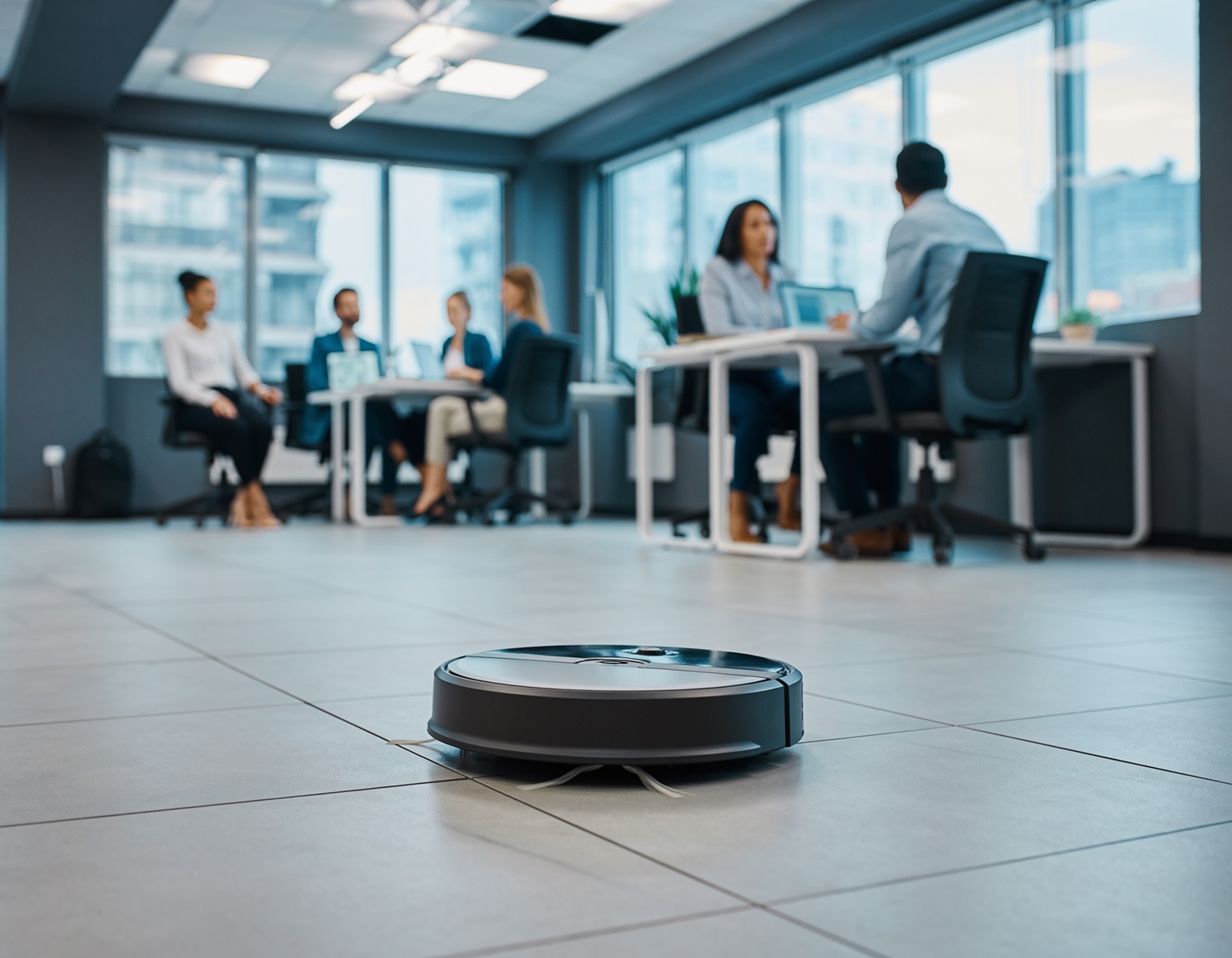
Shopping centres installing robotic floor scrubbers report reduced complaints about sticky floors near food courts. The machines run every night, covering the same routes, maintaining consistent pressure and chemical distribution. No sick days, no rushed corners, no variation in quality.
That’s the reality driving the adoption of robotic cleaners commercial spaces. These aren’t gimmicks or experimental technology anymore. They’re proven tools that handle repetitive tasks with precision, freeing human cleaners to focus on detailed work that actually requires judgment and skill.
The technology works because it solves a specific problem: maintaining baseline cleanliness across large, predictable spaces. Shopping centres, warehouses, airports, and hospitals-these environments need constant attention to high-traffic areas. Manual cleaning crews can handle it, but the cost and coordination required often mean compromises. Robots don’t compromise on their programmed routes.
What Makes Commercial Robotic Cleaners Different
Consumer robotic vacuums navigate lounge rooms and dodge furniture. Commercial robotic cleaners operate on an entirely different scale. These machines are designed to cover thousands of square metres, handle industrial cleaning solutions, and integrate with building management systems.
The Medusa Battery-Powered Sweeper represents the bridge between manual and fully autonomous systems-it’s battery-powered and lightweight, but still requires an operator. True robotic systems go further. They map spaces using LIDAR or camera systems, store multiple floor plans, and execute cleaning programmes without human intervention.
Build quality matters enormously here. A residential robot vacuum might run for two hours before recharging. A commercial unit needs to operate for entire shifts, handle abrasive debris, and withstand bumps from trolleys and foot traffic. The motors, batteries, and chassis construction all reflect industrial specifications.
Chemical delivery systems in these machines maintain precise dilution ratios. That’s crucial for both cleaning effectiveness and safety. Too weak, and you’re just spreading dirty water. Too strong, and expensive chemicals are wasted whilst potentially damaging floor surfaces or creating slip hazards from residue.
Think of it like comparing a bicycle to a commercial delivery truck. Both have wheels and get you from point A to point B, but the engineering, capacity, and durability requirements are completely different. Consumer robots are bicycles. Commercial units are delivery trucks built for demanding daily routes.
The Industrial-Grade Difference
Duty cycles separate consumer from commercial equipment. Residential robotic vacuums might run 300-400 hours annually. Commercial units operate 2,000-3,000 hours or more yearly. Components must withstand this intensive use without frequent replacement.
Navigation precision in commercial settings requires centimetre-level accuracy. Residential units can tolerate rough positioning because furniture rarely moves. Commercial spaces change daily-merchandise displays shift, temporary barriers appear, high-traffic patterns evolve. Advanced mapping systems must detect and adapt to these changes.
Payload capacity differs dramatically. Consumer units handle household dust and pet hair. Commercial machines deal with sand, gravel, metal shavings, packaging debris, and sticky organic matter. Brush systems, filtration, and debris containers must handle much heavier, more abrasive materials.
Connectivity features in commercial units allow remote monitoring, fleet management, and integration with facility management software. Operators can view cleaning progress, receive maintenance alerts, and adjust schedules from central control systems. This level of oversight doesn’t exist in consumer products.
Where Robotic Systems Actually Work
Not every commercial space benefits equally from robotic cleaning. The technology excels in specific conditions.
Large, open floor plans with minimal obstacles suit robots perfectly. Warehouse aisles, hospital corridors, retail showrooms, or airport terminals have predictable layouts and consistent flooring materials. A robot can map the area once, then execute the same cleaning pattern reliably.
Spaces with consistent traffic patterns also benefit. When people generally move through defined routes-like a shopping centre’s main walkway-robots can be programmed to focus on those high-traffic zones during off-peak hours. The machine runs its route at 2 AM, and the floor’s clean before morning foot traffic begins.
Environments requiring frequent, light cleaning rather than occasional deep cleaning suit robotic systems well. A robot can sweep or scrub the same area three times daily, preventing dirt accumulation. That’s often more effective than one intensive manual clean per week.
But there are clear limitations. Spaces with constantly changing layouts-like event venues or flexible office spaces-create navigation challenges. Robots need stable reference points. If furniture moves daily, the machine’s map becomes unreliable.
Detailed cleaning around complex fixtures still requires human attention. A robot can scrub open floor, but it won’t properly clean around toilet bases, into corners, or along detailed architectural features. It’s a complement to human cleaners, not a replacement.
Ideal Facility Characteristics
Floor surface uniformity significantly impacts robotic cleaning effectiveness. Spaces with consistent flooring materials throughout allow a single machine configuration. Mixed surfaces-carpet in one area, tile in another, concrete elsewhere-require either multiple machines or frequent manual adjustments.
Ceiling height matters for certain navigation systems. LIDAR-based robots sometimes use ceiling-mounted reflectors as reference points. Warehouses with 10-metre ceilings need different navigation approaches than retail spaces with standard 3-metre ceilings.
Lighting conditions affect camera-based navigation systems. Areas with inconsistent lighting, large windows creating glare, or complete darkness during cleaning hours challenge visual navigation. LIDAR systems handle varied lighting better but cost more.
Traffic density and timing determine whether robotic cleaners can operate during business hours or must wait until the facility closes. Low-traffic warehouses might accommodate robots during operational hours. Busy retail spaces typically require overnight cleaning when the building’s empty.
The Operating Cost Reality
The purchase price of commercial robotic cleaners makes people hesitate. Quality units cost what you’d pay for a small vehicle. But cost analysis needs to consider operational savings over the machine’s working life.
Labour represents the largest ongoing expense in commercial cleaning. A robotic scrubber running unsupervised during night shifts doesn’t eliminate labour costs-human cleaners are still needed for detailed work-but it reduces the hours required for basic floor maintenance. Robotic scrubbers can cover work that would otherwise require 15 hours of manual labour weekly.
Chemical usage often decreases with robotic systems. The machines apply consistent amounts of cleaning solution across the entire surface. Human operators might over-apply in some areas (wasting product) and under-apply in others (reducing effectiveness). Consistent application means better results with less waste.
Maintenance costs for robotic cleaners are predictable. These machines have service intervals and replacement parts, much like any industrial equipment. Squeegee blades wear out. Batteries eventually need replacement. But scheduled maintenance prevents unexpected breakdowns that disrupt cleaning schedules.
The machines also reduce floor damage over time. Consistent, appropriate pressure and chemical use extend floor life. Timber floors maintained with robots last longer because the machines don’t over-scrub or leave standing water that degrades the finish.
Total Cost of Ownership Analysis
Capital expenditure for quality commercial robotic cleaners ranges from $15,000 to $80,000 depending on size, capabilities, and features. This represents significant upfront investment requiring careful justification.
Operating expenses include electricity for charging, cleaning chemicals, replacement brushes and squeegees, and periodic professional servicing. These costs typically run $2,000-5,000 annually depending on usage intensity.
Labour savings vary by facility but often range from 10-20 hours weekly of reduced manual floor cleaning time. At commercial cleaning rates of $30-50 per hour, this represents $15,600-52,000 in annual savings. The payback period for quality units typically falls between 1-3 years.
Reduced floor maintenance costs add hidden value. Floors cleaned consistently last longer before requiring stripping and refinishing. These major maintenance events cost thousands of pounds and require facility downtime. Extending the interval between refinishing projects saves substantially.
Improved cleaning consistency delivers value that’s harder to quantify but very real. Facilities with consistently clean floors receive fewer complaints, create better impressions on visitors, and reduce slip-and-fall incidents that could result in costly injury claims.
Technical Capabilities That Matter
Navigation technology determines how effectively a robotic cleaner operates. LIDAR systems create detailed spatial maps by measuring distances with laser pulses. They’re accurate and work in various lighting conditions. Camera-based systems use visual landmarks for navigation. They’re often less expensive but can struggle in dim environments or spaces with few distinctive features.
The best commercial systems combine multiple sensors. LIDAR for primary navigation, cameras for obstacle detection, and bump sensors as a final safeguard. Redundancy prevents the machine from getting stuck or causing damage.
Battery capacity and charging behaviour affect operational efficiency. Some units return automatically to charging stations when batteries run low, then resume cleaning where they stopped. Others require manual intervention. For overnight cleaning programmes, autonomous charging is essential so the machine can complete its full route without supervision.
Cleaning path algorithms vary between models. Some robots use random patterns, which work for small areas but waste time in large spaces. Better systems calculate efficient routes that minimise overlap whilst ensuring complete coverage. They clean in straight lines where possible, reducing energy consumption and wear on components.
Water and chemical tank capacity determines how long a machine can operate before requiring refills. Larger tanks mean longer autonomous operation but add weight and reduce manoeuvrability. The balance depends on your space. A long, straight warehouse corridor suits a large-tank machine. A retail space with multiple rooms needs something more nimble.
Sensor Technology Explained
LIDAR (Light Detection and Ranging) systems emit laser pulses and measure return times to calculate distances. A spinning LIDAR sensor creates 360-degree environmental maps with millimetre precision. These systems work equally well in darkness and bright light but struggle with highly reflective surfaces like mirrors or glass.
Stereoscopic cameras use paired lenses to judge distances, similar to human binocular vision. They recognise landmarks, read signs, and identify objects by shape and colour. Camera systems handle reflective surfaces better than LIDAR but require adequate lighting and clear visual reference points.
Ultrasonic sensors emit high-frequency sound waves and detect reflections. They’re excellent for detecting obstacles at close range, including transparent barriers like glass partitions. Response speed makes ultrasonic sensors ideal for immediate collision avoidance.
Gyroscopes and accelerometers track the robot’s movement and orientation. These inertial measurement units (IMUs) complement other navigation systems by providing continuous position updates even when external references are temporarily unavailable.
Edge detection sensors prevent robots from falling down stairs or loading docks. Infrared or ultrasonic downward-facing sensors detect sudden drops in floor level and trigger immediate stops.
Integration with Existing Operations
Introducing robotic cleaners into an established cleaning programme requires planning. These machines work best as part of a coordinated system, not as isolated tools.
Successful implementations assign robots to baseline maintenance whilst human cleaners focus on detailed work. The robot handles nightly scrubbing of main walkways. Human staff clean restrooms, empty bins, wipe surfaces, and address spots the robot can’t reach. This division of labour uses each resource where it’s most effective.
Scheduling coordination matters. If a robot’s programmed to clean at 2 AM but a night shift worker leaves obstacles in its path, the machine stops or cleans around them. Communication between cleaning staff, facility managers, and other building users prevents conflicts.
Software interfaces vary from simple touchscreens on the machine to sophisticated cloud-based management platforms. Basic systems let you programme cleaning schedules and monitor battery levels. Advanced platforms provide detailed cleaning reports, maintenance alerts, and fleet coordination for facilities with multiple robots.
Remote monitoring capabilities prove particularly valuable for facilities with limited overnight supervision. Managers can check cleaning progress from home, receive alerts if machines encounter problems, and verify job completion without physical presence at the site.
Workflow Redesign Strategies
Zone-based cleaning assignments work well with mixed human-robotic teams. Designate specific areas for robotic maintenance (long corridors, open retail floors, warehouse aisles) and others for human cleaning (offices, restrooms, equipment rooms). Clear boundaries prevent duplication and gaps.
Task-based division assigns repetitive maintenance work to robots whilst reserving judgement-intensive tasks for humans. Robots handle nightly floor scrubbing. Humans address spills as they occur, clean vertical surfaces, sanitise high-touch points, and maintain restrooms.
Sequential cleaning programmes have robots complete their routes before human staff arrive. This allows floors to dry and prevents human-robot interaction issues. Night-shift robots finish by 6 AM. Day-shift human cleaners arrive at 7 AM for detailed work.
Parallel operation models run robots and humans simultaneously in different zones. This maximises productivity but requires careful coordination and safety protocols. Works best in facilities large enough that humans and machines rarely encounter each other.
Safety Considerations in Occupied Spaces
Robotic cleaners in commercial environments must coexist safely with people, even when operating during closed hours.
Obstacle detection systems prevent collisions. Sensors identify people, trolleys, temporary barriers, and other objects in the robot’s path. Conservative programming stops machines well before contact, though this can reduce cleaning efficiency if sensors are overly sensitive.
Speed regulation matches the environment. Robots in empty warehouses might travel at 1-1.5 metres per second for efficiency. In occupied retail spaces, they slow to 0.3-0.5 metres per second, allowing people time to notice and avoid them.
Visual and audible warnings help people recognise active robots. Flashing lights, distinctive colours, and gentle warning sounds alert people without creating excessive noise. Some facilities add signage indicating robotic cleaning zones during operational hours.
Some facilities run robotic cleaners during business hours in low-traffic areas. This requires machines with sophisticated sensors and conservative speed settings. The robot must detect and avoid people reliably. Even then, visible markings or warning lights help alert people to the machine’s presence.
Wet floor warnings remain necessary. Even though robotic scrubbers recover most water, floors are still damp immediately after cleaning. When operating during occupied hours, appropriate signage is essential. Some facilities programme robots to clean sections sequentially, allowing previously cleaned areas to dry whilst the machine moves to the next zone.
Chemical safety protocols don’t change because a robot’s doing the work. Store cleaning solutions properly, use appropriate dilutions, and ensure ventilation in the areas being cleaned. Automated chemical delivery systems in robotic cleaners actually improve safety by reducing direct handling, but the chemicals themselves still require proper management.
Emergency stop functions must be accessible and clearly marked. Staff need to know how to immediately halt the machine if something goes wrong. Most commercial units include physical emergency stops on the machine and remote stops accessible through control interfaces.
Regulatory Compliance
Workplace health and safety regulations apply equally to robotic and manual cleaning equipment. Risk assessments must address potential hazards including collisions, chemical exposure, electrical safety, and noise levels. Documentation demonstrates due diligence.
Insurance considerations may change with robotic equipment. Some policies require notification when autonomous machines operate in occupied spaces. Verify coverage adequately addresses robotic equipment operation, potential property damage, and public liability.
Data privacy requirements affect robots using cameras for navigation. In regions with strict privacy laws, camera-equipped robots might require signage notifying people of recording, even if imagery isn’t stored. LIDAR-based navigation avoids these privacy concerns.
Accessibility compliance ensures robotic cleaners don’t create barriers for people with disabilities. Machines must move predictably, avoid blocking accessible routes, and not create hazards for vision-impaired individuals. Audible warnings help vision-impaired people detect approaching robots.
The Human Element Remains Essential
The most successful robotic cleaning programmes don’t eliminate human workers-they redeploy them to higher-value tasks.
Detailed cleaning still requires human judgement and dexterity. Cleaning around complex equipment, sanitising high-touch surfaces, addressing spills immediately, and maintaining restrooms all need human attention. Robots handle repetitive baseline work, whilst people focus on tasks that require problem-solving and adaptability.
Quality control requires human oversight. Someone needs to verify the robot completed its programmed route, check for missed areas, and address any issues the machine couldn’t handle. This oversight role requires less physical labour than manual cleaning but demands attention to detail and understanding of the technology.
Customer interaction often matters in commercial cleaning. A visible human presence reassures building occupants that cleanliness is actively managed. People feel more comfortable approaching a human cleaner with concerns or requests than they would reporting issues through an app about a robot’s performance.
Flexibility for special events or unexpected situations requires human response. If a conference room needs immediate cleaning between meetings, waiting for the robot’s scheduled run isn’t practical. Human cleaners adapt to changing priorities in ways current robotic systems can’t match.
The best outcomes occur when facilities view robotic cleaners as team members rather than replacements. The technology handles predictable, repetitive work efficiently. Humans provide judgement, adaptability, and the detailed attention that creates truly clean environments.
Workforce Transition Management
Retraining programmes help existing staff work effectively with robotic systems. Cleaners learn to programme routes, perform daily maintenance, interpret error messages, and coordinate their work with machine schedules. These skills add value and create advancement opportunities.
Job role evolution shifts from pure manual labour to technology-assisted cleaning management. Staff become robot operators, quality supervisors, and specialised cleaners handling complex tasks. This evolution generally improves job satisfaction by reducing physically demanding repetitive work.
Communication about technology adoption matters significantly. Transparent discussion about why robots are being implemented, what roles will change, and how staff benefit prevents anxiety and resistance. Framing robots as tools that make jobs easier and safer encourages acceptance.
Performance metrics should recognise combined human-robot outcomes rather than pitting workers against machines. Measure overall facility cleanliness, efficiency improvements, and cost reductions as team achievements. Avoid comparisons that suggest robots outperform humans at all tasks.
Selecting the Right System
Choosing a robotic cleaner requires matching technology to your specific needs.
Assess your space first. Measure the area requiring regular cleaning, note obstacles and floor transitions, and identify any features that might challenge navigation. A detailed floor plan helps vendors recommend appropriate systems.
Floor type matters significantly. Different robots suit different surfaces. Some excel on hard, smooth floors like polished concrete or vinyl. Others handle textured surfaces or low-pile carpet. Facilities with multiple floor types might need different machines or a versatile unit that accommodates various surfaces.
Consider your cleaning schedule and available supervision. For completely autonomous overnight operation, prioritise systems with reliable navigation, automatic charging, and remote monitoring. If staff will be present during operation, more flexibility exists.
Battery life and tank capacity must match operational requirements. Calculate the area needing cleaning per session and verify the machine can complete that work without refilling or recharging. Undersized tanks or insufficient battery capacity means interrupted cleaning cycles and increased labour for monitoring.
Support and service availability shouldn’t be overlooked. These machines need occasional repairs and regular maintenance. Local service support prevents extended downtime. Enquire about typical response times, parts availability, and whether loaner units are available during repairs.
Budget for the complete system, not just the machine. Factor in training costs, any facility modifications needed (like dedicated storage and charging areas), and ongoing expenses for consumables like brushes, pads, and cleaning solutions. A realistic total cost of ownership helps avoid surprises.
Feature Prioritisation
Essential features for most commercial applications include reliable navigation, appropriate cleaning width for your spaces, adequate battery life, and basic scheduling capabilities. These fundamentals ensure the machine can perform its primary function effectively.
Highly desirable features include automatic charging, remote monitoring, multiple map storage, and adjustable cleaning intensity. These capabilities significantly enhance operational efficiency and reduce supervision requirements.
Optional features like advanced fleet management, detailed analytics, or specialised cleaning modes provide value in specific situations but aren’t universally necessary. Evaluate whether your operation will actually use these capabilities before paying for them.
Avoid unnecessary complexity. Some systems offer extensive customisation and programming options that sound impressive but overwhelm operators. Simpler interfaces with adequate functionality often deliver better results than complex systems staff find difficult to use.
Maintenance Requirements and Procedures
Like any industrial equipment, robotic cleaners commercial spaces implementations require regular maintenance to operate reliably.
Daily maintenance takes 10-20 minutes and includes emptying recovery tanks, rinsing debris bins, checking brushes for damage or entanglement, and wiping sensors clean. These simple tasks prevent most operational problems and extend component life.
Weekly maintenance involves more thorough cleaning of tanks and filters, checking squeegee condition and alignment, inspecting wheels and drive components, and verifying all sensors function correctly. This maintenance typically requires 30-45 minutes.
Monthly procedures include cleaning or replacing filters, checking battery condition and charging system performance, updating software if necessary, and testing all safety features. Allow 1-2 hours for comprehensive monthly maintenance.
Professional servicing every 6-12 months ensures optimal performance. Technicians perform detailed inspections, replace wearing components before they fail, calibrate sensors, and verify the machine meets safety standards. This preventative maintenance costs less than emergency repairs.
Common Issues and Solutions
Navigation failures often result from dirty sensors or changed environmental conditions. Clean all sensors thoroughly. Verify reference points (reflectors, landmarks) haven’t moved. Remap the space if significant changes occurred.
Poor cleaning results typically indicate worn brushes or squeegees, incorrect chemical dilution, or insufficient water pressure. Inspect and replace worn components. Verify chemical systems dispense correct amounts. Check for clogs in water delivery systems.
Battery problems manifest as reduced runtime or failure to hold charge. Batteries gradually degrade over 2-3 years of intensive use. Monitor charge cycles and capacity. Budget for battery replacement as a regular operating expense rather than unexpected cost.
Mechanical noise or unusual vibrations suggest worn bearings, misaligned components, or debris entanglement. Stop the machine immediately and inspect drive systems, brushes, and wheels. Continued operation with mechanical problems causes additional damage.
Software glitches occasionally affect any computerised system. Restart the machine. Check for available software updates. If problems persist, contact technical support. Most software issues resolve quickly with proper troubleshooting.
Chemical Selection for Robotic Systems
Not all cleaning chemicals work equally well with robotic dispensing systems.
Low-foaming formulations are essential for robotic scrubbers with vacuum recovery systems. Excessive foam interferes with suction, leaving water on floors and reducing cleaning effectiveness. Professional-grade cleaners like pH-neutral floor cleaners are formulated specifically for machine application.
Concentrated products offer better value and more precise dilution control. Robotic systems typically have built-in dilution equipment that mixes concentrated chemicals with water at precise ratios. This automation ensures consistency and reduces waste.
pH-appropriate chemicals protect floor surfaces whilst effectively cleaning. Aggressive alkaline or acidic cleaners can damage certain flooring materials over time. Neutral pH cleaners handle most maintenance cleaning safely whilst being gentle on surfaces.
Compatibility verification with your specific machine matters. Some robots specify approved chemical brands or formulations. Using unauthorised chemicals might void warranties or damage dispensing systems. Always check manufacturer recommendations.
Chemical System Maintenance
Daily rinsing of chemical tanks prevents residue build-up and ensures accurate dispensing. Run clean water through the system after each use. This simple practice extends pump life and maintains dispensing accuracy.
Monthly deep cleaning removes mineral deposits and chemical residues from tanks, lines, and pumps. Use appropriate cleaning solutions designed for chemical delivery systems. Thorough cleaning prevents clogs and ensures long-term reliability.
Descaling procedures address mineral build-up in areas with hard water. Calcium and magnesium deposits gradually reduce flow rates and affect dilution accuracy. Descaling products safely dissolve these deposits without damaging equipment.
Filter replacement at recommended intervals maintains system performance. Chemical delivery systems have inline filters that trap particulates. Clogged filters restrict flow and compromise cleaning effectiveness. Keep spare filters on hand.
Real-World Performance Metrics
Understanding typical performance helps set realistic expectations for robotic cleaners commercial spaces applications.
Coverage rates for robotic scrubbers typically range from 800-1,500 square metres per hour depending on machine size, floor conditions, and cleaning intensity. This compares favourably with manual scrubbing rates of 300-500 square metres per hour, though manual cleaning often handles detailed work simultaneously.
Cleaning effectiveness on level floors with moderate soiling typically matches or exceeds manual cleaning consistency. Robots apply uniform pressure and consistent chemical amounts. However, heavily soiled areas or textured floors might require multiple passes or manual intervention.
Uptime reliability for quality commercial units exceeds 95% when properly maintained. Most downtime results from preventable issues like neglected maintenance or operator error rather than equipment failure. Scheduled maintenance and operator training maximise availability.
Energy consumption varies by machine size and usage intensity but typically costs $2-5 daily in electricity for charging. This represents minimal operating expense compared to labour costs. Some facilities schedule charging during off-peak electricity rate periods for additional savings.
Chemical efficiency improvements of 20-40% are common with robotic systems compared to manual application. Consistent dispensing eliminates over-application waste whilst ensuring adequate cleaning strength. Chemical savings partially offset equipment costs.
Return on Investment Timeline
Year one typically shows partial ROI recovery of 30-50% through labour savings, chemical efficiency, and reduced floor maintenance requirements. Initial learning curves and setup costs prevent immediate full returns.
Year two usually achieves break-even or positive ROI as operations optimise, staff become proficient, and the full labour savings realise. Chemical and floor maintenance savings accumulate.
Year three and beyond deliver continued positive returns. Equipment is fully paid off, operations are refined, and the facility enjoys sustained labour savings and improved cleaning consistency. Equipment value extends 5-7 years with proper maintenance.
Intangible benefits like improved appearance, fewer complaints, and reduced slip-fall incidents add value that’s difficult to quantify but very real. Consistently clean facilities create better impressions and potentially reduce legal exposure.
Future Developments Worth Watching
Robotic cleaning technology continues advancing, with several trends likely to affect commercial applications.
Artificial intelligence integration promises smarter navigation and adaptive cleaning. Current systems follow programmed routes. AI-enhanced machines could identify high-traffic areas automatically, adjust cleaning intensity based on soil levels, and optimise routes in real-time. This would reduce programming requirements and improve efficiency.
Fleet management systems will become more sophisticated. Large facilities might operate multiple robots coordinated through central software. The system could distribute cleaning tasks among available machines, optimise charging schedules, and consolidate performance data across the entire fleet.
Improved battery technology will extend operating time and reduce charging duration. Solid-state batteries and advanced lithium-ion designs promise longer life cycles and faster charging, making robotic cleaners more practical for facilities with limited overnight windows for maintenance.
Enhanced sensor capabilities will improve obstacle detection and edge cleaning. Better sensors mean robots can operate safely in more complex environments and clean closer to walls and fixtures, reducing the human follow-up work required.
Integration with building management systems will allow coordinated operation. Robotic cleaners could automatically adjust schedules based on occupancy sensors, coordinate with HVAC systems to ensure proper ventilation during cleaning, and communicate with access control systems to operate in secured areas.
Specialised models for specific industries will emerge. Healthcare facilities need machines that meet infection control standards. Food service environments require equipment that handles organic debris and complies with food safety regulations. As adoption grows, manufacturers will develop purpose-built solutions for these niches.
Emerging Technologies
UV-C disinfection integration adds sanitisation capabilities to floor cleaning. Robots equipped with UV-C lights can simultaneously clean and disinfect surfaces, particularly valuable in healthcare and food service environments where pathogen control is critical.
Electrostatic spraying systems could allow robots to sanitise vertical surfaces and equipment whilst navigating spaces. This extends robotic cleaning beyond floors to more comprehensive facility hygiene.
5G connectivity will enable real-time video streaming, allowing remote supervision and immediate response to unexpected situations. Supervisors could see what the robot sees and provide guidance without physical presence.
Augmented reality interfaces might assist with programming and troubleshooting. Technicians could use AR glasses to see navigation paths, sensor readings, and maintenance instructions overlaid on the physical machine.
Collaborative robot swarms could coordinate multiple machines to clean large areas more efficiently. Robots could communicate to avoid collisions, distribute work, and collectively complete complex cleaning programmes faster than individual units.
Making the Transition Work
Implementing robotic cleaners successfully requires planning and realistic expectations.
Start with a pilot programme if possible. Test a single machine in one area before committing to fleet-wide adoption. This allows identification of operational challenges, procedure refinement, and demonstration of results to stakeholders who might be sceptical.
Involve cleaning staff early. These people understand your facility’s cleaning challenges and can provide valuable input on where robots would be most useful. Their buy-in matters because they’ll work alongside these machines. Frame the technology as a tool that makes their jobs easier, not a threat to their employment.
Document procedures clearly. Create written protocols for operating the machines, performing daily maintenance, and troubleshooting common problems. Standardised procedures ensure consistent operation regardless of which staff member interacts with the robot.
Establish performance metrics and track them consistently. Measure cleaning quality, coverage area, chemical usage, and labour hours before and after implementation. Objective data demonstrates ROI and identifies improvement opportunities.
Plan for ongoing training and support. As staff changes or new features become available, regular training refreshers maintain operational proficiency. Technical support relationships with suppliers ensure problems resolve quickly.
Overcoming Common Obstacles
Budget approval challenges often arise with expensive equipment. Build comprehensive business cases showing total cost of ownership, projected labour savings, and intangible benefits. Demonstrate successful implementations at similar facilities.
Staff resistance to new technology stems from job security concerns. Address these directly with transparent communication about how roles will evolve and assurances that technology enhances rather than eliminates jobs.
Technical difficulties during initial implementation are normal. Expect a learning period of 2-3 months whilst staff become proficient and operational procedures are refined. Temporary setbacks don’t indicate failure.
Management impatience for immediate results can derail promising programmes. Set realistic timelines for ROI realisation. Emphasise that robotic cleaning represents a long-term operational improvement, not a quick fix.
Professional Guidance and Support
Selecting and implementing robotic cleaners commercial spaces solutions requires expertise in both cleaning operations and technology systems.
If you need advice on whether robotic systems suit your facility, Weskleen Supplies can help evaluate your needs and recommend appropriate solutions. Our experience with commercial cleaning equipment helps facilities make informed decisions about automation.
You can contact us for guidance on equipment selection, chemical compatibility, and integration strategies that maximise your investment in cleaning technology.
The Path Forward for Commercial Cleaning
Robotic cleaners represent a significant evolution in commercial facility maintenance. They’re not science fiction or distant future technology-they’re practical tools delivering measurable results today.
The technology works best when viewed as part of a comprehensive cleaning strategy rather than a complete replacement for human workers. Robots handle repetitive baseline maintenance with tireless consistency. Humans provide judgement, adaptability, and detailed attention to complex cleaning challenges.
Success requires matching technology to facility characteristics, investing in proper training, and maintaining realistic expectations about capabilities and limitations. Facilities that approach robotic cleaning systematically-starting with pilot programmes, involving staff, and refining procedures-typically achieve strong returns on investment within 2-3 years.
The cost of quality robotic systems represents significant capital investment, but operational savings through reduced labour, improved chemical efficiency, and extended floor life provide compelling long-term value. For facilities with large, predictable floor areas requiring frequent maintenance, robotic cleaners deliver consistent results that manual cleaning struggles to match.
As technology continues advancing, capabilities will expand whilst costs gradually decrease. Early adopters gain competitive advantages through operational efficiency and cleaning consistency. Later adopters benefit from mature technology and proven implementation strategies.
The question for most commercial facilities isn’t whether robotic cleaning technology works-it does. The question is whether your specific facility characteristics, budget, and operational requirements align with what current robotic systems deliver effectively. Honest assessment of these factors leads to successful implementation and realisation of the substantial benefits robotic cleaners offer.