


Blog
Aged Care Cleaning Standards in Australia: Product Compliance Guide

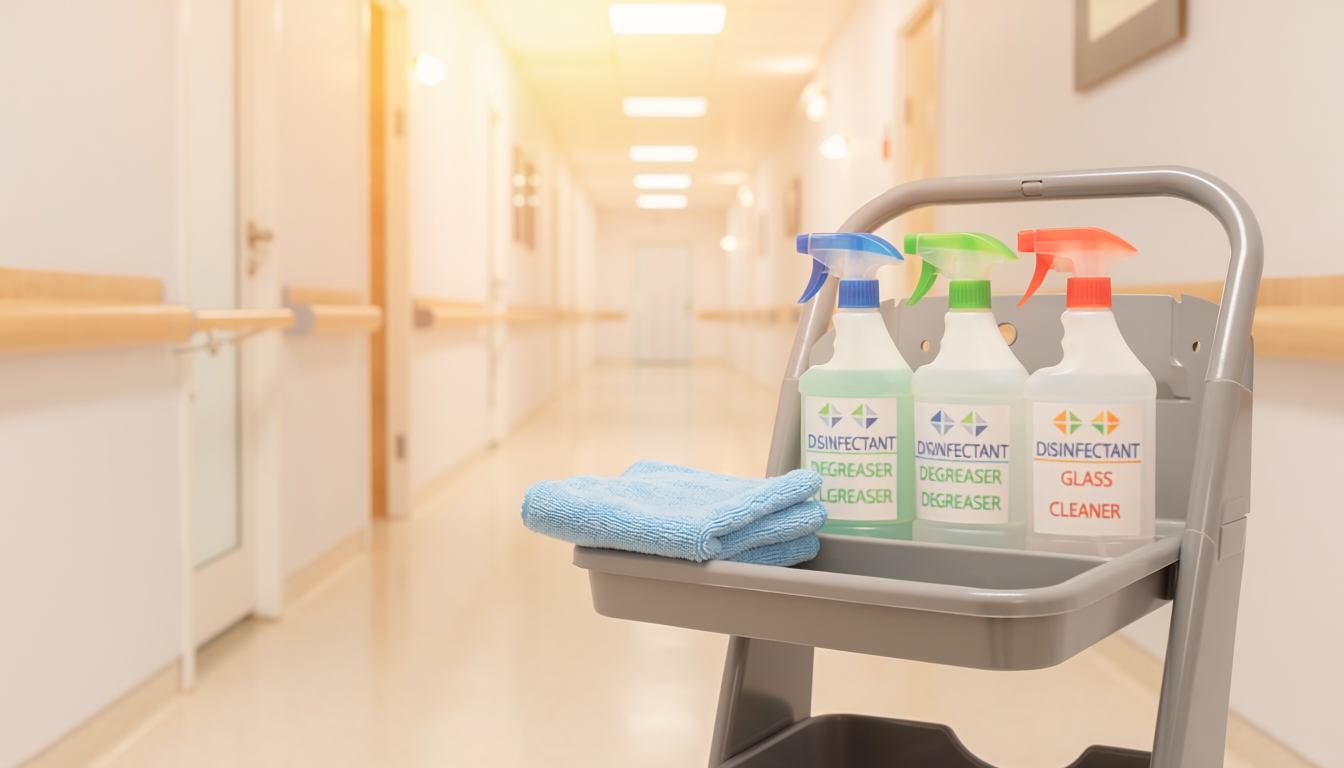
Cleaning in an aged care facility is vastly different from cleaning an office or a hotel. In those environments, a missed spot might result in a complaint; in aged care, it can result in a clinical outbreak. Facility managers and cleaning supervisors face the daily challenge of maintaining aged care cleaning standards that meet rigorous federal regulations while ensuring the facility remains a warm, welcoming home for residents.
The immune systems of elderly residents are often compromised, making them susceptible to pathogens that a healthy adult might shake off in a day. Furthermore, the environment must account for cognitive impairments like dementia, where a wet floor sign might not be understood, or a shiny floor might be perceived as water. This reality transforms the cleaning role into a critical component of clinical care. Weskleen Supplies has spent over a decade working alongside Australian providers to navigate this complex landscape, supplying the professional-grade solutions required to protect vulnerable residents.
The Regulatory Landscape: Quality Standards Explained
The Aged Care Quality and Safety Commission monitors compliance through the Aged Care Quality Standards. For cleaning teams, the focus lands heavily on Standard 3 (Personal Care and Clinical Care) and Standard 4 (Services and Supports for Daily Living), specifically regarding the safety of the service environment.
The Impact of the Royal Commission
The Royal Commission into Aged Care Quality and Safety highlighted significant gaps in environmental hygiene. It shifted the industry focus from “process-based” compliance (ticking a box saying a room was cleaned) to “outcome-based” compliance. Auditors now look for evidence that the cleaning actually minimises infection risk. It is not enough to say you mopped the floor; you must demonstrate that your cleaning practices, chemicals, equipment, and technique, effectively break the chain of infection.
The introduction of mandatory Infection Prevention and Control (IPC) leads in facilities has further sharpened this focus. These leads require cleaning protocols that are defensible, documented, and clinically sound. If an IPC lead asks why a specific chemical is used in the dementia wing, the cleaning supervisor must be able to justify that choice based on safety data and efficacy.
Chemical Compliance: The Science of Safety
The most common compliance gap we see involves the chemicals stored in the cleaner’s trolley. Using a generic disinfectant from a supermarket does not meet the requirements for aged care environments. To protect residents, we must look at the science of what we are using.
Understanding Hospital-Grade Disinfectants
To comply with aged care cleaning standards, your primary disinfectant must be a TGA-listed hospital grade disinfectant. The Therapeutic Goods Administration (TGA) regulates these products to ensure they actually kill the pathogens they claim to.
When you look at a product label, you need to see an AUST L number. This confirms the product has been assessed for safety and efficacy. For example, the Comet Foaming Cleaner & Sanitiser is formulated to meet these rigorous standards. Unlike standard cleaners that might just smell nice, TGA-listed products provide a “kill claim”, proven efficacy against specific pathogens like Staphylococcus, E. coli, and often Norovirus or Influenza. In a high-risk environment like a shared bathroom, this level of validation is non-negotiable.
The Role of pH-Neutral Detergents
Not every surface needs aggressive disinfection every time. In fact, overusing high-pH (alkaline) chemicals can damage floor sealers, strip paint, and most importantly, irritate residents’ skin. Elderly skin is friable, thin, fragile, and prone to tearing or dermatitis.
For general cleaning of low-risk surfaces (like bedside tables or window sills), a high-quality neutral detergent is often the better choice. It removes soil, the food source for bacteria, without leaving harsh residues. A robust chemical schedule balances these two categories: detergents for cleaning (soil removal) and TGA-listed hospital grade disinfectants for sanitising (pathogen killing). Using a residue-free neutral cleaner prevents the buildup of sticky chemical layers that can actually attract more dirt and bacteria over time.
Chemical Safety and Storage Protocols
Safety extends beyond the chemical formulation to how it is stored. In facilities with memory support units, a cleaning trolley can be a hazard. Residents with dementia may not recognise a spray bottle as a chemical; they might see it as a drink.
Strict protocols must be in place:
- Lockable Trolleys: All chemicals should be stored in lockable compartments when the cleaner is not immediately at the trolley.
- Dilution Control: Manually glugging chemicals into a bucket leads to “chemical burn”, where the solution is too strong, leaving dangerous fumes and residues. Using pump systems or portion-controlled pods ensures the exact safe dilution is achieved every time.
- MSDS Accessibility: Material Safety Data Sheets must be physically accessible to staff, not just stored on a computer in an office that is locked at night.
Equipment Protocols to Prevent Cross-Contamination
Think of cross-contamination like glitter. If you spill glitter in the bathroom and then walk into the kitchen without changing your shoes, that glitter ends up on the kitchen floor. Germs work exactly the same way, except they are invisible and dangerous.
The Colour-Coding Defence
Colour-coded cleaning equipment is the industry’s defence against this “glitter effect”. It is a simple, visual system that even non-English speaking staff can follow instantly:
- Red: Toilets and bathrooms (high risk/high bacterial load).
- Blue: General areas, lounges, and offices (low risk).
- Green: Kitchen and food service areas (food safety focus).
- Yellow: Infectious or isolation areas (requires dedicated disposal protocols).
Using a cleaning hand caddy helps staff keep these tools separated on their trolley. If a red cloth touches a blue spray bottle, the system fails. Organisation is not just about tidiness; it is a fundamental infection control protocol.
The Clean-to-Dirty Workflow
Equipment is only as good as the technique used. Staff must be trained in the “Clean to Dirty” workflow. This means cleaning the least contaminated areas of a room first (e.g., the bedside table and armrest) before moving to high-contamination zones (e.g., the toilet).
If a cleaner wipes the toilet flush button and then uses the same cloth, or even the same gloves, to wipe the resident’s door handle, they have effectively vaccinated the door handle with faecal bacteria. This workflow must be ingrained in every staff member, supported by the correct colour-coded tools.
Microfibre Technology Explained
Not all cloths are created equal. High-quality microfibre is essential for aged care because of its ability to physically remove organic matter. The fibres are split during manufacturing to create millions of tiny “hooks” that grab dirt and bacteria, holding them until washed. Cheap cloths often push dirt around rather than lifting it. For infection control, look for microfibre with a high denier count that can withstand hot washing (thermal disinfection) without degrading.
Floor Care, Falls, and Dementia Design
Falls are a leading cause of injury in aged care, and the condition of the floor is a primary environmental factor. Your choice of floor cleaner plays a massive role in preventing them.
Hard Floor Maintenance and Slip Resistance
Cheap detergents often leave a soapy film, known as surfactant residue. When dry, this film might not be noticeable, but as soon as a drop of water hits it, or a resident with damp shoes walks on it, it becomes as slippery as ice. Using a quality microfibre mop head changes the game. Unlike cotton mops that slop water around, high-grade microfibre uses friction and static to lift dirt and bacteria while leaving the floor nearly dry. This reduces the “slip window”, the time the floor remains wet and dangerous, ensuring residents can move safely sooner.
The “Wet Look” Hazard in Dementia Care
In memory support units, visual perception is altered. A highly polished, shiny floor can be perceived as a wet surface or a pool of water by a resident with dementia. This can cause them to become anxious, stop walking, or try to step “over” the perceived water, leading to a fall. Cleaning standards in these areas must prioritise a matte or satin finish. This often means avoiding high-gloss polishes and ensuring the neutral detergent used does not leave a shiny build-up. The goal is a floor that looks clean and consistent, not one that sparkles like a shopping centre.
Carpet Hygiene and Odour Management
Carpets in aged care provide warmth and noise dampening, which is vital for a homelike environment, but they are magnets for odours, particularly urine. When urine dries in carpet backing, it forms uric acid crystals. Standard cleaning might remove the surface stain, but as soon as the humidity rises or the carpet is dampened, the crystals reactivate, releasing a strong ammonia smell. Effective carpet care in aged care requires:
- Immediate Spot Cleaning: Dealing with spills before they penetrate the backing.
- Bio-Enzymatic Cleaners: Using bacteria-based products that “eat” the uric acid crystals rather than just masking the smell with perfume.
- Hot Water Extraction: Regular deep cleaning using machines that inject hot water and immediately extract it. Leaving carpets wet for too long can lead to mould growth, a severe respiratory risk for the elderly.
Outbreak Readiness: Being Prepared Before It Happens
Gastroenteritis (Norovirus) and Influenza outbreaks are the nightmares of any facility manager. Speed is your only advantage when an outbreak begins. You cannot wait for a delivery truck when a resident falls ill on a Friday night.
The Outbreak Management Kit
We recommend every facility maintains dedicated outbreak management kits. These should be pre-packed with:
- Stronger, specific disinfectants (often chlorine-based or specialised virucidal agents active against Norovirus).
- Disposable PPE (gowns, gloves, masks, eye protection).
- Biohazard waste bags (yellow clinical waste bags).
- Disposable microfibre cloths and mop heads (to be thrown away after use to prevent cross-contamination).
Consider Sarah, a facility manager in Melbourne. Last winter, a resident returned from a family visit with symptoms of Norovirus. Because Sarah had her outbreak management protocols ready, her cleaning staff immediately switched to their outbreak kits, isolating the wing and using the correct virucidal chemicals. What could have swept through the entire facility was contained to two rooms. The difference was not the cleaner’s skill; it was the immediate availability of the right tools.
The Two-Step Clean
During an outbreak, the standard “spray and wipe” is insufficient. Staff must implement a strict Two-Step Clean:
- Mechanical Cleaning: Using a neutral detergent and vigorous friction to physically remove vomit, faeces, or organic matter. You cannot disinfect dirt; the organic matter deactivates the chemical.
- Chemical Disinfection: Once the surface is visually clean, the hospital-grade disinfectant is applied and allowed to sit for its required contact time.
Terminal Cleaning
When an infectious resident leaves a room (or is no longer infectious), a “Terminal Clean” is required. This is a forensic-level clean of every surface in the room, curtains, walls, bedframes, mattress undersides, and light fittings. It effectively resets the room’s microbiology to zero before a new resident enters.
Staff Training and Documentation
You can buy the best chemicals in the world, but they are useless if used incorrectly. The most common failure in aged care cleaning standards is ignoring contact time. Most disinfectants need to sit wet on a surface for 5 to 10 minutes to kill pathogens. If a staff member sprays and wipes immediately, they are just cleaning, not disinfecting.
Verifying Cleanliness: ATP Testing
How do you know a surface is clean? It might look clean, but still be covered in germs. Progressive aged care facilities are now using ATP (Adenosine Triphosphate) testing. This involves swabbing a surface (like a handrail) and putting the swab into a handheld device. It gives a numerical reading of the organic matter present. This is not just for auditing; it is a powerful training tool. Showing a cleaner that the table they just wiped still registers a “fail” helps them understand why they need to fold their cloth, change sides, or apply more pressure. It turns an abstract concept into hard data.
Documentation as a Shield
Documentation is your shield during an audit. Maintain logs that track:
- Daily cleaning schedules.
- High-touch point sanitisation frequency (e.g., every 4 hours during flu season).
- Deep cleaning rotations (preventative maintenance).
- Staff competency training records (proving staff know how to use the chemicals).
Ensure Material Safety Data Sheets (MSDS) are available for every product. This is non-negotiable for staff safety and WorkSafe compliance.
Cost-Effective Compliance Strategies
But how do you maintain clinical-grade hygiene without making a home feel like a hospital, or blowing your budget?
The answer lies in chemical concentrates and durable equipment. While a 5-litre bottle of concentrate looks expensive upfront, it dilutes to create hundreds of litres of usable solution, bringing the cost per bucket down to cents. Similarly, investing in superior microfibre that withstands 300 washes is cheaper than replacing poor-quality mops every month.
Reliable supply partners are also crucial. A supplier who understands aged care will not just sell you a product; they will help you rationalise your inventory, reducing the number of different chemicals staff need to learn, which reduces training time and error rates.
Quality compliance protects your residents, your staff, and your accreditation status. It is an investment in care.
If you are reviewing your facility’s hygiene protocols or preparing for an accreditation audit, contact us today. We can review your current inventory and help you implement a compliant, efficient cleaning system that puts resident safety first.