


Blog
Comparing Ettore 12 Foot and 18 Foot Reach Systems for Commercial Use

When you’re cleaning a two-storey shopfront in the Perth CBD at 6 AM before the morning rush, the last thing you need is to drag out a ladder. Professional window cleaners and facility managers know this reality well; height access equipment determines whether a job takes 30 minutes or three hours.
Both the Ettore 12 foot extension pole and the 18 foot system address elevated cleaning from ground level, but they serve different commercial environments. The 12-foot pole extends to 3.6 metres, whilst the 18-foot version reaches 5.5 metres. That difference of nearly two metres might seem modest on paper, but it’s the distinction between needing a ladder or working safely from ground level.
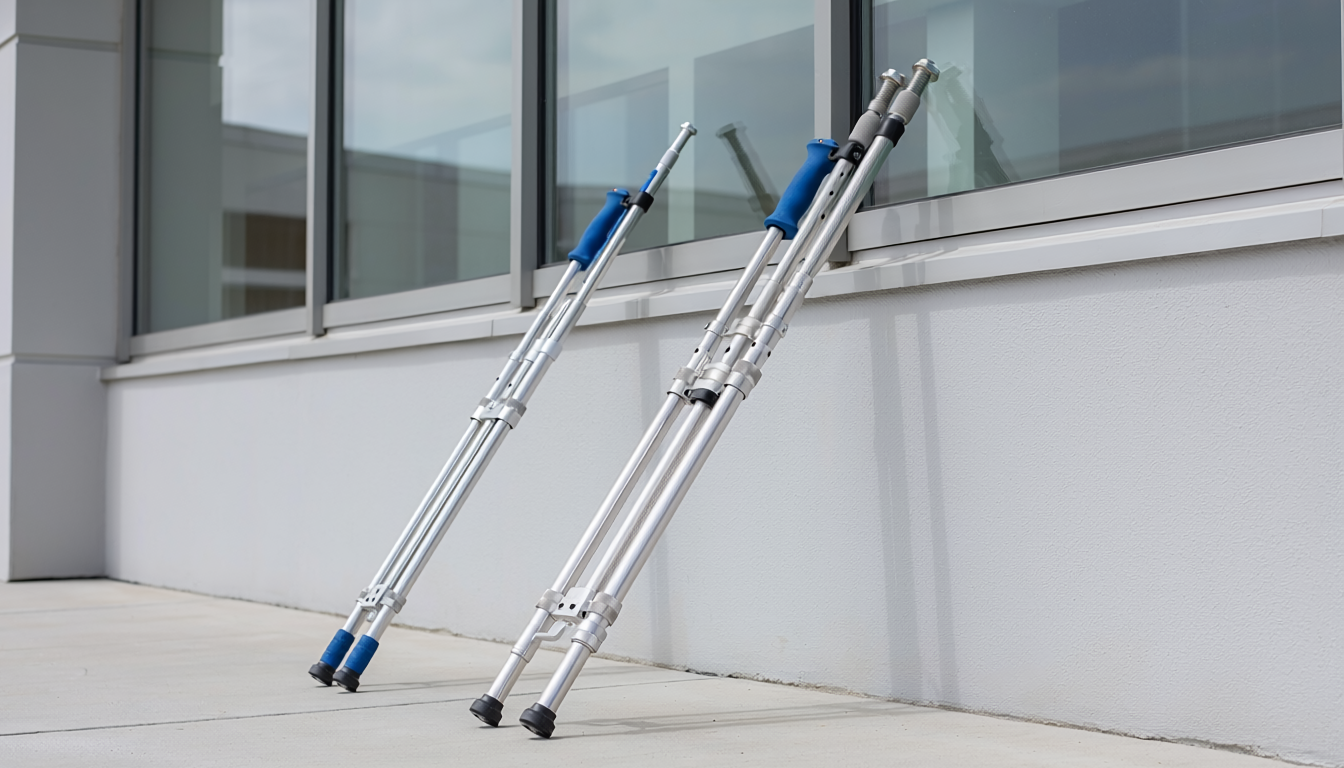
Both poles use Ettore’s three-section telescopic design, which collapses for transport and storage. They’re built from anodised aluminium; lightweight enough to manoeuvre all day without shoulder fatigue, yet rigid enough to maintain control when applying pressure to stubborn marks at full extension. The real question isn’t which pole is “better”; it’s which one matches your typical cleaning scenarios.
Understanding the Practical Height Difference
A 12-foot pole doesn’t just reach 12 feet. When you factor in arm extension and the tool attachment (typically a squeegee or scrubber), you’re effectively working at heights of 4 to 4.5 metres from ground level. That covers standard commercial ground-floor windows, skylights in single-storey warehouses, and most retail signage.
The 18-foot system pushes your effective working height to 6 to 6.5 metres. This brings second-storey windows, high bay warehouse lighting fixtures, and two-storey facade window access into reach without scaffolding or elevated work platforms. For context, a standard commercial storey measures roughly 3.5 to 4 metres floor-to-ceiling; the 18-foot pole gives you genuine two-storey capability.
A Fremantle café owner learned this distinction the hard way after purchasing the Ettore 12 foot extension pole for their heritage building. The ground-floor windows were perfect; quick, streak-free cleans twice weekly. But the upper windows of the adjoining office space remained out of reach. They’d assumed “12 feet” would cover everything. After switching to the 18-foot system, the entire building became accessible from street level.
Weight and Handling Characteristics
The Ettore 12 foot extension pole weighs approximately 0.9 kilograms when collapsed. Fully extended with a squeegee and water, you’re controlling roughly 1.2 to 1.4 kilograms at arm’s length. That’s manageable for most operators across a full shift.
The 18-foot version weighs about 1.3 kilograms collapsed, extending to roughly 1.8 to 2 kilograms when fully loaded. The pole leverage moment arm matters here; you’re not just lifting that extra weight, you’re controlling it through a longer moment arm. Operator fatigue becomes a genuine consideration on jobs requiring sustained overhead work.
Think of it like holding a broom at chest height versus holding the same broom by the very end of the handle, fully extended above your head. The longer the pole, the more the pole leverage moment arm amplifies every ounce of weight at the working end.
For teams doing high-volume commercial work, cleaning 40 shopfronts in a morning for instance, the Ettore 12 foot extension pole often proves more sustainable. For specialised jobs like quarterly facade maintenance on office buildings, the 18-foot system justifies the extra effort by eliminating height access equipment hire costs.
Structural Rigidity and Control
Ettore’s three-section design uses flip-lock mechanisms rather than twist-locks. This matters because flip-locks maintain consistent rigidity regardless of how many times you extend and collapse the pole. Twist-locks can loosen over time, creating telescopic pole flex at full extension.
Both poles exhibit some flex at maximum extension; this is unavoidable with any telescopic system. However, the 18-foot pole shows noticeably more telescopic pole flex at full extension in the upper section when applying pressure to stubborn marks. It’s not a structural weakness, but it does require technique adjustment.
Professional window cleaners compensate by using smoother, more deliberate strokes rather than aggressive scrubbing. You’re working with the pole’s natural movement rather than fighting it. On the 12-foot system, there’s enough rigidity to apply firm, direct pressure without significant deflection.
Here’s a practical test: try writing your name on a window at full extension with each pole. With the 12-foot system, you’ll maintain reasonably precise control. With the 18-foot system, your letters will be larger and less defined because minor hand movements are amplified through the longer shaft. Neither is wrong; they’re just different tools requiring different handling approaches.
Transport and Storage Considerations
Collapsed, the Ettore 12 foot extension pole measures approximately 1.4 metres. It fits diagonally in most commercial vans and utes without modification. You can store it vertically in standard cleaning cupboards or lay it flat under shelving units; collapsed pole vehicle storage is straightforward with the 12-foot system.
The 18-foot pole collapses to roughly 2 metres. This exceeds the interior height of many panel vans, requiring diagonal placement or roof rack mounting. In storage rooms, it often needs dedicated wall brackets rather than fitting into general equipment areas.
For mobile cleaning operations running multiple vehicles, this difference affects fleet configuration. A team using 12-foot poles can operate from compact vans. Teams requiring 18-foot reach often need larger vehicles or external carrying solutions for effective collapsed pole vehicle storage.
Some commercial cleaning companies maintain both systems; 12-foot poles as standard equipment in every vehicle, with 18-foot poles stored at the depot and allocated to specific jobs requiring extended reach. This hybrid approach balances day-to-day accessibility with specialised capability.
Application Scenarios: Which Pole for Which Job
The 12-foot system excels at:
- Retail storefronts with standard ground-floor glazing
- Residential window cleaning for single and double-storey homes
- Vehicle washing bays where you need overhead reach without excessive length
- Interior high dusting in commercial offices and hospitality venues
- Daily maintenance cleaning where speed and manoeuvrability matter
The shorter length allows faster positioning between windows, reduces fatigue during repetitive tasks, and provides better control in confined spaces. When you’re cleaning 15 shopfronts along a single street, the time saved in handling adds up significantly.
The 18-foot system suits:
- Multi-storey commercial buildings where two-storey facade window access is required
- Warehouse facilities with high bay windows and skylights
- Solar panel cleaning on commercial rooftops with parapet access
- Facade maintenance on heritage buildings where scaffolding is impractical
- Signage cleaning for elevated business displays and awnings
These applications justify the extra weight and handling complexity because the alternative; ladders, scaffolding, or elevated work platforms; introduces cost, time, and safety considerations that far outweigh the pole’s limitations.
Safety and Workplace Compliance
Working from ground level with extension poles eliminates many working-at-height risks associated with ladder use. Both Ettore systems keep operators safely grounded whilst accessing elevated surfaces.
However, longer poles introduce different ergonomic challenges. The 18-foot system requires proper technique to avoid shoulder and back strain. Operators need training on body positioning, particularly when working overhead for extended periods.
The 12-foot pole’s lighter weight and shorter length reduce these ergonomic risks, making it more suitable for teams with varying physical capabilities. It’s easier to train new staff and maintain consistent technique across a workforce.
Both poles should be paired with squeegees and mops designed specifically for extension pole work. Standard hand-held squeegees often lack the proper angle adjustment needed for overhead use, leading to poor results and operator frustration.
Cost-Benefit Analysis for Commercial Operations
The 12-foot pole represents the lower initial investment and suits the broadest range of standard commercial cleaning tasks. For businesses building their equipment inventory, it’s typically the foundational purchase.
The 18-foot pole costs more upfront but eliminates height access equipment rental for specific jobs. A single elevated work platform hire can cost $300 to $500 per day in Perth. If you’re doing quarterly facade cleaning on even three buildings, the 18-foot pole pays for itself within the first year.
Consider a commercial cleaning company servicing Perth office buildings. Equipping each team with an Ettore 12 foot extension pole for daily interior and ground-floor work, whilst maintaining two 18-foot poles at the depot for scheduled two-storey facade window access, optimises both day-to-day efficiency and specialised capability.
Durability and Maintenance Requirements
Both poles use the same construction methodology; anodised aluminium sections with stainless steel locking mechanisms. Properly maintained, either system should deliver 5 to 7 years of commercial use.
The longer 18-foot pole experiences greater stress at the locking points due to the increased pole leverage moment arm effect. These mechanisms require more frequent inspection and occasional lubrication to maintain smooth operation. The 12-foot system is more forgiving of irregular maintenance.
After each use, both poles should be collapsed, wiped clean of chemical residue, and stored in a dry location. This prevents corrosion at the locking points and maintains the anodised finish. It’s basic care, but it’s the difference between equipment that lasts years versus equipment that fails prematurely.
Twelve-foot poles maintained consistently by disciplined operators have remained in commercial service for eight years or more. Eighteen-foot poles stored wet in vehicle compartments and never cleaned have failed within 18 months. The equipment is robust; operator discipline determines longevity.
Making the Right Choice for Your Operation
If you’re primarily servicing single-storey commercial premises, residential properties, or retail environments, the 12-foot system provides the reach you need with superior handling characteristics and lower operator fatigue.
If your work regularly involves multi-storey buildings, warehouse facilities, or specialised high-access cleaning, the 18-foot pole becomes essential equipment despite its handling challenges.
Many professional operations eventually acquire both. Start with the 12-foot pole to cover 80% of typical scenarios, then add the 18-foot system when you’ve secured contracts that justify the investment.
Choosing between these poles is like choosing between a ute and a truck. The ute handles better, costs less to run, and suits most daily tasks. The truck is harder to manoeuvre and costs more, but when you need to move something heavy, nothing else will do. Smart operators often need both in their fleet.
Conclusion
The Ettore 12 foot and 18 foot extension poles aren’t competing products; they’re complementary tools designed for different commercial applications. The 12-foot system delivers superior handling, reduced fatigue, and adequate reach for standard commercial cleaning scenarios. The 18-foot pole extends your capability into genuine two-storey territory, eliminating costly height access equipment for specialised jobs.
Your choice depends entirely on the typical heights you’re servicing. Analyse your current contracts and identify where you’re either struggling with inadequate reach or spending unnecessarily on ladders and platforms. That gap between what you can access and what you need to access determines which Ettore system belongs in your equipment inventory.
For any job requiring pole-mounted squeegees, mops, and attachments, having the right accessories matched to your pole system makes the difference between clean glass and constant re-work.
Weskleen Supplies stocks both the Ettore 12 foot and 18 foot systems for Perth commercial operators.
For guidance on which system suits your specific cleaning operations, get in touch with Weskleen Supplies. Call 1800 728 926 and the team will help match your requirements to the right equipment configuration.