


Blog
How to Clean High Reach Commercial Glass Safely Without Ladders

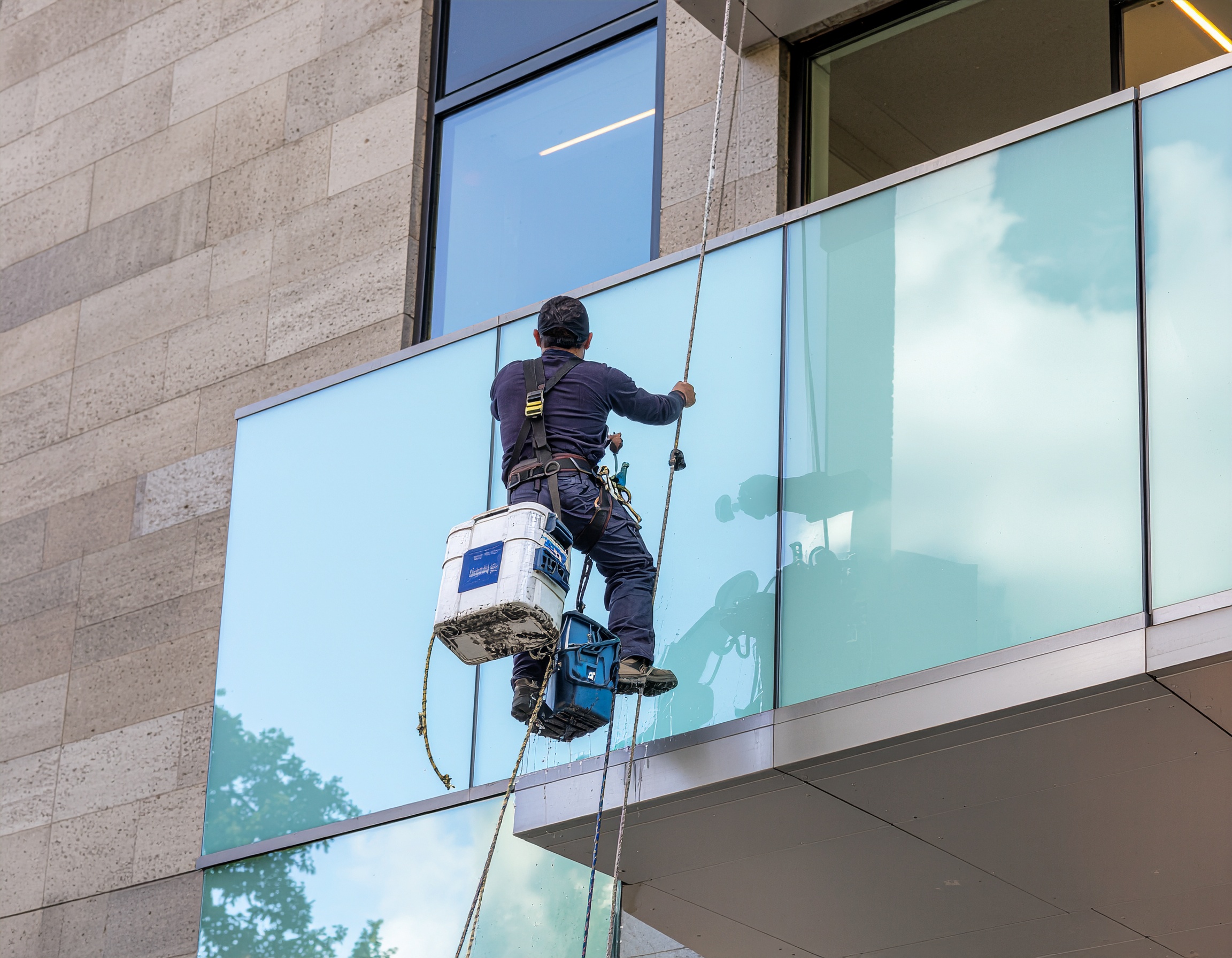
Commercial glass cleaning doesn’t have to mean risking a fall from a ladder. Falls from height remain one of the leading causes of workplace injuries in Australia, with WorkSafe data showing that ladder-related incidents account for a significant portion of serious claims in the cleaning industry. The solution isn’t avoiding high glass altogether – it’s working smarter with the right equipment.
Modern safety glass cleaning equipment has transformed how professionals approach elevated surfaces. What once required scaffolding, ladders, or expensive lift equipment can now be achieved through ground-level glass cleaning with water-fed poles and extension systems that reach heights of 15 metres or more. It’s safer, faster, and often delivers better results than traditional methods.
Why Traditional Ladder Work Creates Unnecessary Risk
Ladders seem straightforward until something goes wrong. A momentary loss of balance, a wet rung, or an awkward reach to avoid repositioning – these split-second moments cause injuries that can end careers.
The statistics don’t lie. High-rise window cleaning safety data from Safe Work Australia shows that falls from ladders result in an average of 10 days off work per incident, with many cases requiring significantly longer recovery periods. For cleaning businesses, that’s not just a safety issue – it’s a productivity and insurance problem.
But there’s another factor most people overlook: quality of work. When you’re perched on a ladder trying to maintain balance while holding a squeegee, you can’t focus entirely on the cleaning technique. You rush. You miss spots. You compromise on the finish because repositioning the ladder multiple times slows the job down.
Ground-level glass cleaning systems eliminate this compromise entirely.
Water-Fed Pole Systems: The Professional Standard
Water-fed pole systems have become the industry benchmark for high-reach glass cleaning, and for good reason. These telescopic poles extend to reach second, third, and even fourth-storey windows while the operator remains safely on the ground.
So how do water-fed pole systems actually eliminate the need for ladders? Here’s how they work: purified water is pumped through the pole to a brush head at the top. The brush agitates dirt and grime on the glass surface, while the pure water rinses it away. Because the water contains no minerals or impurities, it dries spot-free without the need for squeegee work.
The purified water window washing system sounds simple because it is. But the results often surprise people who’ve only used traditional methods. Without dissolved minerals, the water acts like a magnet for dirt – it pulls contaminants away from the glass and doesn’t leave behind the residue that causes streaking.
A facility manager at a Perth office complex switched to water-fed poles after years of contracting ladder-based cleaning services. His observation? “The windows stay cleaner longer. We went from monthly cleans to quarterly, and they still look better than they used to after a week.”
Choosing the Right Extension Pole Length
Not all extension poles are created equal, and choosing the wrong length creates its own set of problems. Too short and you’re back to using ladders. Too long and the pole becomes unwieldy, difficult to control, and fatiguing to operate.
For most commercial applications, poles in the 3.6 to 5.5-metre range handle the majority of ground-floor and first-floor work. The Ettore 3.6m Extension Pole offers excellent reach for standard commercial shopfronts and office windows without the weight penalty of longer models.
When you’re dealing with taller structures – think warehouse skylights, shopping centre atriums, or multi-storey office buildings – the Ettore 5.5m Extension Pole provides the extra reach needed while maintaining structural rigidity. These poles use sectional construction, so you’re not carrying the full length unless you need it.
Weight matters more than most people realise. A pole that feels manageable for the first window becomes exhausting by the twentieth. Look for carbon fibre or reinforced aluminium construction – materials that balance strength with lightness. Your arms will thank you at the end of a full day.
Squeegee Technique for Extended Reach
Using a squeegee on an extension pole requires a different technique than handheld work. You can’t rely on wrist articulation or precise pressure control when the working end is three metres above your head.
The key is letting the tool do the work. Quality squeegees designed for pole mounting feature pivoting heads that maintain contact with the glass as you pull down. You’re guiding the motion, not forcing it.
Start at the top corner and work in overlapping vertical strips. Keep your movements smooth and consistent – jerky motions translate into uneven pressure at the blade, which causes streaking. Think of it like painting a wall with a roller: steady, controlled passes deliver uniform results.
One common mistake? Trying to cover too much width in a single pass. A 35cm squeegee head is about the maximum you want on a pole. Anything wider becomes difficult to control, especially in wind or when working at full extension.
Professional-grade squeegees and mops designed for commercial use feature replaceable rubber blades that maintain sharp edges longer than consumer-grade tools. When the blade starts leaving lines, it’s time to flip or replace it – not time to work harder.
Safety Glass Cleaning Equipment Essentials
Safety glass cleaning equipment goes beyond just the pole and squeegee. A complete system includes components that protect both the operator and the property being cleaned.
Start with proper footwear. Non-slip soles aren’t optional when you’re operating long poles that shift your centre of gravity. Wet pavement plus smooth-soled shoes equals a fall waiting to happen.
Eye protection matters more than you’d think. When you’re working overhead, cleaning solution and rinse water drip down. It’s not just uncomfortable – some commercial glass cleaners are alkaline enough to cause eye irritation.
For water-fed pole systems, you’ll need a purification setup. Purified water window washing typically requires a deionisation filter or reverse osmosis system to remove minerals from tap water. The initial investment pays back quickly in time saved and results delivered. Weskleen Supplies can provide guidance on the right filtration system for your water quality and usage volume.
Don’t overlook pole maintenance. Extension mechanisms accumulate dirt and grit that causes wear and sticking. A quick wipe-down and occasional lubrication of locking collars keeps poles extending smoothly and prevents the frustration of seized sections mid-job.
When to Choose Poles vs. Other Access Methods
Extension poles aren’t always the answer. Some situations genuinely require alternative access methods, and knowing when to use what separates efficient professionals from those who struggle through inappropriate tool choices.
Use ground-level equipment for:
- Regular maintenance cleaning of moderately soiled glass
- Buildings up to four storeys where ground access is available
- Situations where setup time needs to be minimal
- Jobs where noise restrictions apply (no machinery)
Consider alternative access for:
- Heavily soiled glass requiring aggressive scrubbing (first-time cleans, construction cleanup)
- Intricate architectural glass with deep recesses or complex framing
- Heights beyond 15 metres where pole control becomes impractical
- Situations requiring detailed inspection during cleaning
For extreme heights or heavily soiled conditions, boom lifts or scaffolding might be necessary. But these should be the exception, not the default. The cost, setup time, and safety protocols required for mechanical access make ground-based methods preferable whenever possible.
Training Staff on High-Reach Techniques
Equipment only performs as well as the person using it. We’ve seen expensive water-fed pole systems abandoned in storage rooms because nobody took the time to properly train staff on their use.
High-rise window cleaning safety starts with body mechanics. Operating a 5-metre pole isn’t about arm strength – it’s about posture, balance, and leverage. Teach operators to use their core and legs, keeping the pole close to their body rather than extended at arm’s length. It’s the difference between fatigue after an hour versus working comfortably all day.
Practice on ground-level glass first. Before anyone attempts second-storey windows, they should be completely comfortable with the equipment’s weight, balance point, and control characteristics. Set up practice sessions in a car park or on ground-floor windows where mistakes don’t risk property damage.
Cover environmental awareness. Wind affects long poles dramatically. What feels stable in still air becomes difficult to control in even moderate breezes. Train staff to recognise when conditions make elevated work unsafe, and establish clear policies about weather-related work stoppages.
Create a pre-use inspection checklist. Pole locks functioning correctly? Brush or squeegee head secure? Hose connections tight? Water flow adequate? These 30-second checks prevent mid-job failures and the safety risks they create.
Real-World Application: Office Building Case Study
A property management company in Perth was spending roughly $800 monthly on external window cleaning for a three-storey office building. The service required two cleaners with a truck-mounted ladder system, and scheduling was a constant headache due to weather restrictions and parking access issues.
They invested in a water-fed pole system and trained their existing maintenance staff. Initial equipment cost: $2,100. Monthly ongoing cost (water purification consumables): approximately $40.
The payback period was under three months. But the financial return was only part of the story. Their maintenance team could now clean windows during weather windows that would have been unsuitable for ladder work – light rain actually helps the process. They weren’t dependent on external contractor schedules. And they eliminated the liability exposure of having contractors working at height on their property.
Six months in, the building manager reported an unexpected benefit: “Our staff actually enjoy doing the windows now. It’s satisfying work when you can see the results immediately and you’re not worried about falling off a ladder.”
Common Mistakes and How to Avoid Them
Even with proper equipment, certain errors crop up repeatedly. Recognising these patterns helps you avoid them.
Using dirty water defeats the entire purpose of purified water window washing. If your purification filters are exhausted, you’re essentially just wetting the glass and letting minerals dry on it. Monitor your TDS (total dissolved solids) meter and change filters before they’re completely spent.
Inadequate brush agitation leaves dirt behind. The brush isn’t just for applying water – it’s doing the actual cleaning work. Operators sometimes try to speed through jobs by minimising brush contact. This creates the illusion of productivity while delivering poor results that require rework.
Ignoring pole angle creates unnecessary difficulty. The pole should be as vertical as practical, with the brush head doing the angling work. When operators lean poles at extreme angles to reach difficult spots, they’re fighting physics and tiring themselves out needlessly.
Skipping the rinse is tempting when you’re trying to work quickly, but pure water systems require a proper rinse phase after agitation. The brush loosens contaminants; the rinse carries them away. Cutting the rinse short leaves residue that defeats the spot-free drying process.
Maintaining Your High-Reach Equipment
Safety glass cleaning equipment delivers professional results only when properly maintained. We’ve seen $3,000 water-fed systems fail prematurely because basic maintenance was neglected.
Rinse everything after use. Cleaning chemicals, even mild ones, degrade seals and components over time. A 60-second freshwater flush through the system prevents residue buildup that causes failures.
Store poles properly. Leaning them in corners invites warping. Hanging them horizontally or storing them in dedicated pole racks maintains straightness and protects locking mechanisms from damage.
Replace brush heads before they’re worn out. Once bristles start splaying or breaking, the brush loses cleaning effectiveness and can even scratch glass. It’s a consumable item – budget for replacement as part of normal operations.
Check seals and o-rings quarterly. These small components prevent leaks and maintain water pressure. They’re inexpensive to replace but can cause system failures if they deteriorate unnoticed.
For businesses serious about maintaining their investment, establishing a relationship with suppliers who understand professional equipment makes troubleshooting and parts replacement straightforward. When something needs attention, you want answers from people who actually use the equipment, not just sell it.
Making the Switch: Implementation Strategy
Transitioning from ladder-based to ground-based glass cleaning doesn’t happen overnight, and trying to force it creates frustration.
Start with a pilot programme on one building or one team. Work out the technique, identify challenges specific to your properties, and build competence before rolling out broadly. Early wins build confidence; early disasters create resistance.
Keep ladders available initially. Some situations genuinely require them, and having them as a backup option reduces anxiety about the new system. As confidence grows, ladder use naturally decreases.
Document your results. Track time per building, quality issues, safety incidents, and cost savings. Data makes the case for expanding the programme more effectively than anecdotal reports.
Involve your team in equipment selection. The people who’ll use the tools daily often spot practical considerations that managers miss. When staff have input into the decision, adoption improves dramatically.
If you’re ready to explore safer, more efficient approaches to high-reach glass cleaning, the team at Weskleen Supplies can provide guidance tailored to your specific property types and operational requirements. Whether you’re managing a single building or a large portfolio, there’s a ground-based solution that fits your situation.
Conclusion
Ladder-based glass cleaning made sense when it was the only option. It doesn’t make sense anymore. Modern extension systems and water-fed technology enable ground-level glass cleaning that delivers superior results while eliminating the single biggest risk factor in commercial glass cleaning: working at height.
The transition requires investment – in equipment, in training, and in changing established work patterns. But the returns show up quickly: fewer injuries, lower insurance costs, improved productivity, and better cleaning outcomes. For businesses serious about high-rise window cleaning safety and quality, ground-based high-reach cleaning isn’t just an alternative approach. It’s the professional standard.
The question isn’t whether to make the switch. It’s how quickly you can implement systems that protect your staff while improving the service you deliver. Every day spent working from ladders is a day of unnecessary risk and compromised efficiency.
Ready to eliminate ladder work from your glass cleaning operations? 1800 728 926 to discuss equipment options, training support, and implementation strategies that fit your specific operational needs. The right tools, properly applied, transform high-reach glass cleaning from a high-risk job into straightforward, ground-level work that anyone can perform safely.