


Blog
Degreaser Selection for Restaurants: Heavy-Duty vs Everyday Use

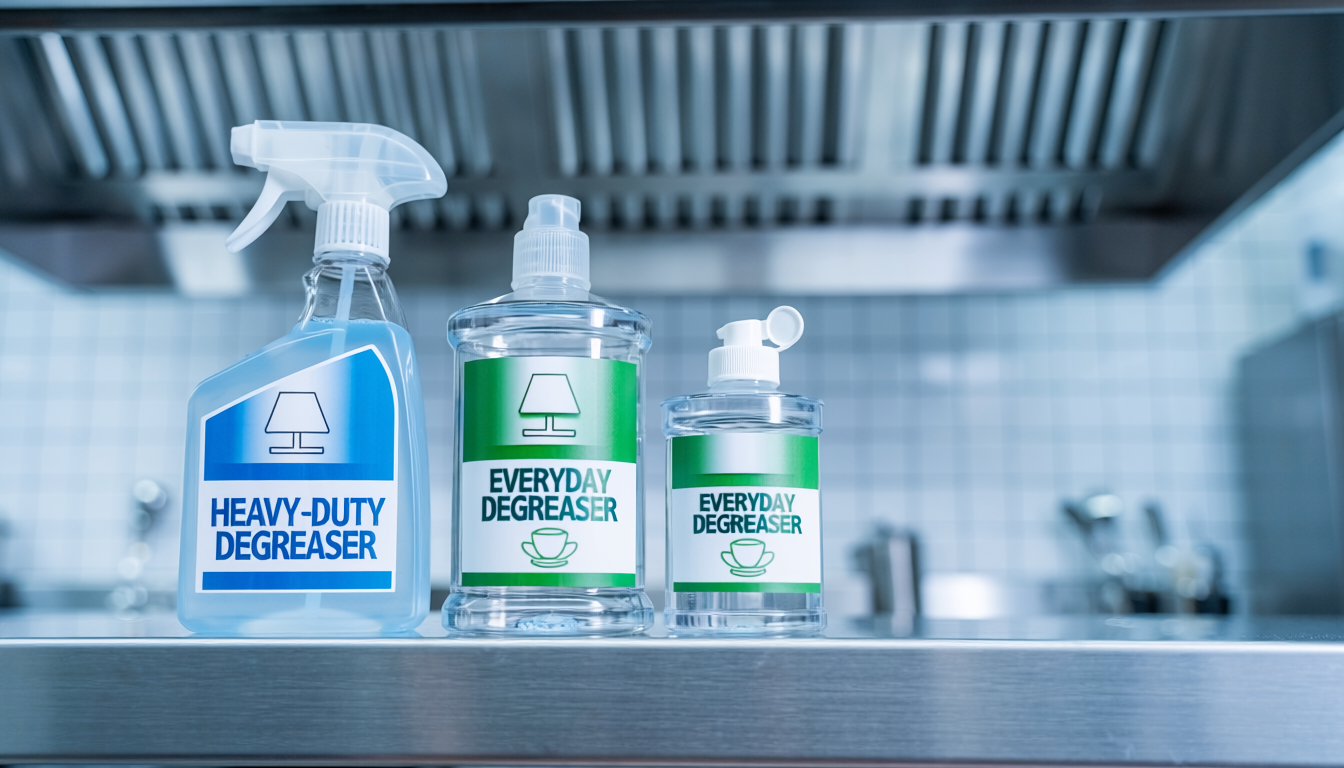
Maintaining a commercial kitchen is a constant battle against the laws of physics. Every time a chef fires up the grill or drops a basket into the fryer, microscopic particles of fat and oil take flight, eventually settling on every available surface. Without a rigorous approach to using the right restaurant degreasers, these thin layers of oil quickly transform into a sticky, polymerised varnish that traps dirt and bacteria. But how do you decide which chemical is right for the job?
When we manage large-scale cleaning contracts, we don’t just grab the strongest bottle on the shelf. We look at the surface, the age of the grease, and the safety of the person holding the trigger. Weskleen Supplies provides the technical range needed to handle everything from a light salad station wipe-down to a full-scale exhaust canopy restoration. Understanding the difference between a daily maintenance product and a heavy-duty solvent is the first step toward a safer, more efficient kitchen.
The Foundation of Kitchen Hygiene
In the world of commercial hospitality, grease isn’t just an aesthetic problem; it’s a significant fire hazard and a breeding ground for pests. If you’ve ever seen the speed at which a flash fire can travel through a greasy duct, you’ll know why insurance companies are so particular about your cleaning logs. Selecting the appropriate restaurant degreasers ensures that your team isn’t just moving grease around, but actually emulsifying and removing it from the environment.
We often see kitchens where the staff uses a “one-size-fits-all” approach. They might use a heavy-duty floor cleaner on a delicate front-of-house benchtop, leading to dulling or even permanent etching. Conversely, using a mild spray-and-wipe on a carbonised chargrill is an exercise in futility. It wastes labour, time, and water. By categorising your cleaning tasks into “Everyday” and “Heavy-Duty,” you can streamline your inventory and protect your assets.
Understanding the Chemistry of Degreasing
To make an informed choice, you need to understand what’s happening at a molecular level. Most grease in a kitchen is organic, meaning it’s derived from animal fats or vegetable oils. These substances are non-polar, which is why water alone won’t touch them. You need a chemical bridge to pull that grease off the surface and into the rinse water.
The Role of pH in Kitchen Grease Removal
Most effective kitchen grease removal relies on alkalinity. On the pH scale, which runs from 0 to 14, degreasers typically sit between 10 and 13.5. These alkaline cleaning solutions work through a process called saponification—literally turning the grease into a crude form of soap that can be washed away.
Think of it like this: trying to clean a deep fryer with a neutral cleaner is like trying to cut through a thick steak with a butter knife. You might eventually get through it, but it’s going to take a lot of unnecessary effort and sweat. An alkaline degreaser provides the “sharpness” needed to break those chemical bonds quickly. However, you must be careful with soft metals. Strong alkaline solutions can turn a shiny aluminium tray into a dull, pitted mess in minutes if left to dwell too long.
Surfactants vs Solvents
While many people use the terms interchangeably, surfactants and solvents work differently. Surfactants lower the surface tension of water, allowing it to “wet” the grease and lift it away. Solvents, on the other hand, actually dissolve the grease. For daily maintenance, a surfactant-heavy cleaner like Mr. Bean 5L All-Purpose Cleaner is often the best choice because it’s effective yet gentle on the hands and surfaces.
Heavy-Duty Degreasers: When to Bring in the Big Guns
There are parts of a restaurant that a standard detergent simply won’t clean. Think of the internal walls of a rotisserie oven or the floor tiles directly underneath the fryers. These areas accumulate “baked-on” grease that has been heated and cooled repeatedly, creating a plastic-like coating.
Heavy-duty restaurant degreasers are formulated with higher concentrations of sodium hydroxide or potassium hydroxide. These are aggressive chemicals designed for periodic deep cleans. They require the use of proper Personal Protective Equipment (PPE), including gloves and eye protection. When your team is tackling these zones, the goal isn’t just cleanliness—it’s restoration.
Managing the Commercial Exhaust Hood Cleaner
The most challenging task in any kitchen is maintaining the ventilation system. A specialized commercial exhaust hood cleaner is designed to cling to vertical surfaces. Because hoods are often stainless steel, they can handle higher alkalinity, but the volume of grease is usually immense.
When applying these heavy-duty agents to filters and canopies, “dwell time” is your best friend. You apply the chemical, let it sit for 10 to 15 minutes to penetrate the layers of oil, and then agitate it. Without this chemical assistance, your staff would spend hours scrubbing with abrasive pads, which eventually scratches the steel and makes it even easier for grease to stick in the future. Effective kitchen grease removal in the ductwork is not just about looks; it’s about making sure your kitchen doesn’t become a statistic in a fire marshal’s report.
Everyday Degreasers for Surface Maintenance
For the 90% of cleaning that happens during and after a shift, you need a product that is fast-acting and rinse-free. Everyday restaurant degreasers are designed to be used on prep tables, cupboard doors, and external equipment panels. They should be powerful enough to cut through fingerprints and light cooking film without requiring a secondary water rinse to remove chemical residue.
Safety is a primary concern for everyday use. Since these chemicals are used frequently throughout the day, they shouldn’t emit harsh fumes that irritate the chefs or the customers. We often recommend using a concentrated foaming agent for high-traffic areas. For example, using a Comet Foaming Cleaner & Sanitiser allows the chemical to stay in contact with the surface longer, ensuring that the alkaline cleaning solutions have time to work even in a busy environment.
The Cost of the Wrong Choice
Consider Marco, who managed a busy Italian bistro in the suburbs. In an attempt to save a few dollars, he started buying a generic, high-caustic industrial degreaser from a hardware store to use on everything. For the first week, the kitchen looked spotless. However, by the end of the month, the seals on his expensive combi-oven began to perish and leak. Even worse, the beautiful marble pass where he plated his dishes started to look dull and “boney” because the harsh chemicals had stripped the natural finish.
What Marco saved in chemical costs, he spent tenfold on equipment repairs and stone restoration. This is why we stress the importance of matching the chemical to the substrate. A commercial exhaust hood cleaner belongs on the hood, not on your front-of-house furniture. Using the right tool for the job isn’t just about cleaning; it’s about asset management.
Understanding Chemical Strength: A Relatable Analogy
Think of choosing a degreaser like choosing a sunscreen. If you’re going for a ten-minute walk to the letterbox, a light moisturiser with a bit of SPF is perfectly fine—it’s comfortable and does the job. But if you’re spending eight hours on a boat in the middle of the ocean, you need the thick, zinc-based heavy-duty stuff.
Using the “ocean-strength” zinc for a quick walk to the mailbox is messy, unnecessary, and a bit of an overkill. Similarly, using the “moisturiser” on the boat will leave you with a painful burn. In the kitchen, using a heavy-duty caustic cleaner for a light spill is a waste of money and a safety risk, while using a light spray on a greasy grill will leave you with a “burnt” reputation for cleanliness.
Selection Criteria for Your Establishment
Before you place your next order, conduct a quick audit of your kitchen surfaces. Are you dealing mostly with stainless steel, or do you have a lot of aluminium and painted surfaces? Do your floors have a non-slip grit that tends to trap oil in the pores?
For floor surfaces, especially in the wash-up area, you need a degreaser that can penetrate the “hills and valleys” of the tile. This is where alkaline cleaning solutions shine, as they can be mopped on and left to work while the team finishes other tasks. If you’re struggling with specific areas or need a tailored plan for your facility, don’t hesitate to contact us for professional advice on chemical integration.
Ultimately, the goal of any degreasing program is to create a “clean-as-you-go” culture. By providing your staff with the right everyday tools and scheduling regular deep cleans with heavy-duty products, you ensure a hygienic environment that protects your staff, your customers, and your bottom line. Whether you’re looking for a high-performance commercial exhaust hood cleaner or a gentle daily spray, we have the expertise to help you make the right selection.