


Blog
Essential Window Cleaning Equipment for WA Facility Managers in 2026

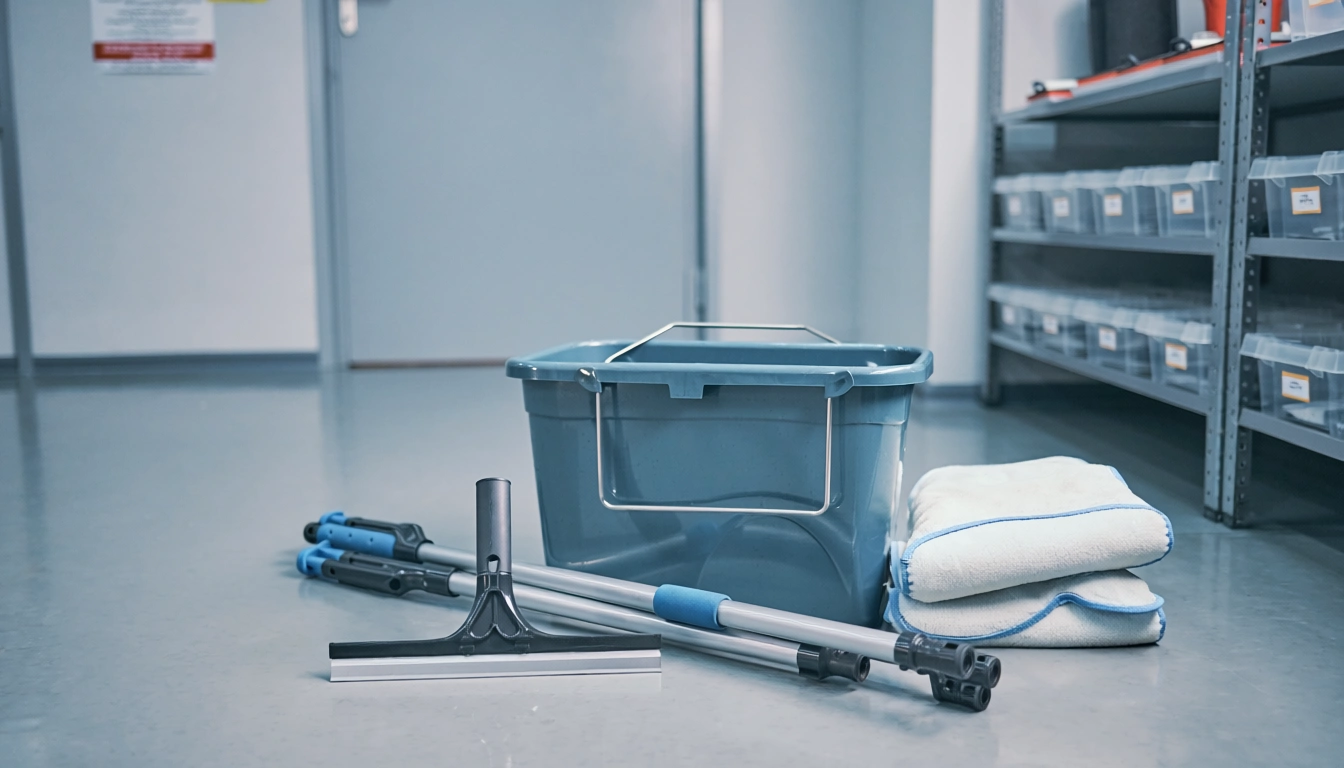
Western Australia’s commercial buildings present unique challenges for facility managers. The harsh UV exposure, salt-laden coastal air, and dust storms that sweep in from the interior demand more from window cleaning equipment than anywhere else in the country.
Professional-grade commercial window cleaning gear isn’t just about achieving a streak-free finish – it’s about maintaining that finish under conditions that would destroy consumer equipment in months. When you’re managing multiple sites across Perth’s CBD or regional facilities in Geraldton and Albany, the difference between adequate gear and the right commercial window cleaning gear becomes a budget issue, not just an aesthetic one.
Why Standard Equipment Fails in WA Conditions
Why does standard equipment fail in WA conditions so quickly? Most facility managers learn this lesson the hard way. A squeegee purchased from a hardware store might work for six months before the rubber blade degrades from UV exposure. By month seven, it’s leaving streaks that require double the labour to fix.
WA coastal pole corrosion is a serious problem that eastern-states suppliers rarely account for. Salt air accelerates metal degradation on extension poles and handles. What works perfectly in Melbourne’s temperate climate becomes unreliable in Fremantle’s coastal environment. The rubber components in squeegees and water-fed poles harden and crack, while plastic fittings become brittle.
Dust storms create another problem entirely. Fine red particles embed themselves in cleaning cloths and scrubbers, turning them into abrasive tools that scratch glass rather than clean it. You’ll need equipment designed to handle particulate contamination without compromising the glass surface.
The Core Equipment Every WA Facility Needs
Building a reliable commercial window cleaning gear kit requires understanding which tools deliver consistent results under local conditions. Weskleen Supplies has worked with facility managers across Western Australia for years, and the facility maintenance window tools that perform reliably share specific characteristics.
Extension Poles That Won’t Let You Down
Height access defines half the challenge in commercial window cleaning. The Ettore 5.5m Extension Pole has become standard equipment for facilities management teams because it solves three problems simultaneously.
First, it reaches second-storey windows without scaffolding or lifts, cutting labour costs by 60% on routine maintenance. Second, the construction materials resist WA coastal pole corrosion – crucial for coastal facilities. Third, the locking mechanism maintains rigidity even when fully extended, preventing the wobble that causes streaks and wasted motion.
For lower-level work, the Ettore 3.6m Extension Pole offers better control on ground-floor windows and interior glass partitions. It’s lighter, which matters when your team is cleaning 200+ windows in a shift.
Think of extension poles like scaffolding – you wouldn’t use residential-grade materials on a commercial project. The same principle applies here. Professional facility maintenance window tools use aerospace-grade aluminium and reinforced locking collars because they’re designed for daily use, not occasional home maintenance.
Squeegees Built for Volume Work
A facility manager at a Perth office complex once calculated that her team made approximately 15,000 squeegee strokes per month across their building portfolio. Consumer squeegees weren’t lasting 60 days under that workload.
Commercial squeegees use dual-durometer rubber – a softer outer edge that conforms to glass irregularities and a firmer inner core that maintains blade shape. This construction extends squeegee rubber blade durability significantly, taking blade life from months to years under heavy professional use.
The channel design matters more than most people realise. Professional channels distribute pressure evenly across the entire blade length, preventing the centre-heavy wear pattern that creates streaks. When you’re working with squeegees and mops designed for commercial applications, you’ll notice the difference in the first week.
Replace rubber blades every three months in coastal environments, every six months inland. Squeegee rubber blade durability drops sharply in WA’s salt-laden air – it’s not about visible wear, it’s about maintaining the microscopic edge that creates truly clean glass.
Water-Fed Pole Systems: When They Make Sense
Traditional squeegee work has its limits. Buildings above three storeys require either expensive lift equipment or a water-fed pole system. For WA facility managers, this technology has shifted from luxury to necessity over the past five years.
Water-fed systems pump purified water through telescopic poles fitted with brush heads. The pure water (with total dissolved solids below 10 parts per million) acts as a magnet for dirt and minerals, lifting them from the glass surface. Because there are no dissolved minerals in the water, it dries without spots or streaks.
Here’s what matters for WA conditions: Perth water TDS filtration requires a four-stage minimum system. Perth’s water is relatively hard, with TDS readings between 200-400 depending on your suburb. A basic two-stage system won’t achieve the purity levels required for spot-free drying.
The initial investment runs between $3,000-$8,000 for a complete system, but the labour savings justify this within 18 months for most multi-storey facilities. One operator can clean four times the window area compared to traditional methods, and you eliminate the safety risks and costs associated with elevated work platforms. Factoring Perth water TDS filtration equipment into your Stage Three budget ensures the system performs to its potential from day one.
Cleaning Solutions That Actually Work
Water alone won’t cut through WA’s combination of salt spray, industrial fallout, and organic matter from bird droppings. You need cleaning chemistry that works fast without leaving residue.
Professional window cleaning solutions contain surfactants that reduce water’s surface tension, allowing it to spread evenly across glass and penetrate under dirt films. The pH level should sit between 6.5-8.5 – neutral enough to avoid glass etching but effective enough to break down organic contaminants.
Mr. Bean 5L All-Purpose Cleaner has found its way into many facility management supply rooms because it handles light to moderate window soiling while remaining safe for daily use. The coffee-scented formula might seem like a gimmick, but it eliminates the chemical smell that can trigger complaints in occupied buildings.
For heavily soiled glass – think windows that haven’t been cleaned in six months or coastal facilities with salt buildup – you’ll need a more aggressive approach. Mix your cleaning solution at double strength for the first pass, then follow with a standard-strength rinse. This two-stage process removes contamination without requiring excessive scrubbing that risks scratching.
Maintaining Equipment for Longevity
Commercial window cleaning gear represents a significant capital investment. Proper maintenance extends its working life by 3-5 years and ensures consistent results.
Rinse all equipment with fresh water after every shift. Salt residue is insidious – WA coastal pole corrosion continues even when equipment is stored. A 30-second rinse prevents 90% of premature equipment failure in coastal environments.
Store squeegees horizontally with blades protected. Vertical storage causes rubber to deform under its own weight, creating permanent waves in the blade edge. Squeegee rubber blade durability depends heavily on proper storage – a simple rack system keeps blades straight and extends their useful life.
Lubricate extension pole locking mechanisms monthly with dry silicone spray. Oil-based lubricants attract dust, which creates an abrasive paste that damages the locking collars. Silicone provides lubrication without the contamination risk.
Inspect equipment before each shift. A 60-second check catches loose fittings, damaged blades, and worn components before they cause problems. It’s faster to replace a squeegee blade during prep than to redo 20 windows because someone didn’t notice the nick in the rubber.
Safety Equipment You Can’t Skip
Window cleaning from height remains one of the highest-risk activities in facilities management. The right safety equipment isn’t optional – it’s the difference between a productive day and a WorkSafe investigation.
Harnesses and fall arrest systems are mandatory for any work above 2 metres where fall protection isn’t provided by the building structure. WA regulations are explicit on this point, and the penalties for non-compliance have increased substantially since 2024.
But safety goes beyond fall protection. Quality work gloves prevent cuts from glass edges and metal fittings while maintaining the dexterity needed for precision work. Chemical-resistant gloves are essential when handling concentrated cleaning solutions.
Non-slip footwear with electrical hazard protection provides stability on wet surfaces and protection if equipment contacts overhead power lines – a real risk when working with extension poles near buildings.
Building Your Equipment Kit: A Staged Approach
Most facility managers don’t need to purchase everything simultaneously. A staged acquisition approach spreads costs while building capability.
Stage One (Months 1-3): Core squeegees, extension poles, and basic cleaning solutions. This foundation handles 80% of routine window maintenance across most facilities. Budget approximately $800-$1,200 for quality facility maintenance window tools that’ll last.
Stage Two (Months 4-6): Specialised tools for difficult situations. Add scrapers for paint overspray, specialised brushes for textured glass, and backup equipment for your most-used items. Another $400-$600 investment.
Stage Three (Months 7-12): Consider water-fed pole systems if your facility portfolio includes multi-storey buildings. At this stage, Perth water TDS filtration equipment becomes a key part of the investment – don’t overlook it when calculating your total system cost.
Keep equipment organised with a Cleaning Hand Caddy or similar system. When your team can find what they need in five seconds instead of five minutes, you’ve just improved productivity by 10% without spending a cent on new facility maintenance window tools.
What Changes After the Wet Season
Western Australia’s winter months bring challenges that summer cleaning never encounters. Rain doesn’t clean windows – it deposits dissolved minerals and airborne particles that create a film requiring different cleaning approaches.
Post-rain cleaning demands more aggressive solutions and additional rinses. The contamination layer is thinner but more adhesive than summer dust. You’ll use 30% more cleaning solution during winter months, and squeegee blades wear faster from the increased friction.
Schedule deep cleaning for early spring, after the last significant rains but before summer UV intensifies. This timing gives you the cleanest possible starting point for the harsh summer months ahead.
When to Call Specialists vs. Handle In-House
Every facility manager faces this calculation: which window cleaning tasks justify in-house resources, and when does specialist contractor engagement make financial sense?
Handle in-house: ground floor and accessible second-storey windows on regular maintenance schedules, internal glass partitions and doors, and routine cleaning on buildings your team knows well.
Engage specialists: buildings above three storeys without water-fed pole capability, first-time cleaning of heavily contaminated glass, situations requiring rope access or swing stages, and any scenario where safety equipment costs exceed contractor fees.
The crossover point typically occurs around 15 metres of working height. Below that, equipped in-house teams are more cost-effective. Above it, specialist contractors bring both equipment and insurance coverage that’s difficult to justify for occasional use.
Technology Trends Worth Watching
Window cleaning technology evolves slower than other facilities management areas, but several developments deserve attention from WA facility managers.
Robotic window cleaners for large glass facades are moving from experimental to practical. Current systems work reliably on buildings with regular glass panel layouts, though they still struggle with complex architectural features. The technology isn’t ready to replace human cleaners, but it’s effective for supplementary maintenance between full cleaning cycles.
Photocatalytic glass coatings break down organic matter using UV light and rain, reducing cleaning frequency by up to 50%. The coating costs add 15-20% to window replacement projects, but the labour savings recover this within three years for most commercial applications.
Smart scheduling systems use weather data and building occupancy patterns to optimise cleaning schedules. Instead of fixed monthly cleaning, these systems adjust frequency based on actual conditions – increasing frequency after dust storms, reducing it during clean weather periods.
Making Equipment Decisions That Last
The commercial window cleaning gear you select in 2026 will likely serve your facilities for the next 5-7 years. Making decisions based on initial purchase price alone typically costs 40% more over the equipment lifecycle than choosing based on total cost of ownership.
Calculate replacement frequency, consumable costs, and labour efficiency differences. A squeegee that costs twice as much but lasts three times longer while requiring 20% less labour to achieve the same results is the obvious choice, yet many purchasing decisions ignore these factors.
Source equipment from suppliers who understand WA conditions specifically. A floor scrubber supplier in Perth knows what works locally in ways that an eastern states distributor never will. The same principle applies to commercial window cleaning gear – local knowledge matters.
Conclusion
Western Australia’s environmental conditions demand more from commercial window cleaning gear than most other regions. Salt air, UV intensity, and dust contamination destroy consumer-grade tools within months, making professional equipment not just preferable but economically necessary.
The core commercial window cleaning gear investment – quality extension poles, commercial squeegees, and appropriate cleaning solutions – runs between $1,200-$2,000 for most facility management operations. This foundation handles routine maintenance across ground-level and low-rise buildings effectively.
Water-fed pole systems represent the next capability level, transforming multi-storey window maintenance from a specialist contractor expense to an in-house capability. The $3,000-$8,000 investment recovers within 18 months for facilities with significant elevated glass.
Equipment longevity depends entirely on maintenance discipline. Daily rinsing, proper storage, and monthly inspections extend working life by years and ensure consistent results. The 30 minutes per week invested in equipment care prevents thousands in premature replacement costs.
For facility managers building or upgrading their window cleaning capability, Weskleen Supplies can help you identify the right equipment configurations for your facility portfolio. We’ve worked with commercial cleaning operations across Western Australia and understand which facility maintenance window tools deliver reliable results under local conditions. 1800 728 926 to discuss equipment options specific to your sites.