


Blog
How to Eliminate Restroom Odours in Commercial Buildings

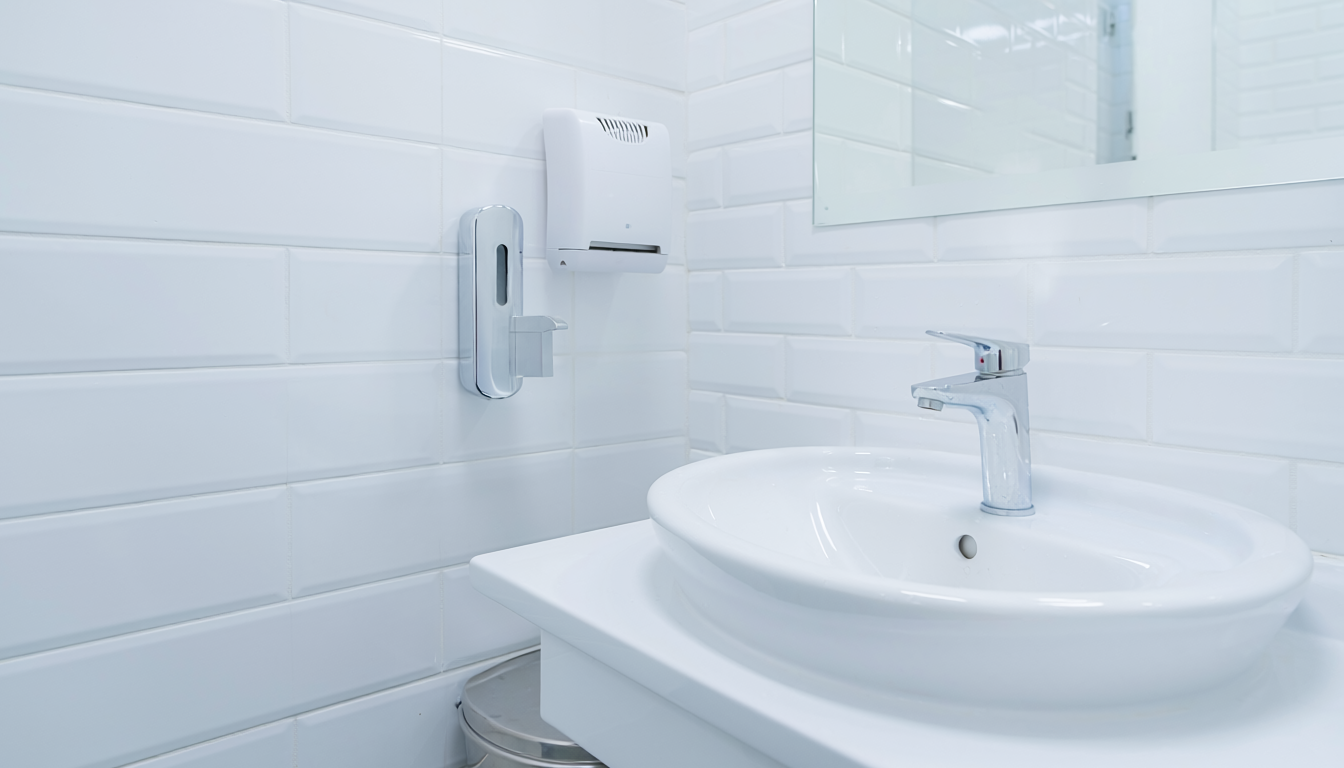
Restroom odour management is the ultimate test for any facility manager. You can have the most modern lobby in the city, but if a tenant walks into a bathroom that smells of ammonia and neglected drains, that’s the only thing they’ll remember. It’s a visceral experience that signals a lack of care and professionalism. But why do some bathrooms smell fresh an hour after cleaning while others reek within minutes? Weskleen Supplies has spent over a decade helping Perth businesses solve these exact challenges.
The reality is that most cleaning programs focus on masking smells rather than achieving true restroom odour elimination. We’ve all walked into a restroom that smells like a mix of “tropical breeze” and stale urine. That happens when you layer perfumes over bacteria without actually removing the source. For high-traffic commercial buildings, this isn’t just a maintenance issue; it’s a reputation issue.
To truly fix the problem, you have to move away from a process-based mindset and toward an outcome-based one. This requires understanding the chemistry of urine, the biology of bacteria, and the mechanics of your building’s plumbing and ventilation. It’s a multi-layered fight, but it’s one you can win with the right strategy.
The Science Of Restroom Odour Elimination
To understand how to get rid of the smell, you first have to understand what the smell actually is. When urine leaves the body, it’s virtually odourless. The “bathroom smell” we all recognize is actually the byproduct of bacteria feeding on uric acid salts. As these bacteria break down the salts, they release ammonia gas. If you don’t remove those salts, the bacteria will keep eating, and the smell will keep returning.
Understanding The Source Of The Smell
Uric acid salts are incredibly stubborn. They aren’t water-soluble, which means your standard floor mop and a bucket of water won’t touch them. In fact, if you’re just mopping with water, you’re likely just spreading the salts across the grout lines, providing a feast for bacteria. These salts hide in the porous surfaces of floor tiles, the underside of toilet rims, and deep inside the pipes of urinals.
Think of odour management like a leaky boat. You can’t just keep bailing water out of the hull; you have to plug the holes. Spraying an air freshener is the equivalent of bailing water. Cleaning the uric acid salts is plugging the leak. If you don’t stop the source of the “water,” your boat is eventually going to sink, or in this case, your restroom is going to stay smelly.
The Role Of Enzymatic Restroom Cleaners
This is where the right chemistry makes all the difference. Traditional disinfectants are great for killing bacteria on contact, but they don’t do much for the food source (the salts). This is why enzymatic restroom cleaners have become the gold standard in commercial cleaning. These products contain “good” bacteria that produce enzymes specifically designed to digest uric acid and other organic matter.
The beauty of enzymes is that they keep working long after you’ve finished scrubbing. As long as there is a food source and moisture, the enzymes will continue to break down the waste. However, you must give them dwell time. You can’t just spray and wipe. You need to let the product sit on the surface for five to ten minutes to allow the biological action to take place.
Urinal Deep Cleaning Strategies
If you have urinals in your building, they are likely the primary source of your odour problems. Urinals are prone to “uric scale,” a hard mineral deposit that forms inside the trap and the pipes. This scale not only smells terrible but can eventually lead to expensive plumbing blockages.
Successful urinal deep cleaning requires getting into the areas you can’t see. Most people clean the face of the porcelain and think they’re done. You need to use a mirror to check under the rim where water is dispensed. This area often harbours thick layers of bacteria-laden scale that never gets touched by a standard wipe-down.
I remember a facility manager, Jim, who ran a large office complex in the Perth CBD. He was getting constant complaints about a “phantom” smell in the Level 4 men’s room. His team was cleaning it three times a day, and it looked spotless. We went in with a high-intensity UV light and looked at the underside of the urinal rims. It looked like a science experiment gone wrong. Once his team performed a proper deep clean using a Comet Foaming Cleaner & Sanitiser, the smell vanished overnight.
Floor Maintenance And Commercial Floor Drainage
The floor is the largest surface area in your restroom, and in a commercial setting, it’s often the most neglected in terms of deep cleaning. Most cleaners use a “damp mop” method. While this makes the floor look shiny, it’s often just pushing dirty water and bacteria into the grout lines.
Managing Porous Tile And Grout
Grout is porous, meaning it acts like a sponge for liquids. If a restroom floor isn’t sealed properly, urine can soak deep into the sub-floor. To combat this, you need a regular schedule of deck scrubbing. Using a stiff brush with an enzymatic cleaner allows you to agitate the grout lines and pull the bacteria to the surface.
Once you’ve agitated the floor, don’t just mop it up. Use a wet vacuum or a floor squeegee to remove the dirty slurry. If you leave the water to air-dry, the bacteria just settles back into the pores. It’s also vital to ensure you’re using a quality Oates Ergo Extra-Long Toilet Brush for those tight corners around the base of the toilet where the mop can’t reach.
Maintaining Floor Drains And Traps
One of the most common causes of sewer-like smells in restrooms is a dry floor drain. Every drain has a P-trap, which is designed to hold a small amount of water to act as a seal against sewer gases. In many modern commercial buildings, the floors are so well-engineered that water rarely enters the floor drains. Over time, the water in the trap evaporates, the seal is broken, and sewer gas enters the room.
The fix is simple: establish a weekly “trap priming” schedule. Have your team pour a litre of water down every floor drain once a week. For better results, add a small amount of a biological cleaner to the water to prevent commercial floor drainage pipes from developing a stinky biofilm.
Mechanical Ventilation And Exhaust Fan Maintenance
You can clean until the cows come home, but if your ventilation isn’t working, the restroom will always feel “heavy” and damp. Moisture is the fuel that bacteria needs to grow. If the humidity in the restroom stays high, the bacteria on the walls and floors will thrive.
Regular exhaust fan maintenance is a non-negotiable part of odour control. Dust builds up on the intake grilles and the fan blades, significantly reducing the volume of air the system can move. A simple test is to hold a single sheet of toilet paper up to the grille while the fan is running. If the fan can’t hold the paper against the grille, your airflow is insufficient.
You should aim for a minimum of ten to twelve air changes per hour in a commercial restroom. If your building’s HVAC system has been “optimised” for energy savings, the restroom exhaust might have been dialed back too far. It’s a classic case of saving a few dollars on electricity while spending thousands on air fresheners and tenant complaints.
Establishing A High-Frequency Cleaning Protocol
Commercial restrooms require a different approach than residential ones. The sheer volume of traffic means that bacteria is constantly being reintroduced. A once-a-day clean is rarely enough for a building with hundreds of occupants.
You need to distinguish between a “refresh” and a “deep clean.” A refresh happens several times a day and involves wiping down touchpoints, checking supplies, and a quick spot mop. The deep clean happens after hours and is where the real restroom odour elimination happens. This is when the chemicals are allowed to dwell, the floors are scrubbed, and the drains are treated.
Training your staff is the most important part of this equation. They need to understand the “why” behind the process. When a cleaner knows that waiting ten minutes for a sanitiser to work is the difference between a smelly bathroom and a fresh one, they’re far more likely to follow the protocol.
Essential Equipment For Restroom Hygiene
Using the right tools doesn’t just make the job easier; it makes the results more consistent. For example, using a long-handled brush for scrubbing the base of partitions and toilets saves your staff’s backs and ensures they can reach the areas where urine usually splashes and collects.
Colour-coding is another vital tool. You should never use the same cloth on a toilet seat that you use on a sink. It sounds obvious, but in the rush of a shift, mistakes happen. Using red for high-risk areas (toilets/urinals) and blue for low-risk areas (mirrors/sinks) is a simple way to prevent the spread of bacteria.
Automated systems also play a role. Automated soap dispensers and touchless taps reduce the number of surfaces people have to touch, which in turn reduces the amount of organic matter left behind. Similarly, automated dilution systems ensure that your chemicals are mixed at the perfect ratio every time. Too weak, and they won’t kill the bacteria; too strong, and they can leave a sticky residue that actually attracts more dirt.
Conclusion
Eliminating restroom odours in a commercial building isn’t about finding a stronger scent; it’s about removing the biological source of the smell. By combining enzymatic cleaners, proper floor maintenance, and consistent ventilation, you can create an environment that feels truly clean. It requires a commitment to the right process and the right products, but the result is a facility that reflects the high standards of your business.
If you’re ready to upgrade your building’s hygiene standards, the first step is auditing your current chemical inventory and equipment. Stop bailing water and start plugging the leaks. Your tenants, and your nose, will thank you. For expert advice on the best products for your specific facility, contact us today to discuss a tailored solution.