


Blog
Touchless Washroom Dispensers vs Manual: Which is Better for Your Washroom?

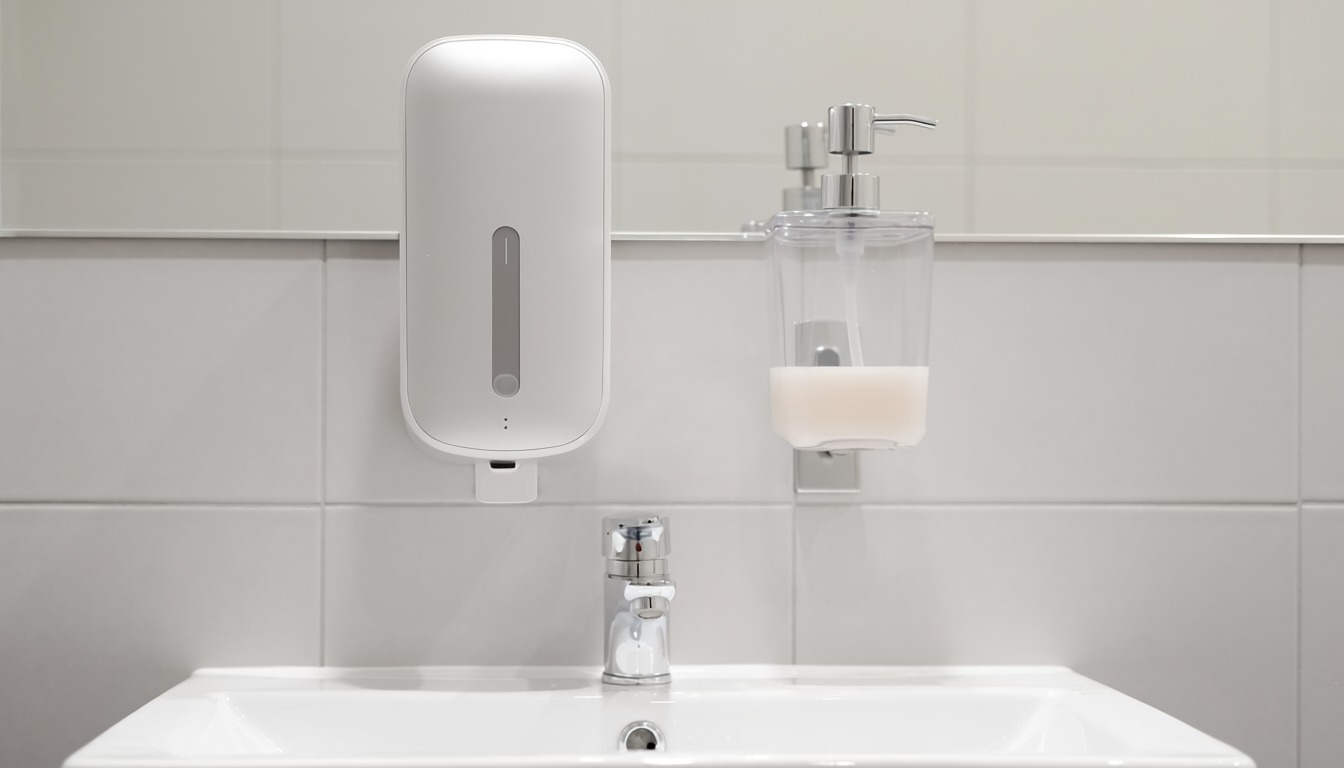
The modern washroom has moved far beyond being a purely functional space; it is now a critical touchpoint for health, safety, and brand perception. For facility managers, the choice between traditional manual pumps and high-tech touchless washroom dispensers often feels like a tug-of-war between budget and innovation. While manual units have been the reliable workhorse of the industry for decades, the rapid shift towards contactless technology is driven by a fundamental change in how users interact with shared surfaces. Weskleen Supplies understands that the right equipment doesn’t just dispense soap, it manages risk and controls costs.
The Evolution of Washroom Hygiene Standards
In the past, a simple wall-mounted soap bracket was considered sufficient for any commercial environment. However, the expectations of the public have reached a point where physical contact with a shared fixture is often viewed with hesitation. This shift has placed touchless washroom dispensers at the forefront of facility upgrades. When we look at the data from high-traffic venues, the move to automation isn’t just about the “wow factor.” It’s a calculated response to the need for a more sanitary user journey.
Automation has transformed the washroom from a series of high-touch obstacles into a seamless, hands-free experience. This transition is particularly noticeable in professional settings where staff turnover and absenteeism due to illness can impact the bottom line. By removing the need to touch a lever that has been pressed by hundreds of others, businesses are actively breaking the chain of infection.
Hygiene and Cross-Contamination Risks
The primary argument for sensor-driven technology is, and always will be, hygiene. Manual dispensers require a user to press a button or pull a lever with their dirty hands before they have even started the washing process. This creates a cycle where the very device meant to facilitate cleanliness becomes a reservoir for pathogens.
The Science of Contact Points
Research into hand hygiene technology shows that manual handles can harbour a diverse range of bacteria, including E. coli and MRSA. While most users will wash their hands immediately after touching the dispenser, the risk of residual contamination remains. A touchless system eliminates this interaction entirely. By using infrared sensors to trigger the release of soap or sanitiser, the user avoids all contact with the hardware. This is especially critical in healthcare and food preparation areas where high-standard infection control is non-negotiable.
Impact on User Confidence
Consider a busy airport or a high-end restaurant. If a guest walks into a washroom and sees a grimy, leaking manual dispenser, their perception of the entire establishment’s cleanliness is immediately tarnished. Automated systems project an image of a managed, modern facility. They tell the user that the business cares about their health. This “perceived hygiene” leads to higher user satisfaction and, crucially, better compliance with handwashing protocols. When the process is easy and “clean,” people are more likely to do it correctly.
Operational Efficiency and Cost Analysis
Many facility owners hesitate at the initial price tag of automatic units, which can be significantly higher than manual alternatives. However, the real value lies in the “cost per use.” Manual dispensers are notorious for being “over-pumped,” with users often taking three or four times the amount of soap actually required to clean their hands.
Automatic touchless washroom dispensers use precision portion control. Each activation releases a pre-measured amount of foam or liquid, typically around 0.4ml to 1ml. This prevents the “piles of soap” effect in the sink and drastically reduces the consumption of consumables. Over a twelve-month period in a high-traffic office, the savings on soap alone can often offset the initial investment in the hardware. If you’re looking to upgrade your current setup, you might consider checking out our Comet Foaming Cleaner & Sanitiser for a professional-grade solution that pairs well with high-efficiency systems.
Maintenance and Reliability Comparison
Reliability is the area where manual dispensers often hold their ground. Because they rely on simple mechanical springs and vacuum pressure, there are fewer things that can go wrong. However, “simple” does not always mean “low maintenance.”
Durability of Manual Systems
Manual pumps are subject to physical wear and tear that automatic units simply don’t face. We’ve all seen manual dispensers with snapped levers or buttons that have become stuck due to dried soap buildup. Because users have to physically manipulate the device, they are also more prone to vandalism or rough handling. In an industrial setting, a robust manual unit like the Soap Dispenser 1.1L Stainless Steel is often preferred because it can withstand significant force without failing.
Technical Upkeep of Automatic Units
Automatic units introduce a different set of maintenance tasks. The most common concern is battery life. A dead battery means a non-functional washroom, which is a major point of frustration for users. To manage this, many modern facilities are opting for hardwired units or systems that use long-life power cells capable of lasting over 50,000 cycles. Regular commercial soap dispenser maintenance should include a quick wipe of the sensor lens to prevent dust interference, ensuring the unit doesn’t “ghost fire” or fail to detect hands.
+1
The Tale of the Tiring Tap: A Fictional Anecdote
Take James, who manages a mid-sized office building in Perth. For years, his maintenance team was constantly clearing “soap sludge” from the bathroom floors. Users were aggressively hitting the manual pumps, causing soap to fly past their hands and land on the tiles. Not only was this wasting product, but it also created a slipping hazard that required constant attention from the janitorial staff.
After James replaced the manual units with touchless washroom dispensers, the floor remained dry. The janitors saved twenty minutes per shift on floor scrubbing, and the soap budget dropped by 15% in the first quarter. What James thought was a “luxury” upgrade turned out to be one of the most practical maintenance decisions he’d made all year.
Environmental and Sustainability Considerations
Sustainability is no longer a buzzword; it’s a procurement requirement. Automated systems are inherently more sustainable because they reduce waste. When combined with foam soap technology, they also reduce water usage. Because the soap is already aerated, it requires less water to lather and rinse off the hands.
Furthermore, many touchless systems use large-capacity cartridges that generate less plastic waste per litre of soap compared to small, disposable manual bottles. If you are looking to improve your facility’s green credentials, focusing on high-capacity, controlled-dispense units is a great place to start. For those looking for more guidance on specific hardware, you can contact us for a tailored recommendation based on your building’s environmental goals.
The Toothbrush Analogy: A Relatable Comparison
Think of the difference between a manual and an electric toothbrush. A manual brush is cheap, portable, and will never “run out of batteries.” It gets the job done if you put in the effort. However, an electric toothbrush does the hard work for you. It uses a timer to ensure you brush long enough and pressure sensors to make sure you don’t damage your gums.
In the washroom, a manual dispenser is that manual brush, it works, but it relies entirely on the user’s behaviour. An automatic dispenser is the electric version; it manages the “pressure” (the amount of soap) and the “timing” (the delay between dispenses) to ensure a consistent, high-quality result every time. You pay more for the technology, but you get a better, more reliable outcome for your health.
Choosing the Right System for Your Facility
The “best” system depends entirely on your environment. If you are managing a high-end corporate office, an airport, or a healthcare clinic, touchless washroom dispensers are effectively mandatory to meet modern hygiene expectations. The reduction in cross-contamination and the improved brand image far outweigh the cost of battery replacements.
However, if you are outfitting a remote construction site or a budget-focused warehouse where “no-fail” operation is more important than aesthetics, a high-quality manual stainless steel unit is a sensible choice. Many facilities find that a hybrid approach works best, using touchless soap and towel dispensers to maximize hygiene, while perhaps sticking to manual units for less critical items like hand lotion or specialised industrial grit soaps.
Ultimately, the goal is to provide a washroom that feels safe and functions efficiently. By investing in the right dispensing technology, you aren’t just buying a box for soap; you’re investing in the health and productivity of everyone who walks through your doors.