


Blog
Safe Operation Guide for the Ettore 18 Foot Extension Pole

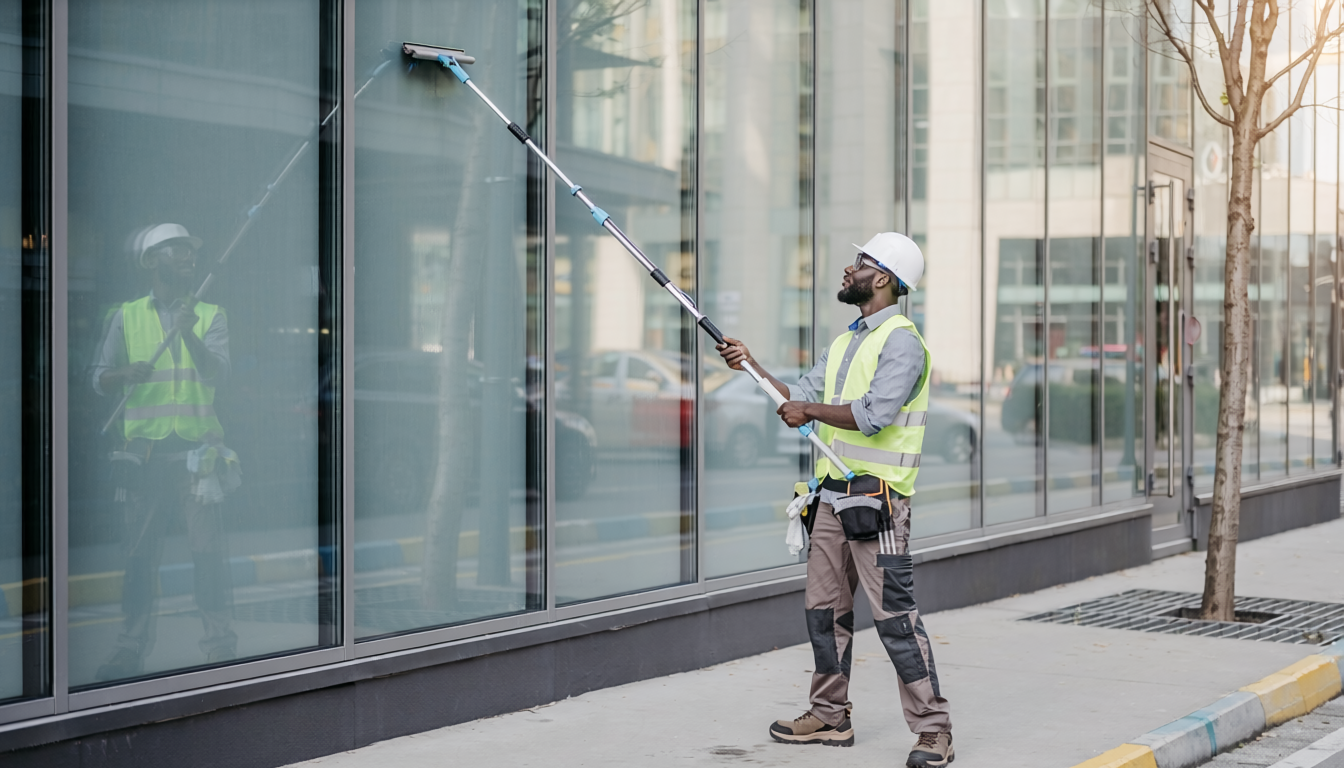
Working at height doesn’t mean working at risk. At 18 feet fully extended, the Ettore 18 foot extension pole is a professional-grade tool that demands respect, proper technique, and a thorough understanding of the forces involved. Used correctly, it transforms how cleaning teams approach elevated surfaces; windows, gutters, solar panels, and signage become accessible from ground level without ladders or scaffolding.
Too many operators treat extension poles like oversized broom handles. That approach leads to strained backs, damaged property, and equipment failure. The difference between efficient overhead cleaning and a workplace incident often comes down to understanding leverage, balance, and the mechanical limitations of telescoping poles.
This guide covers the practical safety protocols you need before, during, and after using the Ettore 18 foot extension pole. Whether you’re a facility manager training new staff or a cleaning professional refining your technique, these methods prevent the most common mistakes that compromise both safety and results.
Understanding the Ettore 18 Foot Extension Pole System
The Ettore 18 foot extension pole isn’t a single rigid piece; it’s a three-section telescoping system that extends from approximately 6 feet to 18 feet. Each section locks into place with twist-lock mechanisms that create a rigid structure when properly engaged.
The pole construction uses fibreglass-reinforced tubing that balances strength with manageable weight. At full extension with a squeegee or brush attachment, you’re managing roughly 3-4 kg, but the physics of leverage multiply that weight significantly at the working end.
Think of it like a fishing rod. A 500g fish feels manageable close to your body, but at the end of a 4-metre rod, your arms work against considerable torque. The same principle applies here; 18 feet of extension creates substantial mechanical disadvantage that affects control, stability, and operator fatigue.
The threaded tip accepts standard professional cleaning attachments: squeegees, T-bars, brushes, and specialty tools. This versatility makes it valuable across applications, but each attachment changes the pole’s balance point and handling characteristics.
Pre-Operation Safety Checks You Can’t Skip
Before extending a single section, inspect the pole’s condition. Poles should be retired from service when twist-locks show wear, sections don’t lock smoothly, or the fibreglass develops cracks or splintering.
Check these elements every time:
- Twist-lock mechanisms: They should rotate smoothly and lock with audible, tactile feedback. Sticky or loose locks indicate internal wear.
- Section alignment: When collapsed, sections should nest cleanly without gaps or misalignment.
- Fibreglass integrity: Run your hand along each section feeling for rough spots, cracks, or delamination.
- Thread condition: The tip threads should be clean and undamaged for secure attachment mounting.
The attachment itself requires equal scrutiny. A loose squeegee channel or worn brush head becomes a projectile at 18 feet. Hand-tighten all connections firmly; power tools aren’t necessary and can strip threads.
Survey your work environment before extending the pole. Overhead power lines represent the most serious fibreglass pole electrical hazard; fibreglass conducts electricity when wet or contaminated with cleaning chemicals. Maintain a 3-metre clearance from any electrical infrastructure.
The Physics of Working at Full Extension
Here’s what most operators don’t anticipate: every foot of extension exponentially increases the physical demand on your body. At 6 feet, you’re managing straightforward overhead work. At 18 feet, you’re fighting leverage that magnifies every movement.
A cleaning professional who weighs 60 kg might struggle to control the Ettore 18 foot extension pole effectively at full extension with a wet squeegee attached. The working end wants to drift, sway, and resist directional changes. Your core muscles, not your arms, control the pole; operators who rely on arm strength alone fatigue quickly and lose precision.
The learning curve for commercial high-reach work isn’t about strength; it’s about technique and understanding mechanical advantage. One experienced cleaner compared it to steering a boat versus a car: you anticipate movement rather than react to it.
Wind compounds these challenges dramatically. A 20 km/h breeze creates enough lateral force on the telescopic pole overhead reach to make controlled movements nearly impossible. If you’re fighting the wind, you’re not working safely.
Proper Body Mechanics and Stance
Your feet establish the foundation for safe pole operation. Stand with feet shoulder-width apart, weight distributed evenly, and knees slightly flexed. This athletic stance allows you to shift weight and absorb the pole’s movement without losing balance.
Position yourself directly under or slightly behind the work area; never reach forward at awkward angles. If you can’t maintain proper posture, reposition your body rather than overextending.
Grip the pole with your dominant hand at chest height and your support hand approximately 30-40 cm lower. This spacing provides control without creating excessive arm strain. As you work, slide your hands along the pole to maintain this optimal spacing rather than locking them in place.
Your core muscles do the actual work. Engage your abdominals and maintain a neutral spine position; no twisting, no leaning back to counterbalance the pole’s weight. When you feel yourself compensating with your lower back, that’s your signal to take a break or reassess your technique.
Extending and Collapsing the Pole Safely
Never extend the pole whilst holding it overhead. Start with all sections collapsed, attach your tool, then extend each section individually whilst the pole is at waist height or lower.
Follow this sequence:
- Grip the lowest section firmly with one hand
- Rotate the twist-lock counterclockwise to release
- Extend the next section smoothly until it reaches the desired length
- Rotate the twist-lock clockwise until it stops; you should feel resistance
- Tug the extended section to verify it’s locked before proceeding
Extend only as much as necessary for the task. If you need 12 feet of reach, don’t extend to 18 feet. Every additional foot increases physical demand and reduces control.
Collapsing requires the same methodical approach. Lower the pole to a manageable height before releasing any locks. Sections under tension can pinch fingers or release suddenly if you’re not controlling both sides of the connection.
Working Techniques for Different Surfaces
Window cleaning at 18 feet requires a different approach than gutter clearing or solar panel maintenance. The squeegee technique that works at 8 feet becomes impractical at full extension due to the pressure required and the difficulty maintaining consistent angle.
For windows, use overlapping horizontal strokes rather than vertical pulls. The pole’s length makes it nearly impossible to maintain the steady downward pressure needed for traditional squeegee technique. Instead, work in sections: clean a manageable area, reposition, repeat.
Scrubbing or agitation work demands even more control. A stiff brush meeting resistance from dried debris creates torque that tries to twist the pole in your hands. Anticipate this resistance and brace accordingly; sudden stops and starts cause the most control problems.
When cleaning gutters or flat surfaces, work with the pole at an angle rather than directly overhead. This reduces neck strain and improves your sightline to the work area. You’ll sacrifice some reach, but you’ll gain control and reduce fatigue.
Environmental Hazards and Situational Awareness
At full extension, the pole reaches into spaces you can’t fully see or anticipate. Before starting work, identify these common hazards:
- Overhead obstacles: Light fixtures, signage brackets, security cameras, and building protrusions that aren’t visible from ground level become collision risks.
- Ground-level hazards: Uneven surfaces, drainage grates, and wet floors compromise your footing when you’re focused upward.
- Weather conditions: Cold conditions make fibreglass brittle and reduce grip strength. Wet conditions increase weight and amplify the fibreglass pole electrical hazard near power lines.
- Bystander traffic: Establish a work zone that keeps pedestrians and vehicles clear of your operating area. A falling squeegee from 18 feet carries serious injury potential.
A two-person spotter protocol is standard practice for complex high-reach jobs; the second person monitors the work area, watches for hazards, and alerts the operator to approaching risks.
Fatigue Management and Work Duration Limits
Your arms will tell you they’re tired long before your judgement becomes impaired, but both happen. Extended pole work creates cumulative fatigue that degrades decision-making, slows reaction time, and increases injury risk.
Set time limits based on extension length and work intensity:
- Full 18ft extension: 15-20 minute work intervals maximum
- 12-15ft extension: 25-30 minute intervals
- Under 12ft: 40-45 minute intervals
These aren’t arbitrary numbers; they’re based on observed performance degradation in professional cleaning operations. Operators who push beyond these intervals show measurably reduced telescopic pole overhead reach control and increased error rates.
Rest breaks should involve lowering the pole completely and performing light stretching, particularly for shoulders, neck, and lower back. Hydration matters more than most operators realise; dehydration accelerates muscle fatigue and impairs coordination.
Maintenance That Prevents Failures
The Ettore pole’s simplicity makes maintenance straightforward, but neglect creates dangerous failures. After each use, wipe down all sections with a clean, dry cloth to remove chemical residue, dirt, and moisture.
Monthly deep maintenance includes:
- Inspecting twist-lock mechanisms for smooth operation
- Cleaning threads with a soft brush to remove debris
- Checking fibreglass for stress cracks or damage
- Testing full extension and collapse under controlled conditions
Store the pole horizontally in a clean, dry location away from temperature extremes. Vertical storage can cause sections to compress unevenly over time, affecting lock mechanisms.
Replace the pole when you observe compromised structural integrity; no repairs or modifications. A failed pole at full extension creates uncontrolled hazards that no amount of operator skill can mitigate.
Training Requirements and Competency Standards
Operating the Ettore 18 foot extension pole safely requires demonstrated competency, not just verbal instruction. New operators should be assessed through supervised practice before being permitted to work independently.
Competency evaluation covers:
- Proper inspection procedures
- Controlled extension and collapse
- Stable stance and body mechanics
- Effective working techniques for various surfaces
- Hazard recognition and response
- Appropriate fatigue management
Document training completion and maintain records; this protects both the operator and the organisation in case of incidents. Refresher training should occur annually or whenever operators demonstrate unsafe practices.
New operators should begin with shorter poles before progressing to the 18ft system. The Ettore 3.6m Extension Pole offers an excellent training platform; building foundational skills at manageable heights translates to safer performance when reaching further.
Conclusion
The Ettore 18 foot extension pole extends your reach and capabilities, but it demands respect and proper technique. Safe operation isn’t about memorising rules; it’s about understanding the physics of leverage, recognising your physical limitations, and maintaining constant situational awareness.
Every operator experiences moments when the pole feels unwieldy or the work seems beyond comfortable control. Those moments are your signal to pause, reassess, and adjust your approach. Professional cleaning means delivering quality results consistently, and consistency requires working within safe parameters.
The techniques outlined here; proper inspection, controlled extension, stable stance, appropriate work intervals, and thorough maintenance; prevent the incidents that compromise both safety and productivity. They’re not suggestions; they’re essential protocols for anyone working with professional extension equipment.
Weskleen Supplies provides the tools and support needed for safe, effective high-reach cleaning. Whether you need guidance on equipment selection, training resources, or technical support, the team is ready to help you build a safer, more efficient cleaning operation.
For expert assistance tailored to your specific requirements, call 1800 728 926.