


Blog
Supporting Local Cleaning Supply Manufacturers in WA

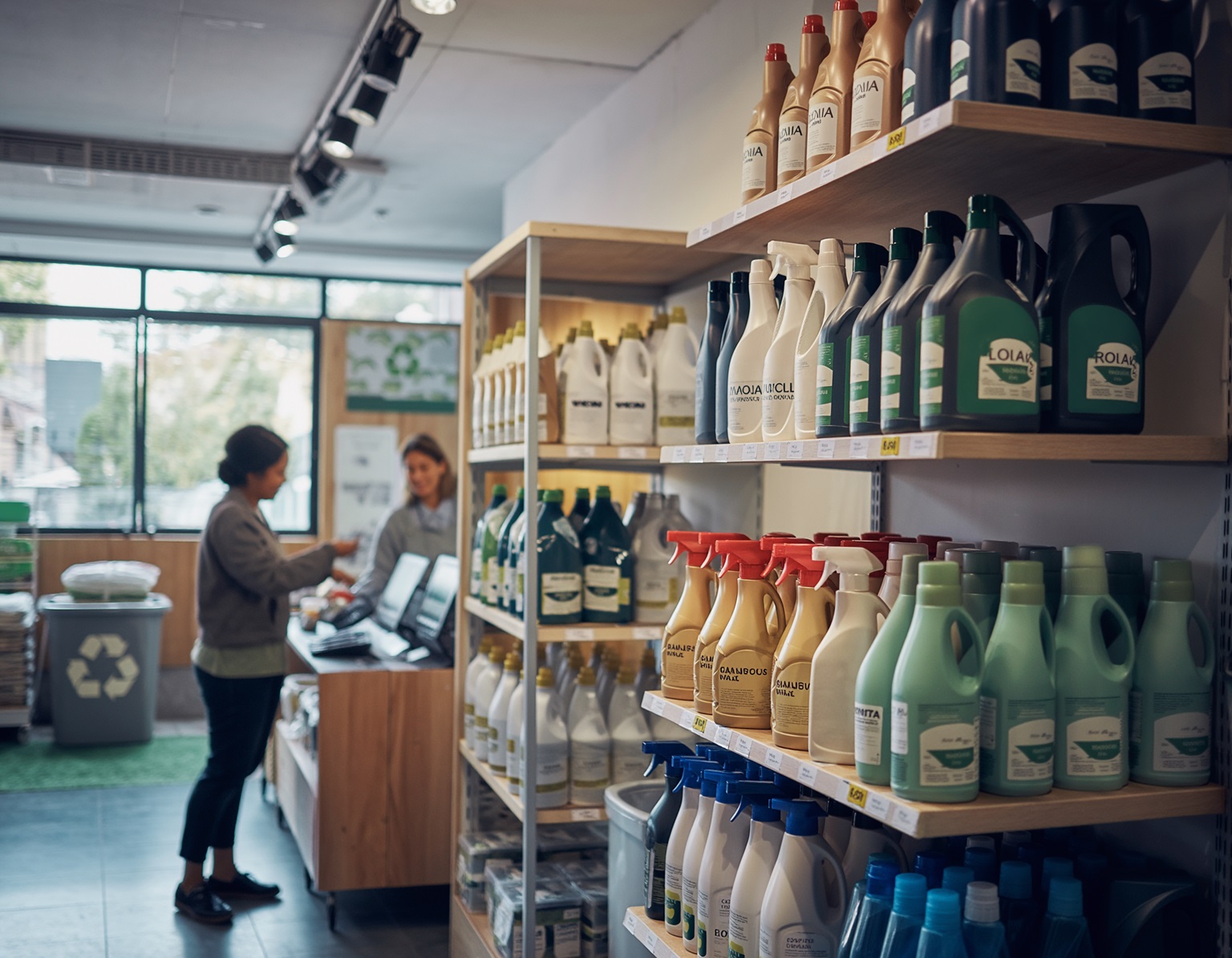
Western Australia’s cleaning supply manufacturing sector operates at the intersection of chemistry, logistics, and practical problem-solving. For businesses sourcing professional-grade products, understanding the local manufacturing landscape isn’t about waving flags – it’s about access, accountability, and the tangible benefits that come from working with suppliers who understand regional conditions.
Weskleen Supplies stocks products from both established Australian manufacturers and international brands, because quality matters more than origin. But there’s a compelling case for knowing which products come from local cleaning supply manufacturers WA operations – and what that means for your business.
When a Perth facility manager needs a sanitiser that works in 45-degree heat without breaking down, or a Pilbara mine site requires dust control solutions that handle red dirt, local manufacturers aren’t just closer. They’re solving problems they’ve encountered firsthand.
Why Manufacturing Location Actually Matters
Most businesses don’t think about where their cleaning chemicals come from until something goes wrong. A delayed shipment. A product that doesn’t perform as expected in local conditions. A safety data sheet that doesn’t comply with Australian standards.
Local production addresses three practical concerns:
- Supply chain resilience – Products manufactured in WA reach Perth businesses within days, not weeks
- Formulation relevance – Manufacturers testing in Australian conditions create solutions for Australian problems
- Regulatory alignment – Local producers navigate Australian chemical standards as their primary framework, not an afterthought
Consider a scenario from 2022. International shipping delays meant some Perth cleaning contractors waited eight weeks for imported disinfectants. Companies using locally manufactured alternatives continued operations without interruption. That’s not nationalism – it’s risk management.
The WA Cleaning Manufacturing Landscape
Western Australia’s cleaning supply manufacturing sector might not rival Sydney or Melbourne in scale, but it punches above its weight in specialised products. Several manufacturers have built reputations by solving problems unique to WA’s climate, industries, and geography.
The state’s manufacturers typically focus on:
- Industrial degreasers for mining and heavy industry applications
- Sanitisers formulated for high-temperature environments
- Dust control products designed for fine, penetrating red dirt
- Water-efficient cleaning solutions addressing Perth’s water restrictions
- Specialty products for hospitality and healthcare sectors
One Perth-based manufacturer developed a floor cleaner specifically for the limestone-based soils common in WA homes. The formulation prevents the white residue that occurs when standard cleaners react with regional water chemistry. That level of regional specificity doesn’t happen by accident.
What “Local Manufacturing” Actually Means
Not every product labelled “Australian-made” involves local manufacturing. The term can mean anything from full domestic production to imported bulk chemicals repackaged in Australian facilities.
Genuine local manufacturing typically involves:
- Raw material sourcing and formulation development
- Chemical blending and quality testing on-site
- Packaging and labelling at the production facility
- Direct distribution to regional suppliers
Some products carry Australian Made certification, which requires specific percentages of local content and processing. Others might be “Australian-owned” but manufactured overseas. Neither approach is inherently superior – it depends on the product category and intended use.
For cleaning contractors, the distinction matters most for specialty chemicals. A general-purpose cleaner manufactured in China might perform identically to an Australian version. But a sanitiser meeting specific Australian healthcare standards? That’s where local expertise becomes valuable.
How Local Production Supports Professional Cleaning Operations
Professional cleaning differs fundamentally from residential cleaning. It’s not about making things look nice – it’s about maintaining hygiene standards, protecting surfaces, and doing both efficiently at scale.
Local manufacturers support these requirements through:
Faster Problem Resolution – When a product doesn’t perform as expected, dealing with a manufacturer in the same time zone changes everything. We’ve seen local suppliers reformulate products based on client feedback within weeks. International manufacturers might take months to respond.
Custom Formulation Options – A Fremantle restaurant group needed a kitchen degreaser that wouldn’t damage their custom concrete floors. A Perth manufacturer created a modified formulation at a reasonable minimum order quantity. International suppliers quoted minimums that would’ve required five years of inventory.
Technical Support That Understands Context – Explaining that your floor scrubber leaves residue because Perth’s water hardness affects chemical performance makes sense to a local technical advisor. They’ve encountered the same issue dozens of times.
Consistent Supply During Disruptions – COVID-19 and subsequent shipping delays demonstrated this clearly. Businesses relying on imported products faced shortages. Those using locally manufactured alternatives maintained consistent supply.
The Chemistry of Place: Why Formulation Matters
Regional water chemistry varies significantly across Australia. Perth’s groundwater typically measures 150-250 parts per million total dissolved solids. Sydney’s might be 50-100 ppm. That difference affects how cleaning chemicals perform.
A floor cleaner optimised for Sydney’s soft water might:
- Leave residue in Perth’s harder water
- Require double the product concentration to achieve the same results
- React with mineral deposits in WA plumbing systems
Local manufacturers formulating for WA conditions account for these variables from the start. It’s the difference between a product that works adequately and one that works optimally.
Think of it like cooking. A recipe developed at sea level needs adjustment at altitude. Cleaning formulations developed for different water chemistry, temperatures, and soil types need similar adaptation.
Supporting Local Without Compromising Quality
Supporting local cleaning supply manufacturers WA operations makes sense only when the products meet professional standards. Origin doesn’t override performance.
We evaluate local manufacturers using the same criteria as international suppliers:
- Chemical efficacy testing and third-party verification
- Safety data sheet accuracy and completeness
- Consistent batch quality and documented quality control processes
- Appropriate certifications for intended applications
- Competitive pricing relative to performance
Some local manufacturers excel in specific categories while falling short in others. A Perth company might produce excellent industrial degreasers but unremarkable glass cleaners. That’s fine – we source the products where each manufacturer demonstrates genuine expertise.
The Comet Foaming Cleaner & Sanitiser represents this approach. It’s formulated for Australian healthcare and food service requirements, with foaming action that increases dwell time on vertical surfaces – critical for effective sanitisation.
The Real Cost Comparison
“Local products cost more” remains a persistent assumption. Sometimes true, often not, and rarely the full picture.
Actual cost analysis must account for:
Shipping and Freight – A 20-litre drum of cleaner manufactured in Perth costs $15-25 to deliver anywhere in the metropolitan area. The same drum imported from overseas might carry $50-100 in freight costs, even before recent shipping increases.
Inventory Carrying Costs – Reliable local supply means smaller inventory requirements. Businesses can order monthly instead of quarterly, reducing warehouse space needs and capital tied up in stock.
Product Concentration – Some local manufacturers produce more concentrated formulations, reducing packaging and shipping costs. A product with 1:50 dilution ratio versus 1:20 effectively costs less than half the price per use.
Waste from Product Failure – When a cleaning product doesn’t work as expected, you’ve paid for the product, the labour to apply it, and potentially the cost to fix the problem. Local suppliers’ faster response times reduce this risk.
A Perth office building manager calculated total costs for two comparable sanitisers – one imported, one locally manufactured. The imported product had a 15% lower unit price but 40% higher total cost when accounting for shipping, inventory, and one incident of delayed delivery that required emergency sourcing.
Environmental Considerations Beyond Carbon Miles
“Food miles” thinking – where local automatically means more sustainable – oversimplifies complex supply chains. But for cleaning chemicals, local manufacturing does offer genuine environmental advantages.
- Reduced packaging requirements – Shorter supply chains allow bulk delivery and refill systems
- Lower transportation emissions – Perth to Joondalup generates less emissions than Shanghai to Perth
- Regulatory compliance – Australian environmental standards govern local production directly
- Waste reduction – Closer manufacturer relationships enable package return and recycling programmes
One Perth manufacturer collects empty chemical drums from commercial clients, sanitises them, and refills them. This closed-loop system reduces plastic waste significantly. International suppliers can’t offer equivalent programmes due to logistics costs.
The Mr. Bean 5L All-Purpose Cleaner demonstrates practical sustainability – concentrated formula in recyclable packaging, manufactured to minimise waste during production.
How Mining and Resources Drive Local Innovation
WA’s mining sector creates unique cleaning challenges that drive product innovation. Fly-in-fly-out camps, remote processing facilities, and equipment operating in extreme conditions require specialised solutions.
Local manufacturers have developed products for:
- Heavy machinery cleaning in water-restricted environments
- Dust suppression for fine airborne particles
- Sanitisation in high-temperature, low-humidity conditions
- Grease and oil removal from equipment in remote locations
These innovations often benefit other sectors. A degreaser developed for mining equipment works exceptionally well in commercial kitchens. A dust control product designed for Pilbara operations excels in Perth warehouses.
The expertise gained solving difficult problems in harsh conditions elevates the entire product range. When a manufacturer’s products need to work reliably 1,200 kilometres from Perth in 48-degree heat, they’re probably going to perform well in your office building.
Technical Support and Training Access
Product performance depends partly on proper application. Even the best cleaning chemical fails when used incorrectly – wrong dilution ratio, inadequate dwell time, incompatible surface application.
Local manufacturers typically provide:
On-site Training – A Perth manufacturer can send a technical advisor to demonstrate proper product use, not just email a PDF. We’ve seen cleaning teams double their efficiency after hands-on training that addressed their specific techniques.
Application Troubleshooting – When results don’t match expectations, local technical support can visit to identify the issue. Is it water quality? Surface condition? Application method? Phone support has limits.
Custom Application Guides – A Broome resort needed cleaning protocols for salt-affected outdoor surfaces. Their local supplier created specific guides addressing tidal exposure and high UV conditions.
Regular Product Updates – As formulations improve or regulations change, local suppliers communicate updates directly. We’ve attended manufacturer workshops explaining new safety requirements before they took effect.
This support infrastructure adds value that’s difficult to quantify but easy to experience. When a cleaning contractor calls contact us about a product issue, we can often arrange manufacturer support within 24 hours if the product comes from a local supplier.
The Hospitality Sector Connection
Perth’s hospitality industry – hotels, restaurants, cafes – creates steady demand for specialised cleaning products. Local manufacturers have responded with formulations addressing specific challenges.
Kitchen degreasers that work in Perth’s hard water – Standard degreasers often require double concentration in WA. Local versions account for this from the formulation stage.
Sanitisers meeting Australian food safety standards – HACCP compliance requires specific kill rates and dwell times. Local manufacturers formulate to these standards as the baseline.
Floor care products for Perth’s popular concrete and polished surfaces – The local trend toward industrial-aesthetic flooring created demand for cleaners that maintain appearance without damaging sealers.
A Northbridge cafe owner described switching from an imported floor cleaner to a locally manufactured alternative. The imported product left a haze on their polished concrete. The local version – formulated specifically for sealed concrete in WA conditions – maintained the finish perfectly.
Building Relationships Beyond Transactions
Working with local manufacturers enables relationships that transcend simple buyer-supplier dynamics. It’s the difference between ordering from a catalogue and having a technical partner.
These relationships create opportunities for:
Product Development Input – Local manufacturers often seek feedback from professional users during development. A cleaning contractor’s insights might influence formulation decisions.
Priority Access During Shortages – When supply tightens, manufacturers prioritise established local relationships. International suppliers allocate based on order volume across their entire market.
Flexible Ordering Terms – Local relationships often mean more accommodating minimum orders, payment terms, and delivery scheduling.
Industry Knowledge Exchange – Local manufacturers understand regional industry conditions – which sectors are growing, what new facilities are opening, where demand is shifting.
A Perth contract cleaner told us their local chemical supplier alerted them to a new hospital development months before public tender. That advance notice meant they could prepare their bid thoroughly and ultimately won the contract.
Quality Control and Accountability
When product quality issues arise – and they occasionally do with any manufacturer – proximity matters for resolution speed and accountability.
Local manufacturing enables:
Batch Traceability – Australian manufacturers maintain detailed production records accessible quickly. If a batch performs inconsistently, the manufacturer can check production logs within hours.
Rapid Recalls or Replacements – If a product needs replacement, local suppliers can deliver new stock immediately. International suppliers might require weeks to ship replacements.
Direct Communication – Speaking with the production manager who oversaw manufacturing differs fundamentally from communicating through international customer service channels.
Regulatory Oversight – Australian manufacturers operate under direct oversight from Australian regulators. Compliance isn’t filtered through international subsidiaries or importers.
The Polystar Orbital Floor Scrubber exemplifies equipment designed with Australian support infrastructure in mind. Parts availability, service networks, and technical support reflect local market understanding.
What About Products That Aren’t Made Locally?
Supporting local manufacturers doesn’t mean refusing international products. Some categories don’t have strong local manufacturing presence. Others feature international products that genuinely outperform local alternatives.
We stock international products when:
- No comparable local alternative exists
- The international product demonstrates superior performance
- Specialised applications require specific international formulations
- Cost differences are substantial without compromising quality
The Pacvac Superpro 700 Backpack Vacuum represents this balanced approach. While not manufactured in WA, it’s designed for Australian commercial cleaning conditions with local service support.
Professional cleaning requires the right tool for each job. Sometimes that’s a locally manufactured chemical. Sometimes it’s imported equipment. The goal isn’t local for local’s sake – it’s optimal performance with reliable support.
How to Identify Genuine Local Manufacturing
Marketing claims about local production don’t always reflect manufacturing reality. Several strategies help verify genuine local manufacturing.
- Check for Australian Made certification – This requires specific local content thresholds
- Review the manufacturer’s facility details – Genuine manufacturers list production locations
- Ask about formulation development – Where does product development actually occur?
- Request batch codes – These often indicate production location
- Verify technical support location – Where are the chemists and technical advisors based?
Some “Australian” brands are marketing entities representing overseas manufacturers. Others are genuine local operations. Neither approach is dishonest, but the distinction affects supply reliability and support access.
The Future of WA Cleaning Manufacturing
Several trends are shaping local cleaning supply manufacturing in WA.
Increased automation is reducing production costs, making local manufacturing more competitive with imported products. A Perth facility that installed automated blending systems reduced production costs by 30%.
Sustainability requirements are driving demand for locally manufactured products with lower transportation impacts. Government and corporate buyers increasingly factor supply chain emissions into purchasing decisions.
Customisation demand is growing as businesses seek products tailored to specific applications. Local manufacturers can offer custom formulations at lower minimums than international suppliers.
Regulatory complexity continues increasing, favouring manufacturers with deep Australian compliance expertise. Recent changes to chemical classification requirements created challenges for importers but minimal disruption for local producers.
These trends suggest local manufacturing will remain competitive and potentially expand in coming years.
Making Informed Sourcing Decisions
Supporting local cleaning supply manufacturers WA operations makes sense when local products meet your performance and cost requirements. Origin alone doesn’t justify purchasing decisions – results do.
Evaluate products based on:
- Performance in your specific conditions – Does it work in Perth’s water? Your facility’s environment?
- Total cost including logistics – Not just unit price but delivered cost and inventory requirements
- Support infrastructure – Can you access technical help when needed?
- Supply reliability – What’s the lead time? How consistent is availability?
- Safety and compliance – Does it meet Australian standards for your application?
The Enduro Microfibre Mop Head and other professional cleaning tools in our range reflect this evaluation approach. We stock products that deliver results, whether they’re made in Perth or elsewhere.
For businesses managing cleaning operations, understanding your supply chain creates resilience. Knowing which products come from local manufacturers, which are imported, and what that means for availability and support enables better contingency planning.
Practical Steps for Supporting Local Manufacturing
If you’re interested in incorporating more locally manufactured products into your cleaning operations, several practical steps make the transition straightforward.
- Audit your current product inventory – Identify which products you use most frequently and in largest quantities
- Research local alternatives – Are there WA-manufactured options in these categories?
- Request samples and testing – Don’t switch without verifying performance
- Calculate total costs – Include shipping, inventory, and support factors
- Start with one category – Test local alternatives in a single product category before broader changes
A Perth facility management company followed this approach, starting with their most-used floor cleaner. After successful testing, they gradually expanded to other locally manufactured products where performance and costs aligned.
The process isn’t about replacing everything overnight. It’s about making informed decisions that balance performance, cost, support, and supply reliability.
The Broader Economic Impact
Money spent with local manufacturers circulates through the WA economy differently than money sent to overseas suppliers. Local manufacturers employ local workers, purchase from local suppliers, and pay local taxes.
This isn’t abstract economic theory. It’s why a Perth manufacturing facility employs chemical engineers, production workers, logistics staff, and sales teams – all spending their incomes locally.
For businesses, this creates indirect benefits. A healthy local manufacturing sector means better access to technical expertise, more innovation addressing local conditions, and greater supply chain resilience.
Supporting local manufacturing isn’t charity – it’s enlightened self-interest. The businesses that benefit most from strong local suppliers have the most reason to support them.
Quality Without Compromise
The strongest argument for local cleaning supply manufacturers WA operations isn’t patriotism or environmental concern – it’s practical advantage. Faster supply, better support, formulations designed for local conditions, and relationships that extend beyond transactions.
These advantages matter only when products perform. A locally manufactured cleaner that doesn’t clean effectively is still a poor choice, regardless of where it’s made.
We evaluate every product in our range based on performance in professional applications. Some local manufacturers produce excellent products that compete with or exceed international alternatives. Others are developing capabilities but aren’t quite there yet.
The goal is equipping cleaning professionals with products that work reliably and efficiently. Sometimes that’s a locally manufactured chemical. Sometimes it’s imported equipment. Often it’s a combination, selected based on specific application requirements.
Understanding your options – including which products come from local manufacturers and what advantages that offers – enables better decisions. Whether you’re managing a commercial cleaning operation, maintaining a facility, or running a hospitality business, knowing your supply chain creates resilience and opportunity.