


Blog
WA Regulations for Chemical Disposal: What Businesses Must Know

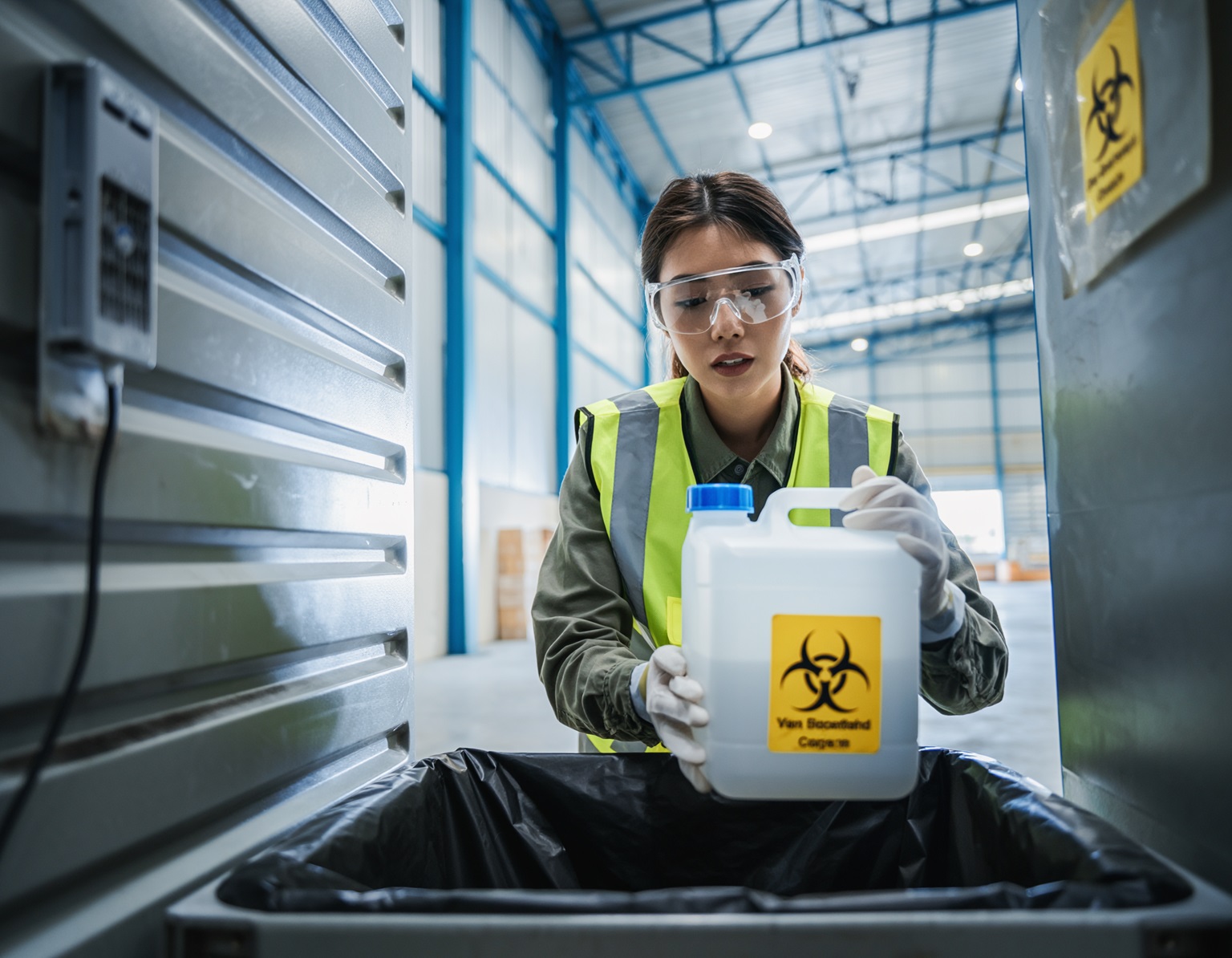
Every commercial cleaning operation in Western Australia generates chemical waste. Whether it’s used sanitiser solution, depleted floor stripper, or empty chemical drums, proper disposal isn’t optional – it’s a legal requirement with significant penalties for non-compliance.
Understanding chemical disposal regulations WA businesses must follow protects from fines, protects the environment from contamination, and protects workers from exposure hazards. This isn’t bureaucratic box-ticking; it’s operational risk management that every cleaning contractor, facility manager, and business owner needs to understand.
The regulatory landscape might seem complex, but the core principles are straightforward. Think of it like sorting household recycling – once you understand which bin each item goes in, the process becomes automatic. Identify what you’re disposing of, understand its hazard classification, and follow the prescribed disposal methods. Get this right, and compliance becomes routine rather than burdensome.
The Regulatory Framework Explained
Chemical disposal regulations WA businesses must navigate stem from multiple overlapping legislation. Understanding which apply to your operation prevents compliance gaps.
The Environmental Protection Act 1986 establishes the foundation. It prohibits causing pollution or environmental harm, including improper chemical disposal. Penalties can reach $500,000 for individuals and $2.5 million for corporations, plus potential imprisonment for serious offences.
The Environmental Protection (Controlled Waste) Regulations 2004 specifically governs waste classified as “controlled waste” – including many cleaning chemicals. These regulations mandate tracking, transport, and disposal requirements for listed substances.
Work health and safety legislation requires safe handling of hazardous chemicals throughout their lifecycle, including disposal. The WHS Regulations specify requirements for chemical storage, labelling, and safety data sheet maintenance that extend through to disposal processes.
Local government regulations add another layer. Individual councils may impose additional requirements for trade waste discharge, stormwater protection, and commercial waste collection. Perth metropolitan councils have increasingly stringent requirements compared to regional areas.
Who Regulates What in WA
Multiple agencies share responsibility for chemical disposal oversight:
- Department of Water and Environmental Regulation (DWER) – Oversees controlled waste tracking, licensing, and environmental protection compliance
- WorkSafe WA – Monitors workplace chemical handling safety, including disposal practices
- Local councils – Regulate trade waste discharge, commercial waste collection, and local environmental protection
- Department of Health – Sets standards for chemicals affecting public health
This multi-agency structure means businesses may face inspections or enquiries from several different regulators. Each has distinct powers and penalties, so understanding which agency governs specific aspects of your operation matters.
Classifying Your Chemical Waste
Before determining disposal requirements, you must classify what you’re disposing of. Not all cleaning chemicals require special handling – but misclassifying waste that does creates serious liability.
Controlled waste in WA includes substances posing potential harm to human health or the environment. Common cleaning-related controlled wastes include:
- Solvent-based products and residues
- Acids and alkalis (pH below 2 or above 12.5)
- Chlorine-based sanitisers and bleaches
- Heavy metal-containing products
- Flammable liquids and aerosol containers
General waste includes substances posing minimal environmental or health risk when disposed of properly. Many diluted cleaning solutions, biodegradable products, and rinsed packaging fall into this category.
The classification process starts with your Safety Data Sheet hazards identification. Section 13 of each SDS specifies disposal considerations, including whether the product constitutes controlled waste. If your SDS is unclear or outdated, contact the manufacturer or seek professional classification advice.
A common mistake occurs with seemingly innocuous products. Some “eco-friendly” or “biodegradable” cleaners still contain ingredients requiring controlled waste handling. The marketing claims don’t override the regulatory classification – always check the SDS.
Weskleen Supplies provides current Safety Data Sheets for all products, ensuring clients have accurate disposal information from the outset.
Safety Data Sheets and Disposal Compliance
Safety Data Sheets are legal documents, not just product information. Australian law requires maintaining current SDSs for all hazardous chemicals in your workplace, and this requirement extends through disposal.
Key SDS sections relevant to Safety Data Sheet hazards and disposal:
- Section 3 – Composition/ingredient information (identifies hazardous components)
- Section 6 – Accidental release measures (spill cleanup and disposal)
- Section 13 – Disposal considerations (specific disposal requirements)
- Section 14 – Transport information (requirements for moving waste)
- Section 15 – Regulatory information (applicable laws and classifications)
SDSs must be no more than five years old. Using outdated sheets for disposal guidance creates compliance risk – formulations change, regulations evolve, and classification requirements update.
A Perth cleaning contractor faced this issue when disposing of a floor stripper product. Their SDS dated from 2017 didn’t reflect updated controlled waste classifications introduced in 2019. The disposal method that was compliant under the old classification became non-compliant under the new one. Regular SDS updates would have prevented this oversight.
Contact us for current Safety Data Sheets on any product in our range – maintaining accurate documentation protects your compliance status.
Controlled Waste Tracking Requirements
When your waste qualifies as controlled waste, WA’s tracking system applies. This ensures hazardous materials are handled properly from generation to final disposal.
The controlled waste registration and tracking system requires:
- Registration as a controlled waste producer (if generating controlled waste regularly)
- Use of licensed controlled waste carriers for transport
- Controlled waste tracking forms documenting each movement
- Disposal at licensed controlled waste facilities only
- Record-keeping for a minimum of five years
The tracking forms create an audit trail. Regulators can trace waste from generation through transport to final disposal. Gaps in this chain create liability for all parties involved.
Controlled waste carriers must hold current licences from DWER. Using unlicensed carriers – even if cheaper – creates significant legal exposure. If improperly disposed waste is traced back to your business, the fact that you used an unlicensed carrier compounds rather than excuses the violation.
For most commercial cleaning operations, controlled waste registration and generation is periodic rather than continuous. Quarterly or annual drum collections, equipment cleaning residues, and expired product disposal typically generate controlled waste obligations. Planning for these events prevents last-minute compliance scrambles.
Practical Disposal Methods for Common Cleaning Chemicals
Different cleaning products require different disposal approaches. Understanding the correct method for each product category simplifies compliance.
Water-based, biodegradable products – When diluted according to manufacturer specifications, many water-based cleaners can be discharged to sewer systems. However, this requires checking local trade waste requirements – some councils prohibit specific ingredients regardless of dilution.
Products like the Mr. Bean 5L All-Purpose Cleaner use biodegradable formulations that simplify disposal. Concentrated products require proper dilution before sewer discharge.
Solvent-based products and residues – These typically constitute controlled waste. Collect residues separately, store in appropriate containers, and arrange licensed disposal. Never pour solvents down drains or dispose of them with general waste.
The Goof Off Adhesive Remover falls into this category. While effective for adhesive removal, disposal requires controlled waste procedures. The product SDS provides specific guidance.
Acids and alkalis – Strong acids and bases require pH neutralisation disposal procedures before discharge or controlled waste handling. pH must fall between 6.0 and 9.0 for most sewer discharge permits. Neutralisation must be documented and conducted safely.
Sanitisers and disinfectants – Chlorine-based products require careful handling. Small quantities of diluted chlorine solutions may be dischargeable to sewer, but concentrated products or large quantities require controlled waste treatment.
The Comet Foaming Cleaner & Sanitiser meets hygiene standards without the harsh chlorine chemistry of some alternatives, simplifying disposal compliance.
Empty containers – Empty chemical drums and containers have their own requirements. Triple-rinsing with appropriate solution, proper labelling, and disposal through licensed facilities ensures compliance. Some suppliers offer drum return and recycling programs.
Equipment cleaning residues – Floor scrubber tanks, extraction machine waste, and equipment cleaning residues often contain concentrated chemical mixtures. These typically require controlled waste handling or pH neutralisation disposal, particularly after using solvent-based or high-pH products.
The Polystar Orbital Floor Scrubber and similar equipment accumulate residues requiring proper disposal. Recovery tank contents should be assessed against chemical use records to determine disposal requirements.
Trade Waste Agreements and Sewer Discharge
Most commercial cleaning operations discharge some liquid waste to sewer systems. In Perth metropolitan areas, Water Corporation regulates this discharge through trade waste agreements.
Trade waste categories determine what you can discharge:
- Category 1 – Low-risk trade waste (most food-related waste, biodegradable cleaners)
- Category 2 – Medium-risk trade waste (some industrial processes, higher-strength waste)
- Category 3 – High-risk trade waste (requires pre-treatment and specific approval)
Operating without an appropriate trade waste agreement exposes businesses to fines and potential disconnection. The application process requires documenting the types and volumes of waste generated.
Trade waste charges apply based on volume and composition. Higher-risk waste incurs higher charges. Using biodegradable, lower-impact cleaning products can reduce both environmental impact and trade waste costs.
A commercial kitchen cleaning service discovered this when switching from solvent-based degreasers to plant-based alternatives. Their trade waste classification improved, reducing annual charges by approximately $2,400. The product cost difference was minimal, making the switch financially advantageous beyond the environmental benefits.
For operations outside Water Corporation’s service area, regional water utilities or on-site disposal systems apply. Requirements vary significantly – contact your local provider for specific requirements.
Stormwater Protection Obligations
Chemical disposal extends beyond drains. Stormwater systems flow directly to waterways without treatment, making any chemical discharge to stormwater a serious environmental offence.
Stormwater protection requirements include:
- No chemical discharge to stormwater drains under any circumstances
- Bunding requirements for chemical storage areas
- Spill response equipment and procedures
- Staff training on stormwater protection
The penalties for stormwater contamination can be severe. A single discharge event traced to a business can result in prosecution, significant fines, and cleanup cost liability.
Outdoor cleaning operations carry particular risk. Car park cleaning, building exterior washing, and outdoor equipment maintenance can direct chemical-laden water toward stormwater drains. Physical containment, recovery systems, and careful chemical selection prevent violations.
Vacuum extraction systems like the Steamvac HP Auto 2 capture dirty solution rather than discharging it. For outdoor applications, similar recovery approaches prevent stormwater contamination while allowing effective cleaning.
Record-Keeping Requirements
Documentation protects businesses when regulators enquire about disposal practices. Minimum record-keeping includes:
- Safety Data Sheets for all chemicals used (current versions, less than 5 years old)
- Controlled waste tracking forms for all controlled waste movements
- Trade waste agreement documentation
- Training records for staff handling chemical disposal
- Spill incident reports and response documentation
Records must be retained for minimum periods specified in regulations – typically five to seven years. Electronic records are acceptable if properly backed up and accessible.
A systematic approach to record-keeping prevents the scramble that occurs when regulators request documentation. Many businesses use chemical management software; others maintain well-organised physical files. The method matters less than consistency and accessibility.
Common Compliance Failures and How to Avoid Them
Regulatory inspections reveal consistent compliance gaps across the cleaning industry. Understanding these common failures helps businesses avoid similar problems.
Outdated or missing SDSs – Regulators frequently find businesses unable to produce current Safety Data Sheets. Establishing a system for maintaining and updating SDSs prevents this basic failure.
Unlicensed waste carriers – Cost pressures lead some businesses to use cheaper, unlicensed waste transport. This creates liability that far exceeds any savings. Always verify carrier licensing before engaging disposal services.
Inadequate waste segregation – Mixing controlled waste with general waste, or mixing incompatible chemicals, creates safety hazards and compliance violations. Clear labelling, dedicated containers, and staff training prevent segregation failures.
Missing controlled waste tracking documentation – Even when using licensed carriers and proper disposal facilities, failing to maintain tracking documentation creates compliance gaps. Implement systems that capture documentation at each step.
Discharge without trade waste agreements – Operating without appropriate trade waste agreements – often through ignorance rather than intention – remains common. Review your waste discharge patterns against agreement requirements.
Insufficient staff training – Front-line staff often handle chemical disposal without adequate understanding of requirements. Regular training sessions, clear procedures, and accessible documentation empower staff to comply correctly.
Building a Compliant Disposal System
Creating a systematic approach to chemical disposal converts ongoing compliance from burden to routine. Key elements include:
Inventory with disposal classifications – Maintain a list of all chemicals used, with each product’s disposal classification and requirements. This prevents case-by-case determination and ensures consistent handling.
Clear procedures for each waste type – Documented procedures for disposing of each waste category give staff clear guidance. Include steps, required documentation, and responsible persons.
Designated disposal areas – Proper storage areas for waste awaiting disposal, with appropriate containment, labelling, and access controls. Separate controlled waste from general waste storage.
Established relationships with licensed disposal providers – Pre-arranged relationships with controlled waste carriers and facilities prevent delays when disposal is needed. Verify licensing annually and maintain contact records.
Regular compliance audits – Periodic review of disposal practices against requirements identifies gaps before regulators do. Self-audits demonstrate commitment to compliance and catch emerging issues.
Staff training program – Initial and refresher training ensures all personnel understand their disposal responsibilities. Document training delivery and content.
Product Selection and Disposal Considerations
Chemical disposal requirements should influence product selection. Products creating disposal complexity may not be worth the compliance burden, regardless of cleaning performance.
When evaluating cleaning products, consider:
- Controlled waste status – Does the product require controlled waste disposal?
- Biodegradability – Can diluted solution be discharged to sewer?
- Container requirements – Are drums returnable or recyclable?
- Residue characteristics – What disposal challenges do residues create?
- SDS availability – Does the supplier provide current, detailed SDSs?
The Enduro Microfibre Mop Head and similar reusable equipment reduce chemical usage overall, which reduces disposal obligations. High-efficiency equipment that achieves results with less chemical creates compliance benefits beyond cost savings.
Equipment like the Pacvac Superpro 700 Backpack Vacuum removes soiling mechanically before wet cleaning, reducing the chemical load in wastewater. This mechanical-first approach simplifies disposal compliance.
Concentrated products used at proper dilution often present simpler disposal than ready-to-use alternatives. The small volume of concentrate requires careful handling, but diluted working solutions may be dischargeable to sewer – whereas ready-to-use products generate larger volumes of potentially controlled waste.
Penalties and Enforcement in WA
Understanding potential penalties helps businesses assess compliance investment appropriately. The consequences of non-compliance extend beyond fines.
Environmental Protection Act penalties:
- Tier 1 offences (most serious) – Up to $500,000 individual / $2.5 million corporate, plus potential imprisonment
- Tier 2 offences – Up to $250,000 individual / $1.25 million corporate
- Tier 3 offences (least serious) – Up to $125,000 individual / $625,000 corporate
- Infringement notices for minor breaches – $250 to $5,000
Controlled waste regulation penalties can apply alongside environmental protection penalties. Directors and officers may face personal liability for corporate offences.
Beyond financial penalties, enforcement actions may include:
- Modified penalty infringement notices
- Remediation orders requiring cleanup at business expense
- Prohibition orders preventing continued operation
- License revocations for waste-related businesses
- Prosecution and potential conviction records
DWER has increased inspection and enforcement activity in recent years. The “accidental discharge” defence rarely succeeds – businesses are expected to have systems preventing such incidents.
Getting Help with Compliance
Chemical disposal compliance can seem overwhelming, particularly for smaller operations without dedicated environmental staff. Several resources provide assistance.
DWER provides guidance materials, factsheets, and a general enquiry line for regulatory questions. Their website includes searchable databases of licensed facilities and carriers.
Industry associations often provide compliance resources and training. The Building Service Contractors Association of Australia (BSCAA) offers guidance specific to cleaning industry requirements.
Environmental consultants provide compliance assessments, training delivery, and ongoing support. For businesses with significant chemical disposal requirements, professional assistance may be cost-effective compared to developing internal expertise.
Chemical suppliers who understand WA requirements can guide product selection toward easier disposal compliance. Contact us to discuss disposal considerations when selecting cleaning products – we can identify products that meet your cleaning requirements while simplifying compliance.
The Practical Approach
Navigating chemical disposal regulations WA compliance doesn’t require environmental expertise. It requires systematic attention to straightforward requirements:
- Know what you’re disposing of – Maintain current SDSs and understand product classifications
- Follow the correct procedure – Different waste types require different handling
- Document everything – Records protect you when questions arise
- Use licensed providers – Never compromise on waste carrier or facility licensing
- Train your people – Staff who understand requirements can comply with them
- Review regularly – Annual compliance audits prevent drift
Weskleen Supplies supports WA cleaning operations with products designed for Australian conditions and compliance requirements. Our range includes options that simplify disposal while delivering professional cleaning results.
Chemical disposal regulations exist to protect the environment and public health. Compliance protects businesses from penalties while contributing to outcomes everyone benefits from. With proper systems and attention, compliant disposal becomes an unremarkable part of professional cleaning operations – which is exactly how it should be.