


Blog
Why Polystar 15 Inch Orbital Scrubbers Outperform Traditional Rotary Machines

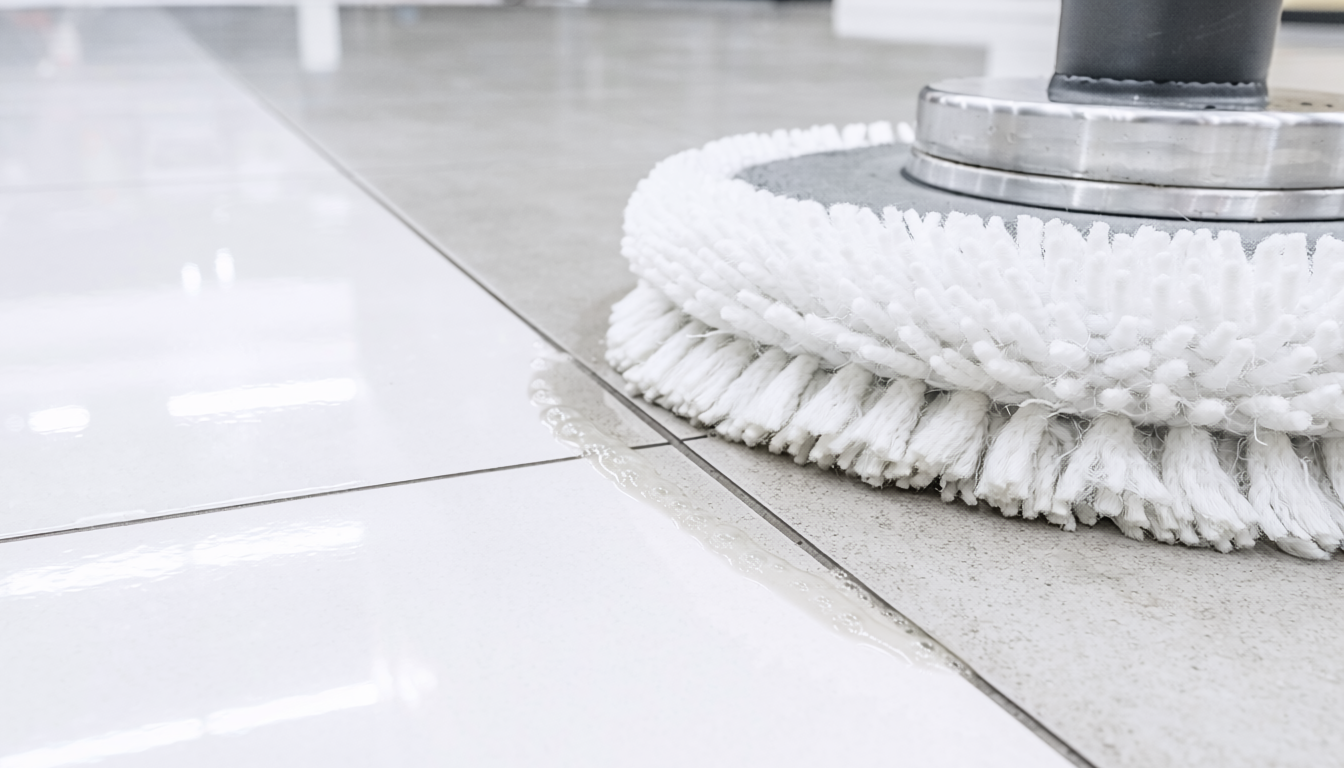
When a facility manager at a Perth shopping centre replaced three rotary floor machines with two Polystar Orbital Floor Scrubbers, the cleaning team noticed something unexpected within the first week. The grout lines between tiles – which had gradually darkened over years despite regular cleaning – started showing their original colour again. It wasn’t magic. It was physics.
The difference between orbital and rotary floor scrubbers isn’t just technical specification jargon. It’s the distinction between cleaning the surface and actually restoring it. Understanding why the Polystar 15 inch orbital scrubber consistently outperforms traditional rotary machines comes down to how each system transfers energy to the floor.
How Orbital Movement Changes Everything
Traditional rotary machines spin in one direction. They’re predictable, straightforward, and they’ve dominated commercial cleaning for decades. But that single-direction rotation creates a fundamental limitation: the brushes or pads follow the same circular path repeatedly, which means they can miss contaminants trapped in textured surfaces or grout lines.
The Polystar orbital floor scrubber operates differently. The pad moves in multiple directions simultaneously – forward, backward, side to side – creating a random orbital pattern. Think of it like the difference between stirring a pot in circles versus using a whisk. The whisk reaches more surface area and agitates more thoroughly.
This orbital pad multi-directional agitation means the cleaning pad contacts every square centimetre of flooring from multiple angles during each pass. For textured surfaces like non-slip tiles, embossed vinyl, or porous stone, this makes an enormous difference. Dirt doesn’t just sit on top of these surfaces – it lodges into microscopic valleys and texture patterns. Orbital action dislodges it.
The Weight Distribution Advantage
Here’s where things get interesting for anyone who’s operated floor equipment professionally. Rotary machines typically weigh between 50-70kg, and that weight concentrates at the centre point where the motor sits. The brush or pad spins beneath this weight, creating significant downward pressure at the rotation axis.
The Polystar distributes its weight more evenly across the entire 15-inch pad surface. Combined with the orbital pad multi-directional agitation, this creates consistent pressure across the cleaning area rather than concentrated force at one point. The practical outcome? Less chance of damaging delicate flooring, more effective grout line contamination removal on uneven surfaces, and better results on textured tiles that rotary machines struggle to clean thoroughly.
A cafe owner in Fremantle discovered this when cleaning around the grouted seams of their heritage tile flooring. Their previous rotary machine would occasionally catch the slightly raised edges of older tiles, causing chips. The orbital motion of the Polystar glided over these same imperfections without issue, while still removing years of accumulated coffee stains from the porous tile surface.
Chemical Efficiency and Cost Savings
Professional-grade cleaning isn’t just about equipment – it’s about the relationship between machine, chemical, and surface. Rotary machines require specific detergent formulations that can handle high-speed agitation without excessive foaming. They also tend to use more solution because the circular motion can fling liquid outward, requiring higher flow rates to maintain consistent coverage.
The Polystar’s orbital action works the cleaning solution into the floor surface more effectively. The random pattern ensures the chemical dwells on the surface longer and penetrates deeper into textured areas. In practical terms, adjusting the floor cleaner chemical dilution rate downward by 20-30% while achieving equal or better results becomes achievable with orbital technology.
For a facility running daily cleaning operations, that floor cleaner chemical dilution rate reduction compounds quickly. A 5-litre container of quality floor cleaner like Mr. Bean All-Purpose Cleaner lasts noticeably longer when paired with orbital technology. The savings aren’t dramatic on a single shift, but over a year of operations, the numbers become significant.
Versatility Across Floor Types
Traditional rotary machines excel at specific tasks. High-speed burnishers create brilliant shine on hard floors. Low-speed scrubbers tackle heavy soil. But switching between tasks often means switching machines, or at minimum, changing pads and adjusting technique.
The Polystar 15 inch orbital scrubber handles an impressive range of applications with minimal adjustment:
- Vinyl composition tile (VCT): Strips old finish without gouging the surface
- Ceramic and porcelain tile: Cleans grout lines without damaging edges
- Natural stone: Removes soil without etching sensitive surfaces
- Concrete: Scrubs textured finishes effectively
- Rubber flooring: Maintains slip resistance without excessive wear
- Terrazzo: Polishes while cleaning without creating uneven wear patterns
This versatility matters enormously for facilities with mixed flooring. A school might have VCT in hallways, ceramic in bathrooms, and polished concrete in the cafeteria. Rather than maintaining multiple machines or compromising results, one orbital scrubber handles all three hard surfaces — with the SteamVac HP Auto-2 completing the programme for any carpeted areas in the same facility.
Operator Fatigue and Ergonomics
Anyone who’s run a rotary floor machine for a full shift knows the physical demand. The spinning action creates rotary scrubber operator torque that the operator must constantly counteract. It’s not overwhelming for short periods, but over hours of operation, it becomes genuinely fatiguing. Operators develop techniques to manage this – letting the machine pull slightly, using body weight for control – but it still requires sustained physical effort.
The Polystar eliminates directional pull almost entirely. The orbital motion doesn’t create the same rotary scrubber operator torque, so the machine tracks straight naturally. Steering requires minimal effort. For cleaning teams working 6-8 hour shifts, this isn’t a minor convenience – it’s the difference between finishing the day tired versus finishing exhausted.
One contract cleaner managing a Perth office complex noted that their team could consistently maintain quality through the end of late-night shifts after switching to orbital machines. With their previous rotary equipment, the last hour of cleaning noticeably declined in thoroughness simply because operators were physically spent.
Maintenance and Longevity Considerations
Rotary machines contain more complex mechanical components. The high-speed spinning mechanism requires robust bearings, sealed motors to prevent dust infiltration, and substantial brush pressure systems. These components wear over time, and replacement parts can be expensive.
The orbital mechanism is mechanically simpler. Fewer high-stress components mean fewer potential failure points. The motor doesn’t need to generate the same rotational speeds, which reduces heat and wear. Pad changes remain straightforward – no complicated brush assemblies or pressure adjustments.
From a total cost of ownership perspective, this matters significantly. A quality rotary machine might require bearing replacement every 18-24 months under heavy commercial use. The Polystar’s simpler design extends service intervals. Combined with the chemical savings mentioned earlier, the machine often pays for itself within two years of regular operation.
The Science Behind Soil Removal
Understanding why orbital technology works better requires looking at how soil actually bonds to flooring. Most commercial floor contamination isn’t just sitting loose on the surface. It’s a combination of:
- Particulate matter: Dirt, dust, and grit ground into textured surfaces
- Organic residues: Spills, tracked-in contaminants, biofilm
- Previous finish layers: Old wax or coating that’s degraded and discoloured
- Chemical residues: Detergent buildup from previous cleaning
Removing this combination requires both mechanical action and chemical dissolution. The cleaning solution breaks down bonds between the soil and floor surface. The mechanical action physically removes the loosened contamination.
Rotary machines apply mechanical action in one direction repeatedly. This works well for loose soil but struggles with embedded contamination. The orbital pattern applies force from multiple angles, which more effectively breaks the mechanical bond between embedded soil and the floor texture. It’s similar to why you’d use a circular motion when hand-scrubbing a stubborn stain rather than just pushing back and forth in one direction.
Real-World Performance Comparison
A facilities management company in Perth conducted a practical test across three similar retail locations. Each site had approximately 2,000 square metres of ceramic tile flooring with textured slip-resistant surfaces. One location continued using their existing rotary scrubber, one switched to the Polystar orbital floor scrubber, and one used a combination approach.
After 90 days, independent assessment measured:
- Visible cleanliness: The orbital-cleaned location showed 35% better grout line appearance
- Slip resistance: All three maintained adequate coefficient of friction, but the orbital location required less aggressive chemical use
- Time efficiency: The orbital system cleaned the same area 15% faster
- Chemical consumption: The orbital location used 28% less detergent concentrate
These weren’t laboratory conditions with controlled variables. These were working retail environments with normal foot traffic, regular spills, and typical cleaning schedules. The orbital technology simply performed better in measurable ways.
When Rotary Machines Still Make Sense
Professional honesty requires acknowledging that orbital scrubbers aren’t universally superior for every application. Ultra-high-speed burnishing – the process of creating mirror-like shine on finished hard floors – still favours rotary technology. The sustained high RPM creates the friction-generated heat necessary for proper burnishing.
Similarly, some extremely heavy soil situations in industrial environments might benefit from the concentrated pressure point of a rotary machine. If you’re removing thick grease buildup from a workshop floor, the focused force of a rotary scrubber can be advantageous.
But for 90% of commercial and residential floor cleaning applications – retail spaces, offices, schools, healthcare facilities, hospitality venues – the orbital approach delivers superior results with less effort and lower operating costs.
Integration with Complete Cleaning Systems
The Polystar doesn’t work in isolation. It’s part of a comprehensive approach to floor care in Perth. Effective maintenance combines:
- Pre-scrub vacuuming: A Pacvac Superpro 700 removes loose particles before scrubbing begins, protecting pad life and maximising chemical effectiveness
- Regular dust control: Using quality dust control mops prevents abrasive particles from scratching floors and supports ongoing grout line contamination removal between scrubbing sessions
- Appropriate chemicals: Products like Comet Foaming Cleaner & Sanitiser for hygiene-sensitive areas and pH-matched floor cleaners protect different flooring types from chemical damage
- Proper technique: Understanding dwell time and agitation requirements
- Post-scrub removal: Squeegees and mops efficiently remove excess solution after scrubbing for faster floor drying and a clean finish
- Consistent scheduling: Regular maintenance prevents soil buildup that requires aggressive intervention
When Weskleen Supplies consults with facilities on floor care programmes, the conversation starts with understanding current conditions and desired outcomes. The equipment recommendation follows from that assessment. Often, switching to orbital technology is part of a larger system improvement that includes better chemical selection, revised procedures, and staff training.
The Bottom Line for Your Operation
Choosing between orbital and rotary floor scrubbers ultimately comes down to your specific needs, but the evidence strongly favours orbital technology for most applications. The Polystar Orbital Floor Scrubber delivers measurably better cleaning results, reduces operator fatigue, lowers chemical costs, and handles diverse floor types with minimal adjustment.
For facility managers evaluating equipment purchases, the decision shouldn’t rest solely on upfront cost. Calculate the total cost of ownership: equipment price, expected lifespan, maintenance costs, chemical consumption, labour efficiency, and cleaning effectiveness. When you run those numbers honestly, orbital technology consistently proves more economical over the equipment’s working life.
The shopping centre manager mentioned at the start? Six months after switching to orbital scrubbers, they’d reduced their floor care chemical budget by 22%, decreased equipment-related maintenance calls by 40%, and received noticeably positive feedback about floor appearance from tenants. The cleaning team reported less physical strain, and the facility’s floor surfaces showed measurably improved condition.
If you’re still relying on traditional rotary technology, it’s worth questioning whether you’re getting the results your facility deserves. The difference isn’t subtle, and the benefits compound with every shift your team works. To explore how the Polystar orbital system might improve your facility’s floor care programme, reach Weskleen Supplies on 1800 728 926 for a consultation on your specific flooring types and operational requirements.