


Blog
Removing Post-Construction Debris: Why Aerosol Adhesive Removers Save Hours of Labour

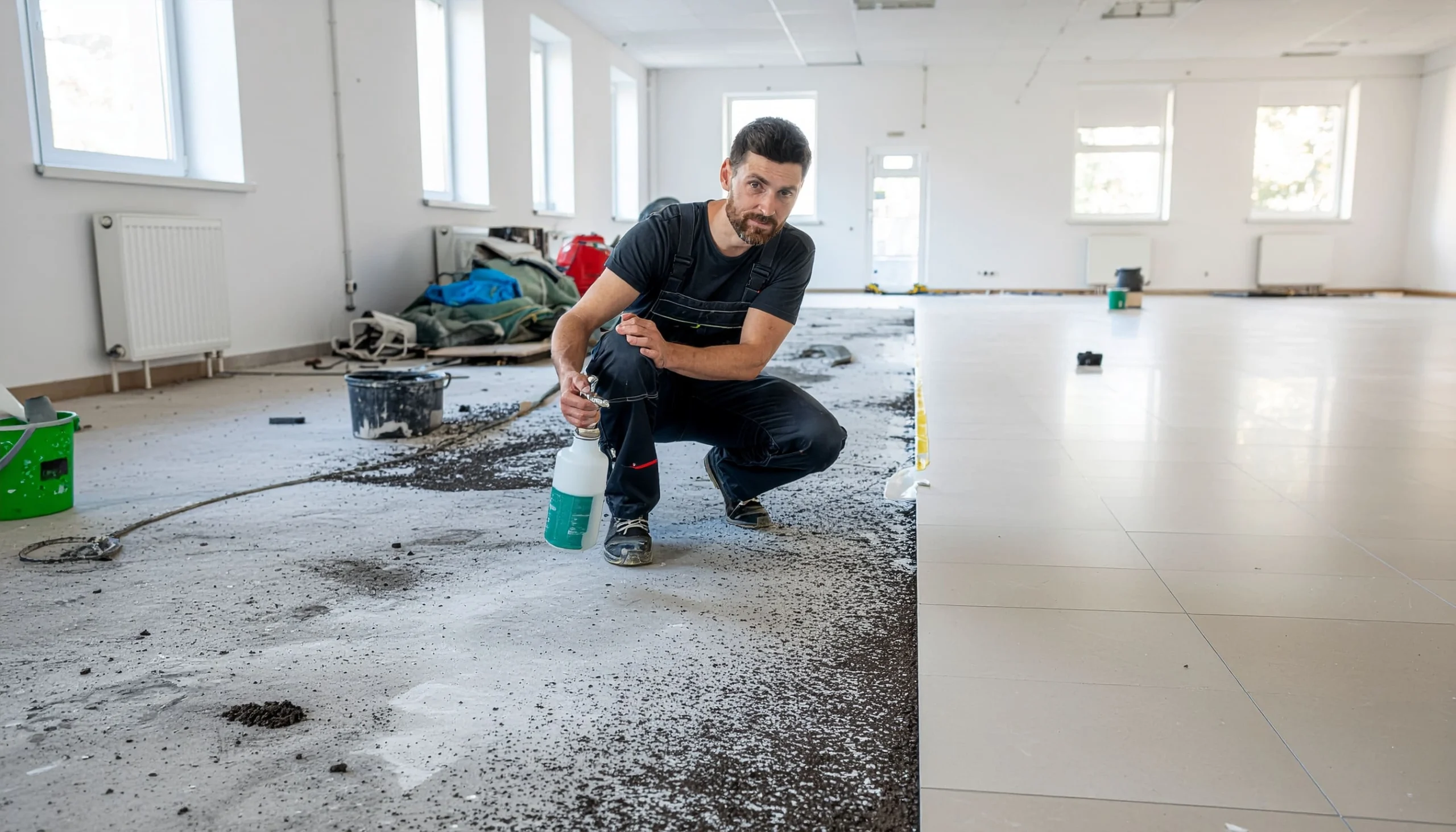
Construction site supervisors across Western Australia know the intense pressure that defines the final days of a build. Between the final installation of high-end joinery and the impending client walkthrough, the site must undergo a total transformation. But what does ‘commercial-grade’ actually mean for the chemicals and equipment you use to combat the remnants of a busy build? For many supervisors in Perth, the answer lies in having a high-performance chemical strategy integrated into their final clean. It is fundamentally about operational integrity, protecting the millions of dollars invested in architectural finishes, and ensuring that the final handover is not delayed by stubborn surface contaminants.
Maintaining these surfaces isn’t just about making the workspace look tidy for a brief inspection. Think of a professional aerosol adhesive remover like a fine artist’s eraser. Just as a single smudge of lead can ruin a charcoal masterpiece, a single patch of tape residue or silicone overspray can destroy the visual impact of a premium stone benchtop or a panoramic glass facade. You wouldn’t expect a master painter to work with a blunt brush, so why expect your handover team to achieve perfection with generic cleaners? Achieving a level of cleanliness that meets Australian industrial standards requires a systematic approach to surface chemistry and mechanical agitation. This specific mindset shift is what separates elite developers from the rest of the market.
The Critical Final Phase: The Handover Builders Clean
In the competitive world of Western Australian residential and commercial construction, the condition of a building at handover is a silent communicator of your professional standards. A window frame covered in adhesive residue from protective tapes doesn’t just look sloppy; it suggests a lack of care during the construction process that can worry high-net-worth clients and safety inspectors. In Western Australia, where architectural standards are incredibly high, the stakes for a final clean have never been higher. Proactive management of these surfaces ensures that a development remains compliant and ready for immediate occupation. As a leading provider of professional hygiene solutions, Weskleen Supplies understands that the unique conditions of WA, ranging from the abrasive coastal salt air to the intense solar heat of the suburbs, require a specific approach to chemical cleaning.
When protective films are left on window frames or stainless steel panels for too long, the intense Western Australian sun can cause the adhesive to “bake” into the substrate. This creates a chemical bond that is significantly more difficult to break than standard surface dust. This isn’t just a mark sitting on top of the surface; it’s a polymer layer that has effectively become part of the material. If these marks are ignored or handled with incorrect tools, they can lead to permanent etching or discolouration of expensive materials.
Managing the selection of builders clean products requires a deep understanding of these regional variables. In the hotter months, adhesives become more fluid and can migrate deeper into the pores of natural stone like travertine or limestone. In the wetter months, moisture trapped under protective films can lead to oxidation on metal surfaces. A generic cleaning agent may handle surface dirt, but for these ingrained polymer problems, a specialised approach is mandatory to prevent long-term damage to the finished product. Neglecting these residues often results in a cumulative effect where the surfaces become progressively harder to maintain once the building is occupied.
The Hidden Complexity of Construction Residue
To effectively manage residue removal on-site, one must first understand the physics at play. Modern construction materials rely heavily on high-strength adhesives, sealants, and expanding foams. These materials are engineered for permanence, which unfortunately makes them incredibly resistant to removal once they’ve strayed onto surfaces where they don’t belong. Standard cleaning agents simply lack the chemical power to penetrate the long-chain polymers found in industrial-grade glues and mastics.
Traditional water-based cleaners are designed to surround and lift organic dirt particles. However, because most construction adhesives are hydrophobic, meaning they repels water, these standard cleaners often bead up on the surface of the residue rather than penetrating it. This is why many handover teams find themselves scrubbing for hours with little to show for their effort except for scratched glass or dull metal. The secret to professional-grade results is breaking the chemical bond between the contaminant and the surface using a targeted aerosol solvent. This allows the debris to be lifted without aggressive mechanical force that might compromise the material’s finish. This solvent action effectively serves as a powerful residue removal tool for every professional kit.
Understanding the Solvent Advantage
Solvent-based cleaners work differently. Instead of trying to “wash” the mark, they dissolve it. A high-quality solvent works by breaking down the polymers in the residue, turning a solid patch of tape glue or silicone back into a liquid state that can be wiped away. This process is essential for maintaining the clarity of architectural glass and the lustre of powder-coated frames, which are frequently the most contaminated areas in any build. Without this chemical breakdown, the residue effectively becomes a permanent part of the surface, attracting further construction dust and complicating the final handover audit.
When applying an aerosol product, the chemistry reacts specifically with the bonds found in resins and polymers. By liquefying these bonds, the cleaner allows for a clean extraction, leaving the underlying timber, glass, or stone unaffected. This precision is vital because aggressive mechanical scraping can actually create microscopic scratches in the surface, providing even more surface area for future dirt to grip. Maintaining a smooth surface is the best way to ensure the long-term longevity of architectural coatings and to guarantee a satisfied client.
The Financial Reality of Post-Build Cleaning Labour
Many site managers view builders clean products as a simple consumable expense. However, a more accurate perspective is to view them as a labour-saving technology. The cost of manual labour in Western Australia is among the highest in the country, and every hour spent on “unproductive” scrubbing is an hour that could be spent on finishing other high-priority handover tasks. This expense is largely avoidable with the correct chemical regime.
By investing in a regular application of high-performance builders clean products, you are effectively reducing the total labour hours required for site handover. When tape residue is allowed to remain on glass for weeks, it hardens into a substance as tough as plastic. Consistent spot cleaning with aerosol solvents prevents this hardening and keeps the surfaces protected from further dust accumulation. This proactive care reduces the need for expensive surface restorations or, in the worst-case scenario, the total replacement of scratched glass panels or damaged stone.
Furthermore, the labour costs associated with inefficient cleaning are astronomical. If a team member spends twenty minutes scrubbing a single patch of bitumen or silicone overspray with an inferior cleaner, they are wasting valuable time. Switching to a product that works in seconds provides an immediate return on investment through reduced labour hours. This economic reality is why successful Perth builders treat their cleaning supply cabinet as a strategic asset. By streamlining these repetitive tasks, companies can redirect their human resources toward high-value activities like quality control and client liaison.
The Role of Handover Quality Control
Handover quality is the ultimate priority in the luxury construction sector. The accumulation of tape residue and silicone creates a surface that feels tacky and unfinished. If a client runs their hand along a kitchen benchtop and feels a patch of glue residue, the resulting loss of trust can be devastating for a developer’s reputation. Keeping these zones clear isn’t just about appearances; it’s about meeting your professional standards. Regular inspections and cleaning protocols are key components of a robust site management system that protects both the project and the company’s brand. Using a specialised residue removal tool ensures that no detail is overlooked.
Integrating Strategic Builders Clean Products into Your Kit
The most efficient construction sites don’t wait for a “final clean” day to address residues. Instead, they empower their staff with the tools to handle adhesive spills and tape marks as they happen. This “clean-as-you-go” philosophy is significantly more cost-effective than attempting a massive restoration at the end of the project. It ensures that the site remains in a state of readiness for various trades and inspectors.
When you use dedicated builders clean products designed for post-construction use, you ensure that the chemicals are compatible with modern architectural coatings. Many generic cleaners can cause “blooming” or clouding on sensitive powder-coated surfaces or can damage the oils in natural timber. A professional solution provides a deep clean while maintaining the structural integrity of the finish. For larger commercial projects, integrating these chemicals into a high-quality floor scrubber can automate the process on large concrete or tiled areas, ensuring consistent results across entire building footprints.
The Case of the Fremantle Luxury Development
Consider the experience of David, a veteran site manager at a luxury apartment development in Fremantle. For months, David’s team struggled with a massive amount of adhesive residue on the external glass balustrades. The protective film had been left on through a particularly hot summer, and the glue had seemingly fused with the glass. David’s team was spending three days every week trying to manually scrape these marks, leading to high labour costs and a significant amount of scratched glass that had to be replaced.
After a consultation with our experts, David switched to a targeted strategy. He equipped his handover team with specialised aerosol solvents as a primary residue removal tool. The result? The glass cleaning process was completed in a single afternoon. By dissolving the adhesive rather than scraping it, the team reduced labour hours by over eighty per cent and completely eliminated glass replacement costs. This shift in strategy transformed the handover process from a stressful bottleneck into a smooth and efficient transition. The development was completed on time and the client was thrilled with the crystal-clear finish of their new home.
The Toolset: Beyond the Chemical Solution
While chemistry does the heavy lifting, the mechanical tools you use are just as important. For post-construction residues, a simple cloth isn’t always enough. You need tools that can provide enough agitation to lift the dissolved glue without scratching the surface. In Western Australia’s harsh conditions, where fine grit is a constant presence, the durability and quality of your tools are paramount.
We recommend using a heavy-duty microfibre mop head for general surface extraction, but for stubborn silicone or bitumen, a stiff-bristled hand brush or a dedicated glass scraper (used correctly) is often necessary. The microfibre is particularly effective because the tiny fibres can pull out the dissolved polymers that a cotton rag would simply smear. Using the correct tools ensures that the builders clean products can reach the deepest parts of the surface contamination.
Managing High-Reach Debris Removal
Construction doesn’t just happen at eye level. Some of the most stubborn residues are found on high-reach windows, soffits, and architectural cladding. Cleaning these areas manually often involves expensive scaffolding or dangerous ladder work. This is where aerosol solvents combined with professional extension poles become invaluable. By spraying the chemical from a distance and using a pole-mounted brush, you can achieve professional results from the safety of the ground.
Using a dedicated residue removal tool on a high-reach pole allows for the fast removal of birds’ mess, paint overspray, and tape residue from facades. Trying to scrub these areas manually often results in an uneven finish or, worse, injury to staff. A solvent-based remover penetrates the grime quickly, allowing it to be rinsed away with a water-fed pole system. This is especially critical in facilities that require a high standard of external presentation, as the exterior of the building is the first thing a client will see.
A Step-by-Step Professional Restoration Guide
To get the most out of your builders clean products, follow this professional workflow used by site supervisors across Western Australia. This systematic approach ensures that you aren’t just moving residue from one spot to another, but actually removing it from the project.
- Preparation: Ensure the area is clear of loose dust and grit. A quick vacuum or sweep prevents you from creating an abrasive paste while you work. In dusty WA environments, this step is vital to prevent microscopic scratching of sensitive finishes.
- Targeted Application: Apply your aerosol solvent directly to the residue. Apply from about 10-15cm away to ensure even coverage. Focus on the edges of the mark, as this is where the adhesive bond is usually the thickest.
- The Dwell Factor: Give the chemical time to work. For light tape residue, 30 seconds is enough. For thick mastic or bitumen, give it a full minute. This allows the solvent to break down the bond at a molecular level.
- Agitation: Use a brush or a microfibre pad to agitate the area. You’ll see the clear adhesive start to cloud and liquify. The goal is to suspend the glue in the solvent.
- Extraction: Wipe up the liquid residue immediately with a clean microfibre cloth. Don’t let the dissolved adhesive dry back onto the floor, or you’ll have to start again.
- Final Wash: Clean the area with a standard pH-neutral cleaner and a sturdy mop bucket system to remove any solvent film. This ensures the surface is safe for the next trade or for the client.
Safety, Compliance, and Environmental Duty of Care
In Western Australia, our construction environments are often subject to extreme conditions. Solvents evaporate faster in 40-degree heat, meaning you might need to work in smaller sections during the summer months to prevent the product from drying before you can wipe it up. Additionally, the high UV levels in WA can make some residues more brittle, making them easier to shatter and smear if not handled with a solvent first.
Safety is paramount on any active site. When using any builders clean products, ensure your team is trained in the correct PPE, usually nitrile gloves and eye protection, and that the area is well-ventilated. Using a high-quality, targeted product means you use less chemical overall, which is better for your staff’s health and the environment. Modern aerosol formulations are designed to be effective without the overwhelming fumes associated with older industrial thinners.
By focusing on high-traffic areas like entry foyers, main living zones, and external facades, you can maintain a safe and clean site without needing to deep-clean every square inch every day. This strategic approach allows you to allocate your budget where it has the most impact on client satisfaction and compliance. It also reduces the frequency of total site restorations, which are both costly and disruptive to the project timeline. Maintaining this balance is the hallmark of an efficient site manager who understands the value of their project’s reputation.
Building a Sustainable Handover Culture
The most successful construction companies are those that treat maintenance as a shared responsibility throughout the build. When sub-contractors are aware of the impact of leaving tape on frames for too long and are provided with the tools to clean up small marks immediately, the overall condition of the project improves significantly. This cultural shift reduces the burden on the final cleaning crew and fosters a sense of pride in the quality of the work.
Professional builders clean products are more than just a chemical in a can; they are tools for professional excellence. By selecting high-performance products and training your staff in their correct use, you protect your project’s value and your company’s reputation. The investment in quality supplies pays for itself through increased efficiency, improved handover scores, and the long-term preservation of the building’s architectural intent. This commitment to excellence ensures that your project remains a benchmark for construction quality in Western Australia.
Ultimately, achieving a flawless building handover requires the right combination of strategy, staff training, and high-performance chemistry. By treating the final clean as a critical architectural phase rather than a last-minute chore, you reduce long-term costs and create a better outcome for your clients. This proactive approach ensures that your reputation is never hindered by the simple presence of construction debris or adhesive streaks. A clean handover is the clearest indicator of a healthy, productive construction business that is ready for the future.
If you are struggling with persistent construction stains or are looking to upgrade your current handover protocols, we invite you to contact us at 1800 728 926 today . Our team of experts can help you select the ideal builders clean products for your specific project type and surface materials. We understand the unique challenges of the WA construction landscape and provide tailored solutions that work in the real world. Our goal is to ensure your project meets every safety and professional standard required by the modern building industry.
Whether you are managing a boutique renovation in Osborne Park or a massive commercial development in the CBD, having a toolkit essential like Goof Off on hand ensures that tough residues never slow you down. For all your professional cleaning needs, trust Weskleen Supplies to provide the solutions that keep WA’s construction industry moving forward. Our commitment to quality ensures that your development remains safe, compliant, and professional-looking for years to come. By choosing the right maintenance partners, you ensure your project remains a valuable asset that supports your broader business objectives. This is the Weskleen promise for WA builders.