


Blog
High-Reach Window Cleaning Kits for Perth Commercial Buildings: Ettore Systems

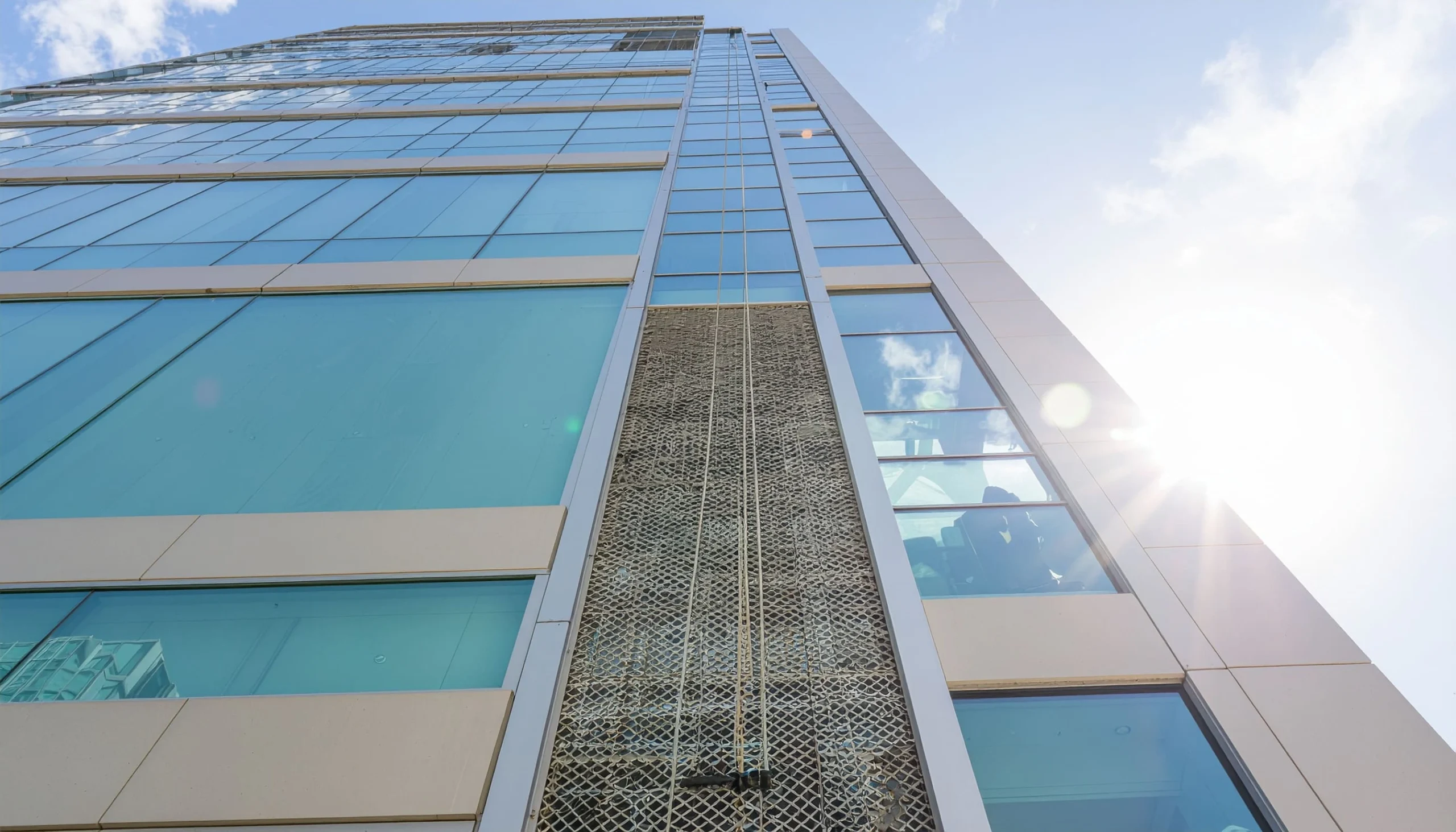
The maintenance of commercial facades in Western Australia requires a thorough understanding of both architectural design and environmental science. Large glass installations have become a standard feature of modern office complexes, educational institutions, and retail hubs across the state. While these expansive glazed surfaces maximise natural light and create a professional aesthetic, they are also constantly exposed to harsh coastal winds, high UV radiation, and airborne particulate matter. Keeping these surfaces clean is not merely a matter of visual appearance; it is essential for protecting the structural integrity of the glass and sealants over time.
For facility managers and commercial cleaning contractors, the primary challenge of facade maintenance is balancing operational efficiency with occupant and worker safety. Historically, accessing elevated windows meant relying on ladders, scaffolding, or specialised access machinery, all of which introduce significant physical risks and operational overheads. In the modern commercial landscape, the focus has shifted toward ground-based solutions that allow operators to perform high-access cleaning safely and efficiently. By minimising the requirement for elevated work platforms, businesses can drastically simplify their maintenance schedules while maintaining immaculate facilities.
Selecting the appropriate equipment for these tasks is a decision that directly impacts daily productivity and long-term operating costs. Professional cleaning crews require tools that offer the perfect balance of structural rigidity, lightweight handling, and physical durability. Substandard equipment often suffers from excessive flexing, inconsistent locking mechanisms, and rapid material degradation when exposed to Western Australia’s demanding coastal climate. Investing in high-performance kits designed specifically for professional use ensures that cleaning teams can deliver flawless, streak-free results on every shift without compromising on safety.
The Operational Challenge of Elevated Facade Maintenance
Commercial buildings in the Perth metropolitan area are subject to a unique combination of environmental factors that complicate window maintenance. The team at Weskleen Supplies notes that the afternoon sea breeze, colloquially known as the “Fremantle Doctor,” carries a high concentration of corrosive salt spray deep into the suburban landscape. When this salt combines with fine silica dust from nearby construction and organic residue from bird droppings, it forms a stubborn, opaque film on exterior glass. If left untreated, these deposits can undergo chemical bonding with the glass surface under the intense Western Australian sun, leading to permanent etching and costly restoration requirements.
Beyond environmental degradation, the physical act of cleaning windows above ground level presents significant safety challenges. Work Health and Safety regulations in Western Australia place strict responsibilities on employers and building managers to eliminate or minimise the risk of falls from height. Traditional methods using ladders are increasingly restricted due to the inherent hazard of falls, while scaffolding and elevated work platforms require specialised licenses, extensive setup times, and ongoing hire fees. These logistical hurdles often cause facilities to delay routine cleaning, leading to a progressive buildup of grime that is much harder to remove.
To address these challenges, the industry has turned to ground-based high-access solutions. By keeping the operator’s feet firmly on the ground, businesses can eliminate the primary hazard associated with window cleaning. This shift not only ensures full compliance with modern safety standards but also increases the speed of cleaning operations. An operator working from the ground can move swiftly from one glazing panel to the next, covering significantly more surface area per hour than a team restricted by the slow positioning and safety protocols of height access machinery.
Ground-Based High-Reach Window Cleaning: A Safer Alternative
The rapid advancement of lightweight material science has enabled the development of highly effective ground-based cleaning tools. These modern systems allow operators to reach windows up to two storeys high while standing safely on the pavement. The transition to ground-based high-reach window cleaning has redefined the commercial maintenance industry, offering a cost-effective method for keeping multi-storey facades pristine without the logistical friction of traditional high-access equipment.
When evaluating a ground-based kit, the primary consideration is the structural integrity of the extension system. A pole that bends or wobbles when extended makes it nearly impossible to apply the consistent, even pressure required to squeegee water off glass cleanly. This wobble causes the rubber blade to skip, leaving water droplets and unsightly streaks behind. To prevent this, professional kits utilise multi-section poles constructed from tempered alloys or composite materials that maintain their linear rigidity even at full extension, ensuring that the mechanical force applied by the operator is transmitted directly to the glass surface.
Furthermore, ground-based cleaning dramatically simplifies the administrative requirements of commercial maintenance. There is no need to coordinate road closures, secure pedestrian permits, or perform complex high-risk work method statements (HRWMS) that are standard when operating elevated work platforms or industrial abseiling systems. A single operator, equipped with a high-reach kit, can complete a scheduled clean during standard business hours with minimal disruption to the building’s occupants, making it the ideal protocol for modern, high-traffic commercial environments.
Anatomy of the Ettore Telescopic Extension Pole Systems
Ettore has long been recognised as a pioneer in the professional window cleaning industry, developing systems that are engineered specifically for the rigours of daily commercial use. At the core of these setups is a high-performance system of premium poles built specifically to deliver exceptional, professional outcomes. The engineering behind these poles focuses on three primary criteria: structural strength, low physical weight, and reliable locking mechanisms.
The construction of Ettore’s telescopic extension poles utilises aerospace-grade anodised aluminium. The anodisation process creates a hard, protective oxide layer on the surface of the metal, preventing the severe white-rust corrosion that commonly occurs when aluminium is exposed to salt-laden coastal air and wet cleaning environments. This treatment ensures that the telescopic sections slide smoothly against one another without binding or sticking over years of service. Additionally, the outer tubing features a fluted profile, which increases the structural strength of the pole while providing a superior grip for the operator’s hands, even when the equipment is wet or soapy.
The mechanical connection between the telescopic sections is managed by a heavy-duty flip-lock mechanism. Unlike traditional twist-lock collars, which can seize up due to grit contamination or slip under vertical pressure, Ettore’s flip-locks maintain consistent holding power. They are easily adjusted and can be operated with a simple thumb motion, allowing the user to change the length of the pole in seconds. The tip of the pole features a heavy-duty tapered cone with a click-lock system, ensuring that squeegees, washers, and other attachments are mechanically locked onto the pole and cannot fall off during high-access operations.
Comparing the 12-Foot and 18-Foot Ettore Reach Systems
When selecting a high-reach system, matching the pole length to your specific commercial facility profile is critical for operational efficiency. Ettore offers two primary configurations designed for standard commercial use: the 12-foot (3.6-metre) system and the 18-foot (5.5-metre) heavy-duty system. Each length serves a distinct purpose, and understanding their practical differences prevents operator fatigue and ensures optimal cleaning results.
The 12-foot telescopic pole is the standard tool for retail shopfronts, ground-floor office glazing, and interior glass partitions. When collapsed, it is compact enough to fit easily into standard commercial vehicles and is lightweight enough (approximately 0.9 kilograms) to be used all day without causing excessive shoulder strain. This system is highly manoeuvrable, making it perfect for navigating tight commercial corridors, indoor lobbies, or busy retail environments where space is restricted. It provides the operator with precise control over the squeegee, ensuring fast and flawless results on lower-level surfaces.
For multi-storey facilities, the Ettore multi-purpose extension pole with an 18-foot reach pushes your effective working height to approximately 6.5 metres. This genuine two-storey reach brings upper-level glazing, high bay warehouse windows, and architectural facade elements into safe reach from ground level. Although the 18-foot pole is constructed with thicker walls to handle the increased leverage forces, its dry weight remains manageable at approximately 1.3 kilograms. It is the ideal tool for facilities management teams responsible for maintaining mixed-use office parks, school campuses, and large-scale commercial warehouses.
Understanding the Physics of Pole Leverage and Operator Fatigue
Operating long telescopic extension poles requires a basic understanding of physics, specifically the concept of the moment arm. When a pole is extended to 5.5 metres, any weight at the tip is multiplied by the length of the pole, creating a significant turning force, or torque, at the operator’s hands. A squeegee assembly that weighs 300 grams feels several times heavier when controlled from the ground through a long lever arm. This physical leverage is what causes muscular fatigue in the operator’s shoulders, back, and wrists if proper ergonomic techniques are not utilised.
To minimise fatigue and maintain precise control over the cleaning tool, operators must adopt a balanced stance. This involves placing one foot slightly forward to establish a solid base and using the body’s core muscles rather than arm strength to guide the pole. The hands should be placed wide apart on the grip sections, with the lower hand acting as a pivot point and the upper hand guiding the direction of travel. This spacing maximises the operator’s mechanical advantage and reduces the physical effort required to keep the squeegee pressed firmly against the glass.
Professional window cleaners also learn to work with the pole’s natural movement rather than fighting against it. All long poles will exhibit a minor degree of deflection, or bend, when extended. Trying to force the pole completely rigid through muscle power is inefficient and exhausting. Instead, the operator should apply a smooth, continuous downward stroke, allowing the weight of the pole itself to assist in maintaining contact between the squeegee blade and the glass. This rhythmic approach reduces physical strain, prevents skipping, and ensures a consistent, streak-free finish across the entire glazing panel.
Selecting the Right Squeegee and Washer Attachments for Ettore Kits
The effectiveness of a high-reach window cleaning system is heavily dependent on the quality of the attachments connected to the pole. Ettore’s kits are designed to work seamlessly with a range of professional brass and stainless steel squeegees, as well as high-performance washing sleeves. Using essential window cleaning equipment that is matched to your specific pole tip ensures that the attachments remain secure and aligned during operation, preventing accidental drops that can damage property or injure staff.
The squeegee is the most critical tool for achieving a streak-free finish. Professional channels are constructed from brass or tempered stainless steel, which are completely rigid and do not warp or bend over time. The rubber blade held within the channel must be of premium quality, featuring a sharp, square-cut edge that wipes the glass completely dry in a single pass. Squeegee handles should feature a quick-release mechanism to allow the operator to change channels rapidly, adapting the tool size to the width of the window frame being cleaned.
For washing the glass prior to squeegeeing, a high-capacity washer sleeve is required. Microfibre sleeves are the industry standard because they can absorb up to six times their weight in water, allowing the operator to wash multiple windows before needing to re-wet the tool. Many professional sleeves also feature a scrub pad on one end, which allows the operator to remove stubborn debris, such as dried bird droppings or tree sap, simply by rotating the pole and applying targeted friction. Securely locking these tools to the tapered end tip of the Ettore pole ensures a safe and uninterrupted cleaning cycle.
The Chemistry of Glass Cleaning in Western Australia
Achieving a professional result on commercial windows requires more than just clean water and mechanical friction. Western Australia’s unique environmental conditions mean that glass surfaces are often coated in a complex mixture of organic oils, industrial fallout, and mineral deposits. To break these bonds efficiently, cleaning crews must utilise specialised chemical formulations that are designed to lower the surface tension of water and suspend contaminants for easy removal.
Professional window cleaning solutions contain advanced surfactants that allow the wash water to spread evenly across the glass rather than heading into droplets. This even wetting is essential for dissolving grease and oil films quickly. The pH level of the solution should sit between 6.5 and 8.5; this is neutral enough to prevent chemical etching of the glass or damage to anodised aluminium window frames, yet effective enough to break down organic proteins and mineral crusts. For facilities near the coast, utilising high-quality window cleaning chemicals that include anti-static agents will prevent wind-blown dust from immediately adhering to the freshly cleaned glass.
When dealing with severe mineral scaling, which is a common issue in areas with hard ground-water irrigation overspray, standard neutral cleaners may not suffice. In these scenarios, a mild acidic cleaner must be used to dissolve the calcium and magnesium deposits. However, this must be done with extreme care. The acid must be thoroughly rinsed from the glass and frame within minutes of application to prevent permanent chemical damage. Understanding this chemical balance is what separates professional facility maintenance from basic janitorial cleaning, ensuring that valuable glazing assets are protected for the long term.
Mechanical Care and Preventative Maintenance for Telescopic Poles
A high-reach window cleaning kit is a valuable capital investment, and its operational lifespan is directly determined by the quality of its ongoing maintenance. Because these tools are constantly exposed to water, aggressive cleaning chemicals, and abrasive environmental grit, they require a systematic care protocol to prevent premature wear and mechanical failure. Neglecting basic maintenance can cause locking mechanisms to seize and telescopic sections to become scratched and difficult to slide.
The most critical maintenance task is the regular cleaning of the telescopic sections. At the end of each shift, the pole should be fully extended and wiped down with a clean, dry cloth to remove any residual soapy water, grit, or salt spray. If salt or grit is allowed to remain on the aluminium, it acts as an abrasive paste when the pole is collapsed, scratching the protective anodised layer and creating friction points. Particular attention should be paid to the areas around the flip-lock collars, as grit accumulation in these hinges can prevent them from clamping securely, leading to pole slippage under pressure.
To maintain the smooth operation of the locking mechanisms, the flip-locks should be lubricated monthly using a dry silicone spray. It is essential to avoid using oil-based lubricants, such as standard WD-40 or grease, as these oils attract and hold airborne dust and sand, quickly turning into a destructive grinding compound. Dry silicone provides excellent lubrication without leaving a sticky residue, ensuring that the locks snap open and shut easily. Additionally, when purchasing extension telescopic poles for commercial use, storing them horizontally on dedicated vehicle racks prevents the internal components from warping or suffering impact damage during transport.
Cost-Benefit Analysis: Equipment Investment versus Height Access Hire
For facility managers and commercial cleaning business owners, the financial return on investment for ground-based high-reach kits is immediate and compelling. Traditional elevated window cleaning methods represent a significant, recurring operational expense. Every time a second-storey window needs cleaning, the business must factor in the cost of hiring a scissor lift, cherry picker, or mobile scaffolding towers. In the Perth metropolitan area, the daily hire rate for an elevated work platform (EWP) can easily range between $300 and $500, not including delivery fees, operator licensing requirements, and administrative safety permits.
By contrast, a professional Ettore ground-based kit represents a one-off capital investment of several hundred dollars. This equipment effectively eliminates the need for height access machinery hire for the vast majority of routine facade cleaning tasks. A facility management team that transitions from EWP hire to ground-based high-reach kits typically recovers their entire capital expenditure within the first two cleaning cycles. Over a five-year period, this shift can save a business tens of thousands of dollars in equipment rental fees and administrative overheads, while significantly reducing their public liability risk exposure.
Furthermore, ground-based cleaning drastically reduces the labour hours required to complete a project. An operator using an EWP spends a significant portion of their shift positioning the machine, securing the safety perimeter, and moving the platform up and down. A ground-based operator, however, can walk continuously along the facade, cleaning as they go. This operational efficiency allows a single worker to complete the same window area in a fraction of the time, freeing up labour resources for other critical maintenance tasks and increasing the overall profitability of the cleaning contract.
Integrating Ettore Systems into Your Facility Maintenance Schedule
Transitioning your commercial facility maintenance to ground-based high-reach cleaning is a straightforward process that begins with a comprehensive audit of your glazing assets. Map out all exterior and interior glass surfaces, noting their heights, angles, and ease of access. For most commercial properties, you will find that over 90% of the windows can be accessed using a combination of 12-foot and 18-foot telescopic poles, leaving only the most extreme architectural features for specialised high-access teams.
Once the equipment has been acquired, staff training should be prioritised to ensure safety and efficiency. Because Ettore systems completely eliminate the risk of falls from height, training is much simpler and faster than EWP or abseiling onboarding. Focus on teaching operators the correct ergonomic posture, the wide-hand grip, and the smooth, continuous stroking technique required to prevent streaks. This simple training investment ensures that your team feels confident and operates at peak efficiency from day one, delivering consistent, professional-grade results across all facade surfaces.
To maximise the lifespan of your equipment and maintain a high standard of appearance, integrate window cleaning into a scheduled preventative maintenance plan. Depending on your building’s location and exposure to coastal wind, a quarterly cleaning frequency is typically recommended for Perth commercial facilities. By establishing a regular schedule, you prevent the accumulation of corrosive salt and mineral scale, ensuring that your windows remain clear and visually impressive while extending the useful life of both your glazing assets and your high-reach cleaning equipment.
Conclusion
For professional commercial window cleaning in Western Australia, ground-based high-reach kits offer an unmatched combination of safety, efficiency, and cost-effectiveness. By replacing expensive and high-risk elevated access methods with precision-engineered telescopic tools, facility managers can achieve pristine results while protecting their operational budgets. The science behind Ettore’s anodised aluminium poles and click-lock attachments ensures that your team can work with confidence, day after day, in any environmental condition.
The choice of cleaning equipment is a direct reflection of a facility’s commitment to quality and safety. Investing in professional-grade tools like those in the Ettore range ensures that your maintenance program is built on a foundation of durability and performance. These systems allow you to maintain absolute control over your facade care, reducing reliance on external contractors and eliminating the logistical friction of machinery hire.
To discover the ideal high-reach cleaning kit for your Perth commercial building, or to upgrade your current maintenance inventory, call 1800 728 926 or explore the professional range at Weskleen Supplies today. Our experienced team is dedicated to providing the high-performance cleaning solutions, technical advice, and ongoing support you need to keep your commercial property looking its absolute best.