


Blog
Floor Polishing Machine vs Manual Polish: What WA Facility Managers Need to Know

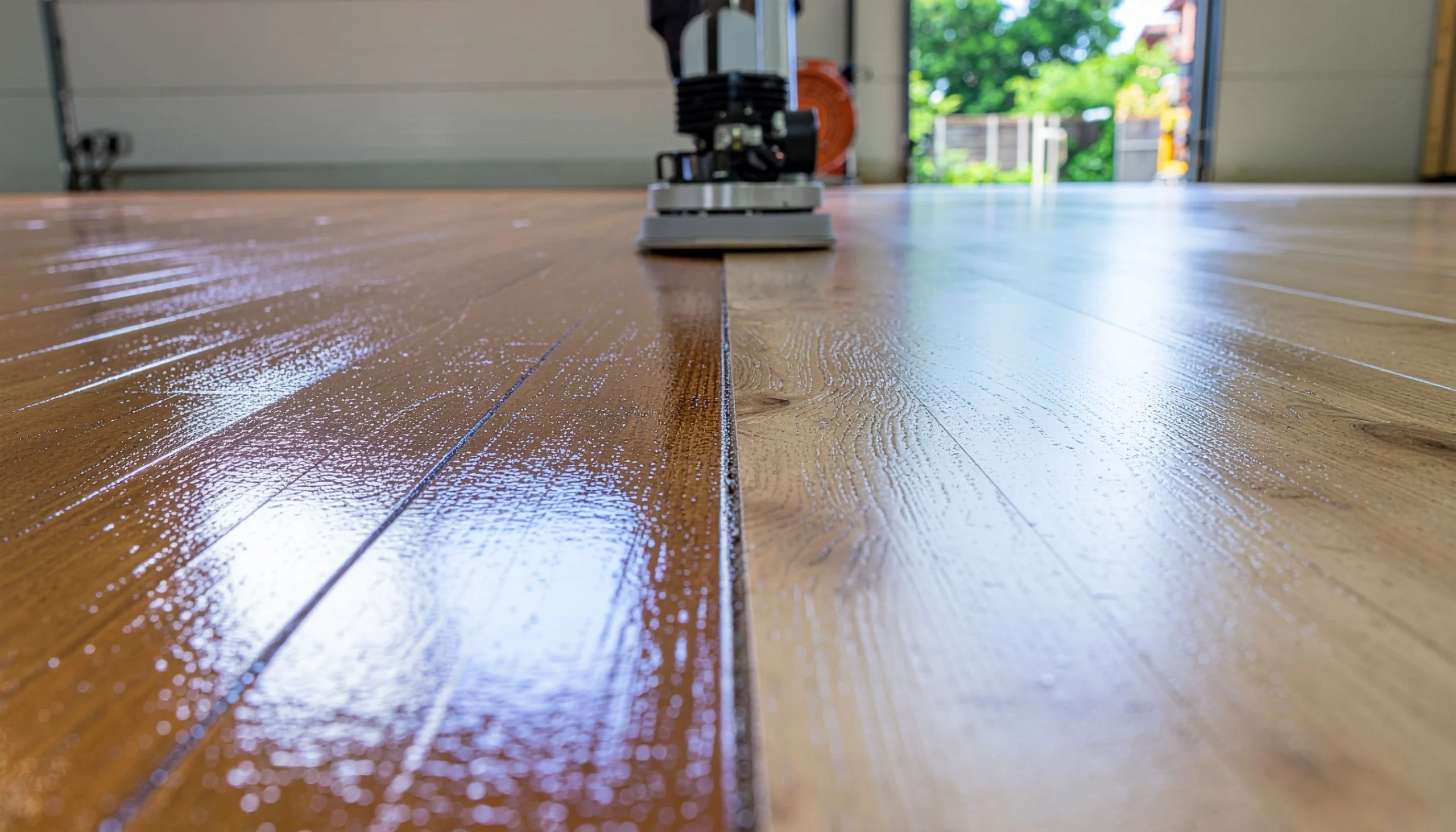
Western Australian facility managers face a challenge that rarely makes headlines but affects every visitor’s first impression: maintaining polished floors across thousands of square metres. A shopping centre in Joondalup recently calculated they were spending 47 hours per week on manual floor polishing across their retail spaces. That is more than a full-time position dedicated solely to pushing a buffing pad in circles.
The question is not whether polished floors matter; anyone who has walked into a premium office building or hospital knows they do. The real question is whether investing in a floor polishing machine commercial operation makes financial sense compared to manual methods, particularly in WA’s unique conditions where red dust, coastal salt, and high foot traffic create specific maintenance demands. For professionals sourcing commercial cleaning supplies perth, understanding the true cost of labour versus equipment is the first step toward operational efficiency.
The True Cost of Manual Floor Polishing
Manual floor polishing seems straightforward: grab a mop, apply polish, and buff by hand or with a basic rotary buffer. It is how cleaners have worked for decades. But here is what the numbers actually show.
A maintenance worker using manual methods can polish approximately 150-200 square metres per shift, depending on the floor condition and product used. That same worker operating a professional floor polishing machine commercial unit covers 800-1,200 square metres in the same timeframe. When evaluating the manual vs machine polish difference, the efficiency gap is not marginal; it is a four-to-six-fold difference.
Consider a mid-sized Perth office building with 3,000 square metres of polished flooring requiring quarterly maintenance. Manual methods demand roughly 15-20 worker hours per quarter. A machine-based approach cuts this to 3-4 hours. Over a year, that is 48-64 hours versus 12-16 hours, resulting in a difference of 36-48 hours of labour cost.
At current WA award rates for cleaning staff, that translates to significant annual labour savings for just one building. Scale this across multiple sites or larger facilities, and the mathematics become compelling quickly.
What ‘Commercial-Grade’ Actually Means for Polishing Equipment
Walk into any hardware store and you will find floor polishers for a few hundred dollars. Walk into Weskleen Supplies and you will see professional machines starting much higher. What justifies the price difference?
Motor durability separates consumer from commercial equipment. A domestic polisher uses a motor designed for occasional use. A commercial machine expects 200-500 hours per year, sometimes more. The motor construction, bearing quality, and heat dissipation systems are fundamentally different. Think of it like comparing a home drill to a tradie’s impact driver. They look similar, but one is built for weekend projects, while the other is built for daily jobsite punishment.
Pad pressure and consistency matter more than most facility managers realise. Manual buffing applies uneven pressure, pressing harder at the start of each pass when arms are fresh, and lighter as fatigue sets in. A quality commercial machine maintains consistent downward pressure across the entire pad surface throughout the entire job. This consistency produces uniform gloss levels without the streaking or patchy appearance common with manual work.
Solution delivery systems on professional commercial cleaning equipment control exactly how much polish reaches the floor. Manual application creates variations. Too much product in one area leaves it tacky, while too little in another causes it to dry too quickly. Commercial machines eliminate this guesswork.
WA-Specific Challenges That Favour Machine Polishing
Western Australia’s environment creates unique floor maintenance challenges. Red dust from the interior, salt air along the coast, and UV intensity that degrades floor finishes faster than in southern states are daily realities for Perth facility managers.
Combating Fine Dust Infiltration
Dust infiltration is relentless. Even with entry matting systems, fine red particles work their way into buildings, particularly during summer’s easterly winds. These particles act like sandpaper on polished floors, creating micro-scratches that dull the finish. Manual polishing can address this, but it requires more frequent application to maintain gloss levels. Machine polishing’s efficiency makes more frequent maintenance cycles economically viable.
Managing Coastal Salt Degradation
Salt air degradation affects coastal facilities from Mandurah to Geraldton. Salt accelerates the breakdown of floor finishes, requiring more robust polishing schedules. A manual approach might mean accepting lower gloss levels between major refinishing projects. A dedicated floor polishing machine allows facility managers to maintain higher standards with the same labour budget.
Coping With UV Exposure and Heat
Heat and UV exposure through WA’s extensive glass facades causes floor finishes to cure harder and faster than in cooler climates. This makes polish more difficult to spread evenly, presenting a particular challenge with manual application. Commercial machines’ controlled solution delivery compensates for these rapid curing times.
When Manual Methods Still Make Sense
The manual vs machine polish debate is not universally one-sided. Specific situations favour manual approaches, and experienced facility managers recognise these contexts.
Small or irregularly shaped spaces under 100 square metres often do not justify machine setup time. A retail kiosk, small reception area, or corridor section can be manually polished faster than retrieving, setting up, and cleaning a machine. The break-even point sits around 150-200 square metres for most facilities.
Highly detailed areas with extensive furniture, fixtures, or equipment benefit from manual precision. Think medical clinics with examination rooms, or offices with dense workstation layouts. Manoeuvring a machine around obstacles takes longer than working with a hand buffer or mop.
Budget-constrained operations might legitimately choose manual methods when labour costs are low and capital is tight. A small business with owner-operators providing cleaning might reasonably prioritise other equipment investments. However, this calculation changes rapidly as the facility grows or labour becomes contracted.
Touch-up work between major polishing cycles often works better manually. Addressing high-traffic wear patterns near entries or service counters does not require pulling out the machine. A quick manual buff restores appearance until the next scheduled machine polish.
The Real Productivity Gap: Beyond Speed
Speed comparisons tell only part of the story. The productivity advantage of a commercial floor polishing machine extends into areas facility managers do not always quantify.
Fatigue reduction changes everything for multi-site operations. A cleaner who manually buffs floors all morning arrives at the afternoon site already tired, and quality suffers. A machine operator maintains consistent output across multiple locations because the equipment does the physical work. This matters particularly for contract cleaners servicing multiple sites daily.
Training time decreases with machine operations. Teaching proper manual polishing technique takes weeks of supervised practice. Teaching machine operation takes hours. The learning curve is not just shorter; it is less steep, which reduces the skill premium required for floor maintenance staff.
Quality consistency across different operators improves dramatically. Manual methods produce results that vary with the individual’s technique and physical capability. Machines standardise the process, which is essential for managers overseeing large teams.
Chemical efficiency improves with controlled application. Manual methods typically use 15-25% more polish than necessary because operators apply conservatively to avoid dry spots. Machine application meters product precisely, reducing waste. Integrating high-quality liquids like the Mr. Bean 5L All-Purpose Cleaner into your routine cleaning before polishing ensures finishes adhere properly without chemical interference.
Making the Investment Decision: A Framework for WA Facilities
Choosing the right path in the manual vs machine polish comparison requires an honest assessment of your specific situation. Here is how to structure that decision.
Calculate your total floor area requiring regular polishing. Include all hard floors that receive polish, not just showcase spaces. Many facilities underestimate this figure by focusing only on main corridors while overlooking back-of-house spaces that still need maintenance.
Determine your current frequency and what you would prefer. If you polish quarterly but wish you could do it monthly, factor this into calculations. Machine efficiency often enables more frequent maintenance at the exact same labour cost.
Price your labour accurately. Do not use just the hourly wage; include superannuation, workers compensation, leave loading, and supervision time.
Project equipment lifespan realistically. A quality commercial polisher used in normal conditions should deliver 7-10 years of service with proper maintenance.
Account for opportunity cost. Hours spent manually polishing floors cannot be spent on other maintenance tasks. If machine polishing frees up 30 hours per month, what else could your team accomplish with that time? For most WA facilities over 1,000 square metres with regular polishing requirements, the payback period on a floor polishing machine commercial investment runs 12-24 months. After that, it is pure operational savings.
Equipment Considerations Beyond the Polisher Itself
Investing in commercial cleaning supplies means investing in a system, not just a single piece of equipment. Experienced operators know the machine is only part of the equation.
Pad selection dramatically affects results. Different pad types suit different floor finishes and polishing stages. Red pads are for spray buffing, white pads for polishing, and microfibre pads are designed for ultra-high-speed work. A premium Enduro Microfibre Mop Head demonstrates how material technology affects cleaning performance, and the exact same principle applies to polishing pads.
Solution compatibility matters more than many realise. Not all floor polishes work equally well with machine application. Some are formulated specifically for high-speed buffing, while others are strictly for manual application.
Maintenance supplies keep the machine operational. Spare pads, brushes for cleaning pad drivers, and appropriate lubricants for moving parts must be kept on hand. A machine sitting idle waiting for a minor part wastes more money than the part costs.
The Hybrid Approach: What Most WA Facilities Actually Do
In practice, most successful facilities do not choose exclusively between manual and machine methods. They deploy both strategically to secure the best results from their commercial cleaning supplies perth inventory.
Primary spaces get machine polishing on a scheduled cycle. This covers the bulk of square metres efficiently. Secondary spaces receive manual touch-ups as needed, with machine polishing applied less frequently. This might include offices, meeting rooms, or low-traffic corridors.
Detail work around edges, corners, and obstacles gets manual attention even in machine-polished areas. A combination approach produces the best results in complex spaces. Emergency response situations also favour manual methods. When a spill damages the floor finish and requires immediate spot treatment, grabbing a bottle and buffer beats setting up the machine.
What the Next Five Years Look Like for Floor Polishing
Technology shifts are reshaping commercial floor maintenance in ways that favour machine-based approaches even more strongly.
Battery technology improvements eliminate the cord management challenges that once made machine polishing difficult in complex spaces. Modern lithium systems deliver runtime comparable to corded machines with faster charging and longer lifespan. Equipment like the Pacvac Superpro 700 Battery Kit shows how advanced battery systems have matured for professional cleaning operations.
Automation features are appearing in commercial polishing machines. Self-levelling pad pressure, automatic solution metering, and guided path tracking help less-experienced operators achieve professional results quickly.
Integrated cleaning systems combine scrubbing, stripping, and polishing functions in single machines, reducing the equipment inventory facilities need to maintain. This consolidation makes the investment case much stronger for mid-sized operations.
Making It Work: Implementation Advice for WA Facility Managers
Buying the machine is the easy part. Getting genuine value from it requires deliberate implementation.
Start with proper training, not just a quick demonstration. An operator who understands why they are doing something specific will achieve better results than one just following basic steps.
Establish maintenance schedules for the equipment itself, not just the floors. Schedule monthly pad inspections, quarterly deep cleaning of the machine, and annual service checks. Equipment that is maintained lasts, while equipment that is neglected becomes expensive scrap metal. This reality applies equally to polishers and heavy-duty floor scrubbers in perth.
Document your processes so results do not depend on one person’s knowledge. When the experienced operator is sick or leaves, the replacement should be able to reference written procedures that specify pad types, solution dilution rates, and pass patterns.
Track results quantitatively when possible. Gloss meter readings, customer feedback scores, or time logs showing hours spent on floor maintenance will prove whether the investment is delivering expected returns.
The Decision Point
For Western Australian facility managers maintaining large commercial spaces, investing in proper mechanisation through reliable commercial cleaning supplies perth networks delivers measurable returns through labour efficiency, quality consistency, and reduced chemical waste. The investment typically pays for itself within two years, then continues generating savings for another 5-8 years of service life.
Manual methods retain relevance for small spaces, detailed work, and budget-constrained operations. But the mathematics shift decisively toward machine polishing as facility size increases and labour costs rise.
The question is not whether machines are theoretically better; the productivity data settles that. The question is whether your specific operation has reached the scale where that theoretical advantage translates into practical financial benefit.
Your floors will look better, your team will work more efficiently, and your operational costs will decrease. For questions about specific equipment suited to your facility’s requirements, you can find reliable guidance and local support through Weskleen Supplies. To discuss upgrading your maintenance fleet, contact our team on 1800 728 926 today.