


Blog
Floor Polisher Guide: Choosing the Right Machine for Perth Commercial Spaces

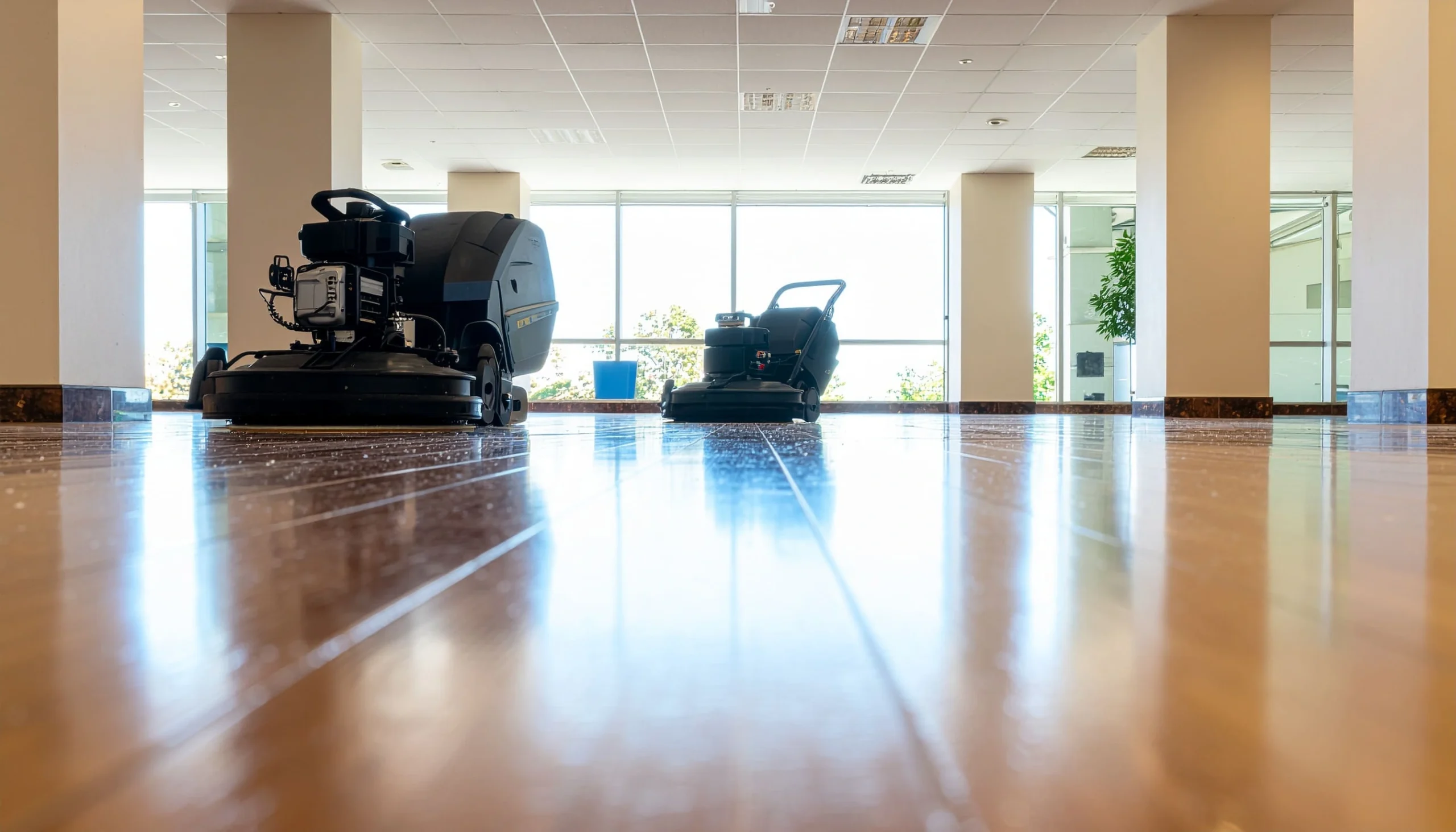
Perth’s commercial spaces face unique challenges. Limestone dust from construction, red dirt tracked in from surrounding suburbs, and the relentless Western Australian sun streaming through windows all reveal every streak, scuff, and imperfection on your floors. A proper commercial floor polisher Perth businesses rely on doesn’t just make surfaces shine; it protects your investment and maintains the professional appearance that clients expect when they walk through your door. But what does commercial-grade actually mean for your daily operations?
The difference between consumer-grade and commercial floor polishers isn’t just about power. It is about durability, efficiency, and the ability to handle the specific demands of high-traffic environments. Facility managers often waste thousands on machines that cannot keep up with daily use, only to replace them within months. Understanding what separates a reliable workhorse from an expensive disappointment starts with knowing exactly what your space requires. When sourcing commercial cleaning supplies perth, getting the equipment specifications right is your first line of defence.
Understanding Floor Polisher Types and Their Applications
Commercial floor polishers fall into distinct categories, each designed for specific tasks. The orbital floor scrubber uses multi-directional force to remove ingrained dirt from porous surfaces, ensuring a deep and consistent clean without damaging the material. It works smarter, preventing the swirling marks often associated with inexperienced operators.
Rotary floor machines spin in a single direction, making them ideal for heavy-duty stripping and aggressive cleaning. These machines excel at removing old wax buildup or preparing floors for new finishes. They are powerful but require proper technique; think of them like a circular saw compared to an orbital sander. Both remove material, but one requires significantly more control to avoid damaging the base.
High-speed burnishers operate at 1,500 to 3,000 RPM, creating that mirror-like shine you see in premium office buildings and retail spaces. They generate heat through friction, which melts and buffs floor finish to a hard, glossy surface. However, they are not cleaning machines. They are finishing tools for already-maintained floors.
For businesses managing multiple floor types, versatility is paramount. One café owner in Mount Lawley shared that they had struggled for months with stubborn coffee stains near their espresso bar. The aggressive scrubbing action of commercial cleaning equipment lifted what three different manual mops couldn’t touch, restoring the area to its original standard.
Floor Type Considerations for Perth Commercial Environments
Perth’s commercial spaces typically feature polished concrete, vinyl composite tile (VCT), ceramic tile, or natural stone. Each demands different treatment and careful selection from your commercial cleaning supplies.
Polished concrete floors, popular in modern offices and retail spaces, require minimal maintenance but benefit from periodic professional floor polishing to restore their lustre. The wrong machine can create uneven patches or dull spots that scream neglect. Use a machine with adjustable pressure settings to avoid over-polishing soft concrete or under-treating harder surfaces.
VCT flooring dominates schools, medical facilities, and retail environments. It responds beautifully to regular burnishing but deteriorates quickly under aggressive scrubbing. The key is matching pad hardness to your maintenance schedule: softer pads for daily buffing, harder pads for periodic deep cleaning.
Natural stone like travertine or marble appears in high-end commercial lobbies and hospitality venues. These surfaces are pH-sensitive and scratch easily. You need a machine that works with pH-neutral cleaners and soft pads. Think of it like washing your face; harsh chemicals and rough scrubbing damage the surface, while gentle, consistent care maintains its natural beauty and extends its lifespan.
Ceramic tile floors handle almost anything, but the grout lines tell the real story. A quality commercial floor polisher with proper pad coverage cleans both tile and grout simultaneously, preventing the discoloured grout lines that make even new floors look old.
Power Source: Corded vs Battery-Powered Machines
The debate between corded and battery-powered floor polishers comes down to your specific operational needs. Corded machines deliver consistent power without interruption. They are ideal for large, open spaces where cord management isn’t a safety hazard. The unlimited runtime means you can polish a 5,000-square-metre warehouse without stopping.
Battery-powered options eliminate trip hazards and provide mobility in complex layouts. Medical facilities, aged care homes, and multi-level offices benefit immensely from cordless operation. However, battery capacity limits runtime, typically 60 to 90 minutes per charge for heavier polishing machines.
Assessing your largest cleaning task is recommended. If you can complete it within one battery cycle, cordless makes sense. If not, you will need multiple battery packs or a corded machine. Some businesses run hybrid operations, using cordless tools for daily maintenance and corded machines for periodic deep cleans.
The Pacvac Superpro 700 Battery Kit illustrates how battery technology has evolved to support continuous operation. Four batteries and a fast charger mean continuous running by rotating charged packs. This same principle applies to battery-powered floor polishers; having backup power eliminates downtime.
Machine Size and Manoeuvrability in Confined Spaces
Perth’s commercial landscape includes everything from sprawling shopping centres to narrow heritage-listed shopfronts. Machine size directly impacts efficiency and accessibility when navigating these varied environments.
Compact 13-inch machines navigate between restaurant tables, around retail displays, and through medical examination rooms. They are slower to cover large areas but essential for detailed work. A physiotherapy clinic in Subiaco uses a small rotary machine for treatment rooms and a larger walk-behind model for their reception and exercise areas.
Standard 17-inch machines balance coverage with manoeuvrability. They are the workhorses of commercial cleaning, versatile enough for most applications without being cumbersome. These machines fit through standard doorways and work efficiently in spaces ranging from 200 to 2,000 square metres.
Walk-behind and ride-on machines suit warehouses, shopping centres, and large office complexes. They cover ground quickly but require storage space and cannot handle tight corners. One logistics company in Jandakot runs a ride-on burnisher across their 10,000-square-metre facility every weekend, completing in three hours what would take two days with a standard machine.
Pad Compatibility and Maintenance Requirements
Floor pads are the interface between machine and surface. Understanding pad colour coding prevents costly mistakes across your facility:
- Black pads: Aggressive stripping and heavy-duty cleaning
- Brown pads: Medium stripping and scrubbing
- Green pads: General-purpose scrubbing
- Blue pads: Light cleaning and buffing
- Red pads: Spray buffing and light cleaning
- White pads: High-speed burnishing and polishing
Using the wrong pad is like washing your car with sandpaper; you will get results, but not the ones you want. A hotel in Northbridge learned this the hard way when their night cleaner used black stripping pads on polished marble, creating visible scratches that required professional floor polishing and extensive restoration.
Pad maintenance extends machine life and ensures consistent results. Rinse pads after each use, store them flat to prevent warping, and replace them when they lose thickness or develop hard spots. It is a common mistake to try and squeeze extra life from worn pads, only to damage floors that cost thousands to repair. Quality consumables, similar to a premium microfibre mop head, perform longer. Investing in high-grade pads reduces replacement frequency and delivers demonstrably better results.
Chemical Compatibility and Safety Standards
Floor polishers work in conjunction with cleaning chemicals, not independently. pH-neutral cleaners suit daily maintenance on most surfaces. They clean effectively without stripping protective finishes or damaging pH-sensitive materials like natural stone.
Alkaline cleaners cut through grease and organic soils but can dull finishes over time. Use them for periodic deep cleaning, not daily maintenance. A commercial kitchen in Victoria Park uses alkaline cleaners monthly to remove cooking oil residue, then neutralises the surface with a pH-balanced rinse.
Acid cleaners remove mineral deposits and rust stains but attack grout and etch natural stone. They are highly specialised tools for specific problems, not general-purpose solutions for your commercial cleaning supplies perth inventory.
A reliable product like the Comet Foaming Cleaner & Sanitiser combines cleaning power with disinfection for high-hygiene areas. When using such products with floor polishers, ensure proper dilution ratios; concentrated chemicals can damage machine components and void warranties.
Safety standards require proper ventilation when using chemical cleaners with floor machines. Enclosed spaces need exhaust fans or open windows. Personal protective equipment (PPE) includes gloves, safety glasses, and non-slip footwear. Why would you compromise health for the appearance of savings? Workers can face hospitalisation from chemical exposure that could easily have been prevented with basic safety protocols.
Noise Levels and Operating Hours
Perth’s noise regulations vary by council area, but most restrict high-noise equipment during early morning and late evening hours. Commercial floor polishers typically operate between 65 and 75 decibels, which is comparable to a standard vacuum cleaner.
High-speed burnishers are the loudest, often exceeding 70 decibels. They are unsuitable for occupied spaces during business hours. Most businesses run them after hours or during weekends. A medical centre in Applecross schedules burnishing for Saturday afternoons when patient traffic is minimal.
Orbital and rotary scrubbers operate quieter, typically around 65 to 68 decibels. They are tolerable during business hours in most environments, though still disruptive in quiet settings like libraries or professional offices.
Battery-powered machines often run quieter than corded equivalents due to brushless motor technology. If you are polishing floors in occupied spaces, the noise reduction frequently justifies the premium cost.
Warranty Coverage and Local Service Support
Equipment warranties mean nothing without accessible service support. Perth’s geographic isolation makes local service networks critical. A machine with a three-year warranty is worthless if the nearest service centre is in Melbourne and shipping takes two weeks.
Local distributors, such as Weskleen Supplies, maintain Perth-based support for commercial cleaning equipment. When a machine needs parts or service, facility managers are not left waiting weeks for interstate technicians. Local support prevents expensive operational downtime and protects the initial investment.
Warranty terms vary significantly across brands. Some manufacturers cover parts but not labour. Others exclude consumables like pads and brushes. Read the fine print before purchasing. It is frustrating to assume full coverage only to discover labour charges cost more than the repair parts themselves.
Extended warranties make sense for high-use environments. A machine running daily in a shopping centre experiences more wear in one year than a low-traffic office sees in five. The extended coverage generally pays for itself after just one major repair.
Cost Analysis: Purchase vs Lease Considerations
Purchasing floor polishers suits businesses with predictable, ongoing needs. The upfront cost is higher, but you own the asset. A quality commercial floor polisher Perth facility managers invest in lasts 5 to 10 years with proper maintenance, making the per-use cost negligible over time.
Leasing makes sense for businesses testing equipment, managing cash flow, or needing flexibility. Monthly payments are tax-deductible, and you can upgrade equipment as technology improves. However, long-term leasing often costs more than purchasing outright.
Consider the total cost of ownership: purchase price, maintenance, consumables, and downtime. A cheap machine that breaks down monthly costs more than a premium model that runs reliably for years. One retail chain calculated that their budget floor polisher cost them $8,000 in repairs and replacement over three years, double what a quality machine designed for professional floor polishing would have cost initially.
High-grade extraction equipment like a carpet steam cleaner represents the buy-it-for-life philosophy that commercial operators rely on. It costs more upfront, but it delivers consistent results year after year, unlike cheaper alternatives that fail under heavy use.
Making the Right Choice for Your Perth Business
Selecting a commercial floor polisher requires matching machine capabilities to your specific operational needs. Start by documenting your floor types, square metreage, and maintenance frequency. A 500-square-metre office with VCT flooring needs entirely different equipment than a 5,000-square-metre warehouse with polished concrete.
Consider your team’s experience level. Some machines require rigorous training and technique, while others are operator-friendly from day one. Orbital scrubbers are exceptionally forgiving for inexperienced operators; the orbital action prevents the user error common with traditional traditional rotary machines.
Budget realistically for quality when sourcing commercial cleaning supplies perth. Commercial-grade equipment costs more initially but delivers professional results and long-term reliability. Commercial operators rarely regret buying quality equipment, but the frustration associated with buying cheap alternatives is a common industry complaint.
Conclusion
Choosing the right commercial floor polisher Perth professionals trust protects your flooring investment and maintains the appearance your business demands. The combination of Perth’s unique environmental challenges, including dust, dirt, and harsh sunlight, combined with the specific requirements of your floor type, space layout, and operational schedule, all influence which machine delivers the best results.
Quality equipment from Weskleen Supplies backed by local service support ensures you are not just buying a machine; you are investing in a long-term commercial cleaning supplies perth solution. Whether you need the versatility of an orbital scrubber, the power of a rotary machine, or the finishing capabilities of a high-speed burnisher, the right choice comes down to understanding your specific requirements.
Don’t settle for equipment that cannot keep pace with your operational demands. Contact our team on 1800 728 926 to discuss your specific flooring challenges and discover which machine delivers the reliability and performance your Perth business deserves.