


Blog
Reading Chemical Labels: A Guide for Training New Cleaning Staff in WA

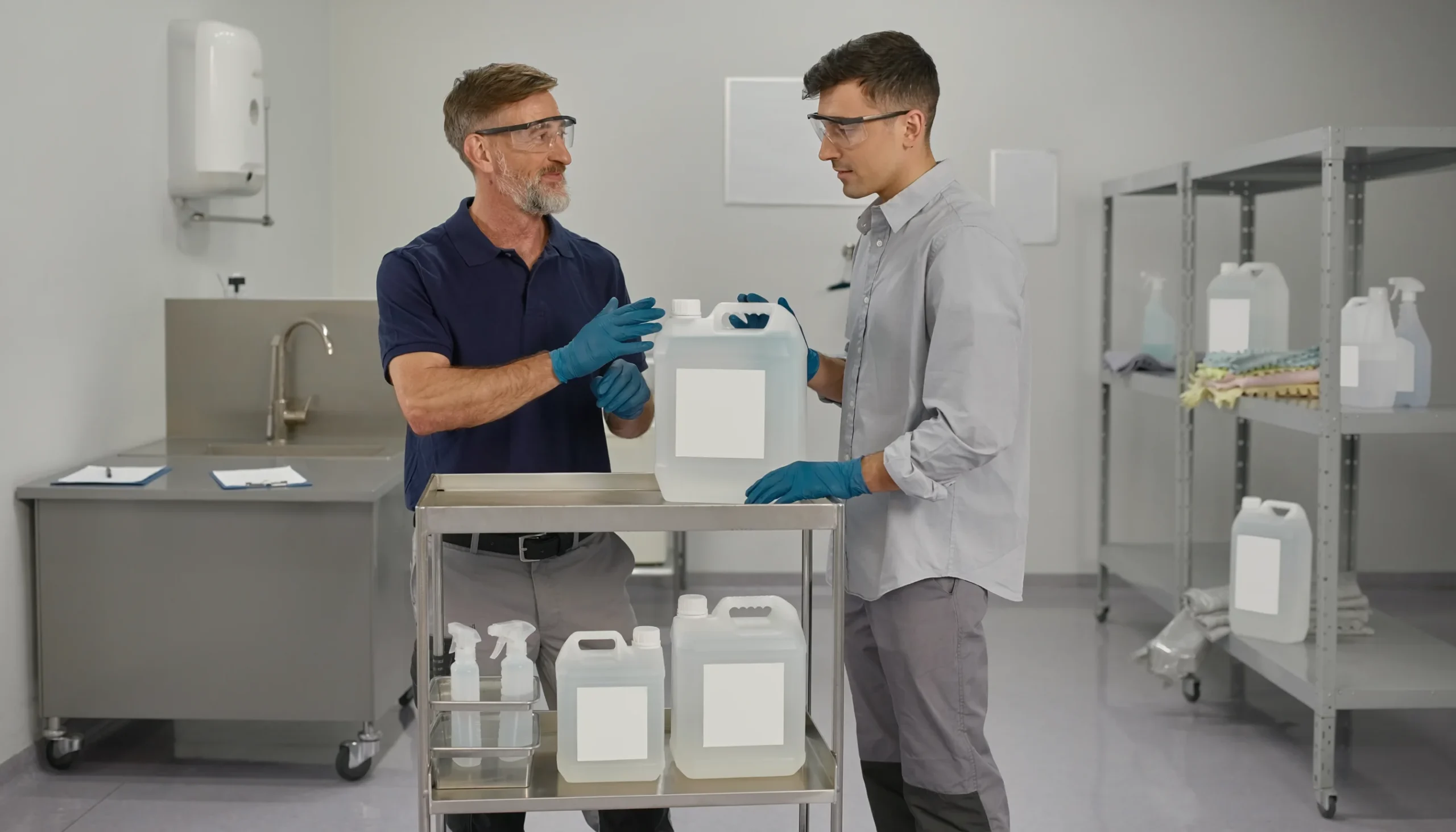
New cleaners often learn site routines while working quickly. Chemical labels are one of the first tools that can stop a mistake.
Chemical safety training should teach staff how to read the product name, hazard cues, directions, and storage notes. A label guide makes that lesson repeatable.
Why Label Reading Belongs In Induction
A label is not decoration. It is the fastest way to identify what is in the container and how it should be handled.
If a new cleaner skips the label, the job becomes guesswork. That is risky for people, surfaces, and the cleaning result.
Names Matter
Staff should read the product name before using any chemical. Similar bottles can hold very different products.
Chemical safety training should make this a habit. The cleaner checks the name first, then checks the intended task.
Directions Matter
Labels often explain dilution, contact time, rinsing, and surface limits. These details affect whether the product works properly.
A site label guide should tell staff to pause before spraying or pouring. A few seconds can prevent a poor result.
Teach The Label In Sections
New staff learn better when the label is broken into parts. Do not expect them to absorb every detail at once.
We stock products that Perth sites can use in training. The workplace still owns the induction.
Product Identity
Start with the product name and supplier details. The cleaner should be able to say what the product is before using it.
This is the simplest part of chemical safety training. It also prevents the common mistake of relying on bottle colour alone.
Intended Use
Next, check where the product is meant to be used. A product suited to a hard surface may not suit fabric, carpet, or food contact areas.
The label may also state what not to use it on. That warning should be treated as part of the job instruction.
Safety Directions
Safety directions may include gloves, ventilation, eye protection, or storage notes. Staff should connect those directions to the task.
A site label guide should avoid vague language. It should point to the exact label area staff need to read.
Use Product Examples During Training
Training works better with real products from the site. Abstract safety talk is easy to forget.
Sanitising Product Example
A cleaner using a sanitising product should understand the difference between cleaning soil and sanitising a surface. The label helps set that order.
The Comet Foaming Cleaner and Sanitiser can be used as a training example for reading product role and directions. Suitability still depends on the site procedure.
Sticky Residue Product Example
Adhesive remover is a useful example because it is not a general-purpose cleaner. Staff need to know where it belongs.
The Goof Off Adhesive Remover shows why chemical safety training should cover specific product roles. The label should guide surface testing and handling.
Mopping Product Context
Floor cleaning often involves chemical use, water, and slip control. Labels help staff understand dilution and surface suitability.
The squeegee and mops category gives context for tools used beside chemical products. Tools and chemicals should be trained together.
Build A Simple Training Routine
A good routine does not need a long classroom session. It needs repeatable steps that supervisors can demonstrate.
Step One: Read Before Opening
Staff should read the label before opening the container. This prevents rushed handling when a cap is already off.
The first action in a janitor label guide should be calm identification. Keep the product examples from WesKleen Supplies in front of the cleaner.
Step Two: Check The Surface
The cleaner should name the surface before applying the product. Bench, tile, carpet, stainless steel, and fabric are not the same.
This connects chemical safety training to real work. It also stops one product being used everywhere by habit.
Step Three: Check The Method
The method includes dilution, dwell time, wiping, rinsing, and drying. Missing one step can change the outcome.
A supervisor should demonstrate the method once, then watch the staff member repeat it. Keep the product card from WesKleen Supplies beside that demo.
Handling Secondary Containers
Secondary bottles create extra training needs. The original label may not be on the working bottle.
Do Not Accept Mystery Bottles
A bottle without a clear label should not be used. Staff should stop and ask a supervisor.
This rule protects the cleaner from guessing. It also protects surfaces from the wrong product.
Keep Labels Dry And Readable
Spray bottles are handled with wet hands and gloves. Labels need to stay readable under normal use.
A staff label guide should include label replacement. Mr Bean 5L is a useful example of a general cleaner whose name must stay readable.
Match Bottle To Product
Some products need specific containers. Staff should not decant into an old drink bottle or random sprayer.
Chemical safety training should show approved containers and explain where replacements are stored. A 16L Mop Bucket is not a chemical bottle and should never be labelled as one.
Testing Staff Understanding
A quick test can be practical without feeling like an exam. The goal is safe work, not embarrassment.
Ask Three Questions
Ask the staff member to identify the product, name the surface, and explain the first safety step. Dust control fringe mops can sit in the same walk-through as dry tools.
If the answers are weak, repeat the demonstration. Do not send the person to work on memory alone.
Watch One Real Task
Observation is better than a signature on a form. Watch one real cleaning task that uses the product.
This shows whether the staff member reads, dilutes, applies, and stores correctly. An Enduro Microfibre Mop Head can be part of the floor-chemical demonstration.
Keep Refresher Notes
Supervisors should record common label mistakes and use them in toolbox talks. The notes can be short.
Over time, the training becomes site-specific. Amenities training can include an extra-long toilet brush so washroom chemicals stay in that lesson.
Helping Staff Remember The Process
New staff need repetition, not a single lecture. The label-reading habit should appear during normal supervision.
Use A Pocket Checklist
A small checklist can sit on a trolley or inside the chemical cupboard. Squeegees and mops can be named on the same card as the floor chemical.
The checklist can ask staff to confirm product name, surface, method, and storage. Four checks are easier to remember than a long policy.
Pair New Staff With A Careful Cleaner
Experienced staff influence habits quickly. Pair new cleaners with someone who already handles products carefully.
The senior cleaner should explain each choice during the task. This turns label reading into a normal work rhythm.
Repeat After Product Changes
A new chemical should trigger a short refresher. Floor-machine chemistry still belongs with the floor scrubber range in Perth.
Show the label, explain the job, and demonstrate the method. This keeps training current without making it heavy.
Common Label Mistakes To Correct Early
Small misunderstandings can become routine if nobody corrects them. Supervisors should watch for these habits in the first week.
Reading Only The Front
The front label may not hold every instruction. Staff should know where extra directions appear.
This is especially important when products need dilution, rinsing, or specific contact time. The back label may carry the operational detail.
Trusting Bottle Colour
Colour can help staff recognise a kit, but it should not identify a chemical by itself. Colours can be reused across brands.
Train staff to read the words, not only the colour. That habit holds up when suppliers or products change.
Ignoring Storage Notes
A product can be used correctly and stored badly. Storage notes should be part of the same training conversation.
After the task, staff should return the product to the correct place. The job is not complete until storage is reset.
Use Real Labels, Not Slides
Training slides can introduce a topic, but staff need to hold the bottle. Real labels show font size, layout, warnings, and product names.
This helps new cleaners practise under normal conditions. It also shows supervisors which parts of the label need extra explanation.
Build Confidence Gradually
A new cleaner should begin with common products before handling specialist items. Confidence grows when the first tasks are clear.
Once the habit is strong, supervisors can add more complex products. A Polystar Orbital Floor Scrubber does not skip the label step.
Keep The First Week Light
Do not overload a new cleaner with every product on day one. Start with the products used on the assigned run.
FAQ
Should New Staff Read Every Chemical Label?
Yes. Staff should read the label before using a product, even if another cleaner says the product is familiar.
What Should A Janitor Label Guide Include?
It should cover product name, intended use, directions, safety cautions, storage, and what to do with damaged labels.
Can A Supervisor Explain The Label Instead?
A supervisor can explain it, but staff still need to practise reading labels themselves. That skill matters when working alone.
What If A Label Is Missing?
The product should not be used until it is identified and relabelled through the workplace process.
Conclusion
Good label training gives new cleaners a clear process before product handling begins. Read the name, match the surface, then follow the method on the label. Contact us if you need that shortlist checked against current stock.