


Blog
5.5m Poles for Reachable WA Warehouse Racking

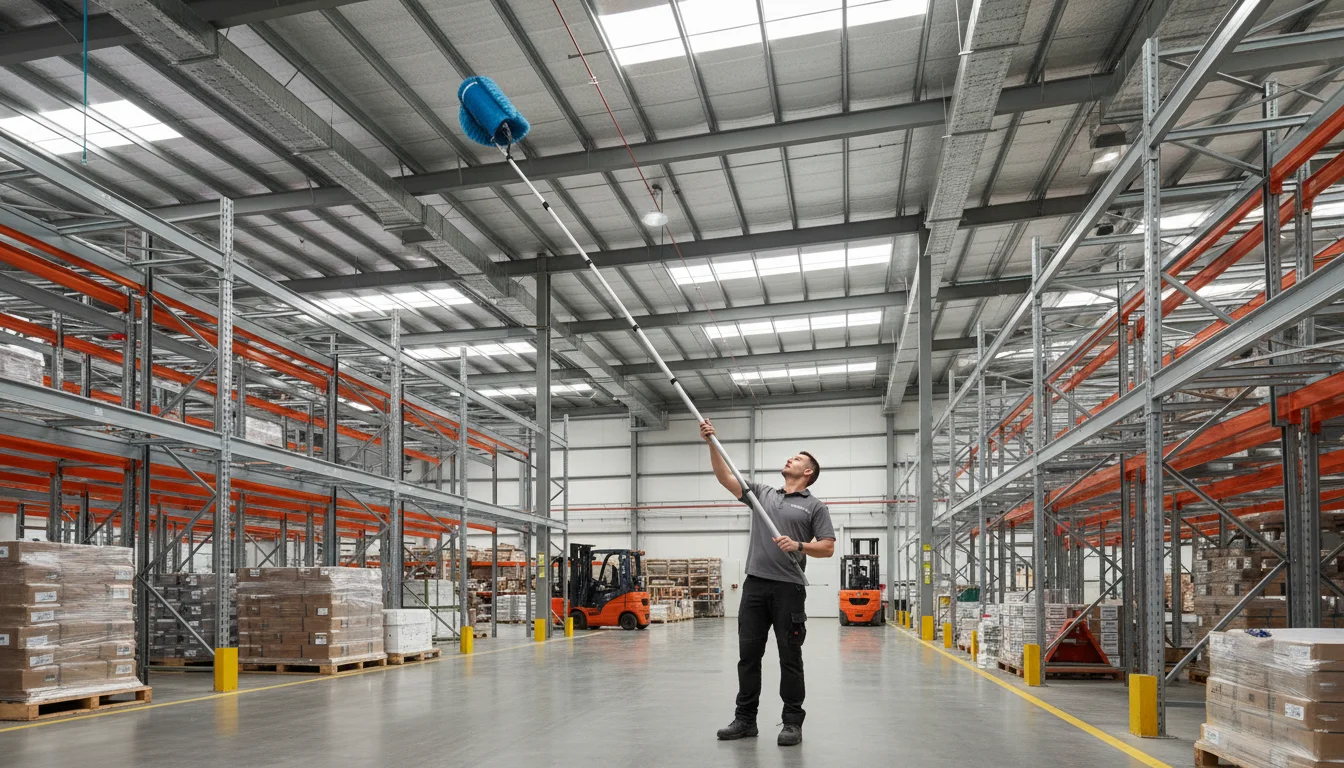
Warehouse racking gathers dust in places staff rarely inspect closely. The issue becomes obvious when stock moves and dust falls onto cartons.
A warehouse dusting tool should let cleaners reach common racking faces without turning every job into an access project. High reach maintenance works when the target is realistic.
Measure The Reach Before Buying
A 5.5m pole is not a magic answer for every warehouse height. It is useful for reachable zones that sit above normal arm level.
That distinction matters. The job should be planned around what can be reached safely and controlled from the floor.
Check The Working Angle
Start by walking the aisles during a quiet period. Note the racking height, aisle width, stock sensitivity, and traffic pattern.
If forklifts operate nearby, cleaning should not happen at the same time. Movement and overhead dusting do not mix well.
We stock reach equipment that WA facilities can match to aisle conditions.
Match The Head To The Surface
The Ettore 18 extension pole is relevant for racking edges, signage, lint, and accessible ledges. It should be paired with the right head.
A warehouse dusting tool needs a light feel at extension. Heavy heads become awkward when the cleaner has to work along a full bay.
High reach maintenance should also include dust capture below the work. Otherwise debris lands on walkways and pallet edges.
Use Local Product Advice
The dust control fringe mops category supports follow-up floor cleaning after overhead work. This is especially useful near dispatch areas.
Aisle timing affects the result. Clean after stock movement settles, but before daily presentation checks or client visits.
Racking bays near doors often collect more grit. Bays near packaging benches may collect cardboard dust and tape fibres.
Build A Safer Cleaning Sequence
Different dust calls for different technique. Dry dust needs capture, while sticky residue may need a separate product decision.
Do not drag a damp head across unknown stock areas. Moisture near cartons, labels, or electrical items can create avoidable issues.
A pole route should move from top zones to lower rails. The cleaner should not finish a shelf and then knock dust down from above.
Control Dust Below The Work
High reach maintenance also benefits from simple section names. Aisle A front, dispatch wall, and mezzanine edge are easier to track than vague notes.
Supervisors can add these names to a monthly checklist. That makes the work visible without writing a long procedure.
The squeegees and mops range can help build a flexible racking and floor-care kit. One supplier list keeps replacement ordering simpler.
Keep The Kit Easy To Repeat
A warehouse dusting tool should be stored where the work starts. If it lives in a distant office cupboard, staff may skip the task.
Use wall clips or a labelled rack near the maintenance area. Keep heads clean, dry, and away from forklift traffic.
Check the pole sections before each use. A loose lock can turn a simple task into a poor-quality clean.
Store And Inspect The Gear
Staff should also know when not to use the pole. High fixtures, live electrical areas, and unstable stock need a different method.
A 5.5m pole is strongest as a routine maintenance tool. It helps keep reachable dust under control before it becomes a larger clean.
For bigger cleans, schedule a separate access plan. That might involve elevated work platforms, isolation, or specialist contractors.
Buying Notes For Perth Teams
The buying note should include reach, attachment type, and intended zones. This helps future orders match the original reason for purchase.
Perth and WA warehouses also face seasonal dust changes. Dry weather, open doors, and nearby works can change cleaning frequency.
Review the routine after the first month. If dust returns fast, the schedule or tool head may need adjustment.
Racking Zones That Need Attention
Warehouse dust rarely spreads evenly. Some racking faces stay clean, while others collect grit because of airflow and work patterns.
Door And Roller Areas
Racking near large doors often collects outdoor dust. Wind, vehicle movement, and loading activity add extra debris.
These bays may need more frequent checks than internal aisles. The schedule should reflect actual dust behaviour.
Packaging And Dispatch Areas
Packaging benches create fine fibres and cardboard dust. Nearby racking can look clean until light hits the surface.
A planned pass along upper rails can stop dust falling onto prepared orders. That helps presentation and stock care.
Long-Term Storage Bays
Slow-moving stock can hide dust for months. The top carton or shelf edge may only be noticed during a stocktake.
Include these bays in the routine even when they are quiet. Low traffic does not mean low dust.
Building A Practical Routine
A practical routine should fit warehouse operations. Keep the route notes from WesKleen Supplies with the aisle plan.
Choose A Quiet Window
Pick a time when aisles are stable. Early morning, late afternoon, or a scheduled stock-control window may work.
The cleaner needs room to handle the pole. Narrow aisles with active traffic are poor conditions.
Start At The Cleanest End
Work from cleaner aisles toward dirtier zones. This helps prevent carrying dust back through finished areas.
Record the route if several people share the task. A consistent route makes quality checks easier.
Pair Overhead And Floor Tasks
Overhead dusting should be followed by floor care. Dust that lands below still needs removal.
Pairing tasks in the roster keeps the result visible. It also avoids a half-finished warehouse clean.
Tool Care For Warehouse Conditions
Warehouse tools work in rougher spaces than office equipment. They need storage and checks that match that environment.
Protect The Pole From Traffic
Do not store reach tools near pallet paths. An Ettore 12 extension pole can cover lower rails without the longer pole.
Use a clear wall rack or maintenance bay. A cleaning hand caddy keeps spare heads off the aisle floor.
Keep Heads For Dry Work Dry
Dry dusting heads should stay dry. An Enduro Microfibre Mop Head can finish low hard edges after the overhead pass.
If a head becomes damp, clean and dry it before storage. A 16L Mop Bucket belongs with wet follow-up, not the dry-head kit.
Review The Routine Quarterly
Dust patterns change with seasons, stock, and nearby works. The Pacvac Superpro 700 Vacuum Cleaner can take fallen dust off aisle floors.
If dust returns quickly, inspect airflow and entry points. Keep the route notes from WesKleen Supplies with the maintenance rack.
Supervisor Checks After Cleaning
A warehouse supervisor does not need to inspect every rail. A few repeat checks can show whether the routine is working.
Check Light Against The Racking
Side light reveals dust lines that overhead lighting can hide. A Pacvac Superpro Go Battery helps when a cord would cross a picking aisle.
Check Stock Tops Near Doors
Cartons near doors often show the first sign of returning dust. Floor follow-up can sit with the floor scrubber range in Perth.
Check Tool Condition
Look at the pole, head, and storage rack after the job. A Polystar Orbital Floor Scrubber is still a floor machine, not a racking tool.
A short review keeps the process honest. If the method is too slow or awkward, adjust it before the task disappears.
Stock Protection During Dusting
Warehouse cleaning should protect stock as much as it improves presentation. Dust control needs to respect packaging and product sensitivity.
Move Open Stock First
Open cartons, exposed parts, and unpacked orders should be moved before overhead work. That prevents avoidable contamination.
Cover Sensitive Items
Some stock needs a light cover during nearby dusting. This is especially true for display items, paper goods, and electronics.
Clean Before Replenishment
If racking is being refilled, dust first. Filling shelves before cleaning traps debris behind new stock.
A careful sequence saves rework. It also helps warehouse teams keep cleaning from disrupting normal order flow.
When A 5.5m Pole Is Enough
The pole is enough when the target is visible, reachable, and light enough to clean without force. That is the sweet spot.
Know The Stop Point
If the cleaner has to lean, twist, or jab upward, the method has reached its limit. Stop and choose another access plan.
Clear stop points protect staff and stock. They also keep the cleaning result consistent across different shifts.
Keep Cleaning Notes Visible
Place the route note near the maintenance rack. Staff are more likely to follow a routine they can see.
FAQ
Which Warehouse Areas Need More Frequent Dusting?
Doorways, dispatch zones, and packaging areas often collect dust faster. Quiet long-term storage bays still need scheduled checks.
Is A 5.5m Pole Enough For All Racking?
No. It suits reachable light dusting only. Higher or forceful work needs another access plan.
How Should Stock Be Protected?
Move open cartons, cover sensitive items, and clean before replenishment. The sequence should protect products as well as shelves.
Conclusion
Height photos and aisle measurements make product-fit advice more practical.
Reachable racking stays cleaner when pole length, timing, and dust control are planned together. Stay inside the reachable zone, then clean the floor below. Contact us if you need that shortlist checked against current stock.