


Blog
How to Prevent Infection Outbreaks in Aged Care with Proper Cleaning

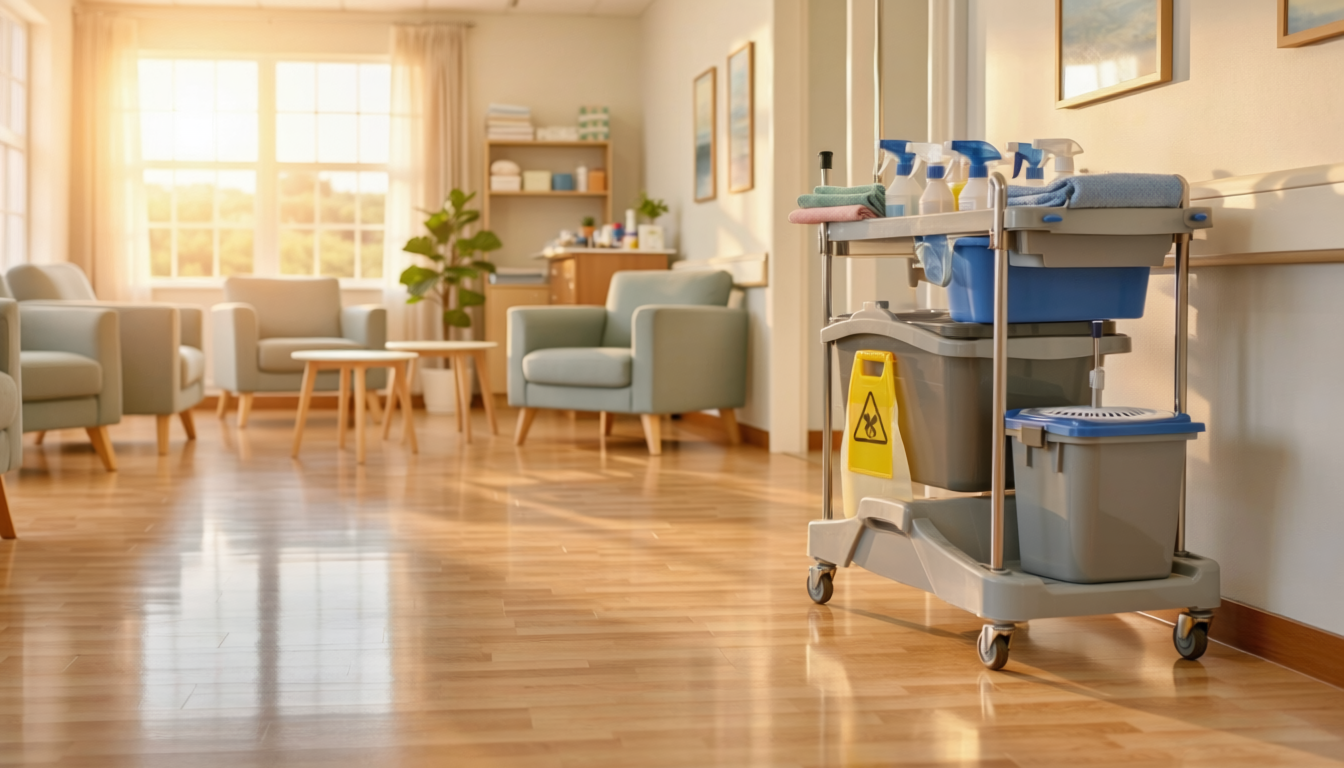
Infection outbreaks in aged care facilities rarely announce themselves with warning signs. They creep through common touch points, spread via inadequately cleaned surfaces, and exploit gaps in sanitation protocols that seem minor until an outbreak forces an entire wing into lockdown.
The residents most vulnerable to these infections—those with compromised immune systems, chronic conditions, or post-surgical recovery needs—depend entirely on the facility’s commitment to rigorous, evidence-based cleaning practices. When those practices fail, the consequences extend far beyond regulatory penalties. Lives hang in the balance.
Effective aged care infection prevention is not about surface-level appearances or the smell of disinfectant masking deeper problems. It is about understanding pathogen behaviour, implementing targeted cleaning protocols, and using professional-grade products that actually eliminate microbial threats rather than simply moving them around.
At Weskleen Supplies, we have seen firsthand how shifting from aesthetic cleaning to clinical disinfection transforms facility safety.
The Real Cost of Inadequate Infection Control
A single norovirus outbreak in a 120-bed facility can infect 40 to 60 residents within 72 hours. Clostridioides difficile (C. diff) spores survive on surfaces for months if cleaning protocols do not specifically target spore elimination. Influenza spreads through aged care environments three to four times faster than in general community settings because of the proximity of vulnerable individuals and the frequency of shared spaces.
These are not abstract statistics. They represent residents missing family visits during isolation periods, staff working double shifts to manage outbreak containment, and families questioning whether their loved ones are truly safe.
The financial impact compounds quickly. Outbreak management costs average between $50,000 and $150,000 per incident when you factor in additional staffing, medical interventions, temporary closures, and regulatory reporting. But the reputational damage? That is harder to quantify and even harder to repair.
Understanding Pathogen Transmission in Aged Care Settings
Aged care facilities face unique infection risks that differ significantly from hospitals or commercial buildings. Residents live in these spaces; they are not just visiting for a procedure or appointment. This means high-frequency touch points get contacted hundreds of times daily: handrails along corridors, door handles to communal dining areas, bathroom fixtures, and mobility aid surfaces.
Most concerning are the pathogens that standard cleaning misses entirely. Norovirus requires specific contact time with TGA-registered disinfectants to achieve kill rates above 99.9%. C. diff spores need sporicidal agents, not just broad-spectrum disinfectants. MRSA can colonise porous surfaces and survive for weeks if cleaning products lack the right active ingredients.
Here is where the analogy helps: think of standard household cleaners as a broom sweeping a dusty floor. You will move the dirt around, maybe collect some of it, but the fine particles remain embedded in the surface. Professional-grade aged care infection prevention disinfectants work like a vacuum with HEPA filtration—they do not just move pathogens; they capture and eliminate them at a molecular level.
Critical Cleaning Zones That Demand Daily Attention
Resident rooms require a different approach than communal areas. To prevent cross-contamination, we must break down the facility into specific zones with distinct protocols.
Resident Rooms and Personal Spaces
Personal spaces accumulate bioburden from skin cells, respiratory droplets, and bodily fluids. Bedrails, bedside tables, call buttons, and light switches need daily disinfection with products that maintain efficacy even in the presence of organic matter.
We have found that facilities often overlook the surfaces adjacent to the bed. A quick wipe of the table isn’t enough; the underside of the table, the drawer handles, and the remote control are prime vectors for cross-contamination prevention.
Shared Bathrooms and Hygiene Areas
Toilet flush handles, tap controls, and grab rails harbour faecal coliforms and urinary tract infection-causing bacteria. These surfaces need twice-daily attention minimum. Using a product like Comet Foaming Cleaner & Sanitiser allows the chemical to cling to vertical surfaces long enough to achieve proper contact time, ensuring the disinfectant actually works before it runs down the drain.
Communal Dining and Social Areas
Dining areas present a perfect storm for transmission. Residents with varying levels of mobility assistance touch tables, chairs, condiment containers, and serving utensils. Food particles provide nutrients for bacterial growth.
The solution is not just wiping tables between meals; it is using food-safe sanitisers with proven efficacy against enteric pathogens, applied with clean microfibre cloths that get laundered after each use. Never reuse a cloth from a bathroom in a dining area—this sounds obvious, but colour-coding failures happen more often than managers realise.
The Equipment That Makes Infection Prevention Possible
You cannot achieve genuine aged care infection prevention with consumer-grade tools. The difference between professional and household equipment is not just about durability; it is about microbial reduction capacity.
Microfibre technology removes 99% of surface bacteria when used correctly, compared to 30-40% removal rates for cotton mops. But here is the critical detail most facilities miss: microfibre only works when it is clean. Contaminated mop heads spread pathogens rather than remove them. We recommend colour-coded systems—blue for general areas, red for bathrooms, green for dining spaces—with laundering protocols that include hot water cycles above 60°C.
The Enduro Microfibre Mop Head exemplifies this principle. Its split-fibre construction creates microscopic hooks that physically trap bacteria, while the dense weave prevents cross-contamination during use.
Floor scrubbers matter more than most administrators realise. Aged care facilities cannot afford the downtime required for floors to dry after traditional mopping. Wet floors create fall risks for residents with mobility challenges. Automated scrubbers clean, sanitise, and dry floors in a single pass, reducing both infection risk and safety hazards simultaneously.
The Polystar Orbital Floor Scrubber works particularly well in aged care because its multi-directional cleaning action reaches into grout lines and textured surfaces where pathogens hide. It provides subsurface sanitation that prevents biofilm development, which is essential for cross-contamination prevention.
Chemical Selection: What Actually Kills Aged Care Pathogens
Here is a story that illustrates why product selection matters: A 90-bed facility in Perth experienced recurring gastroenteritis outbreaks every six to eight weeks. They were cleaning diligently, following schedules, and using name-brand products. But those products were formulated for general commercial use, not healthcare pathogen elimination.
We switched them to TGA-listed hospital-grade disinfectants with proven efficacy against norovirus and C. diff spores. Within three months, outbreak frequency dropped to zero. The difference was not effort—it was chemistry.
Quaternary Ammonium Compounds (Quats)
Quats work well for routine daily cleaning of low-risk surfaces. They are relatively gentle on materials, do not require extensive PPE, and provide good broad-spectrum activity against common bacteria. However, they generally do not kill spores, and they must be used at the correct dilution to be effective.
Sodium Hypochlorite (Bleach)
Bleach remains the gold standard for C. diff spore elimination. A 1,000 ppm solution achieves sporicidal activity within five minutes of contact time. The challenges are that bleach corrodes metals, damages fabrics, and requires careful dilution to maintain efficacy without creating safety hazards.
Hydrogen Peroxide
Hydrogen peroxide-based disinfectants offer a middle ground. They are effective against spores when formulated at appropriate concentrations, less corrosive than bleach, and break down into water and oxygen rather than leaving toxic residues. This makes them ideal for resident rooms where strong chemical odours might cause respiratory irritation.
Training Staff to Execute Infection Prevention Protocols
The best products and equipment mean nothing if staff do not understand proper application. We have seen facilities invest thousands in a hospital-grade disinfectant, then watch staff spray and immediately wipe surfaces—giving disinfectants 10 seconds of contact time when the label requires five minutes.
Contact time is non-negotiable. If a disinfectant requires five minutes to kill target pathogens, the surface must remain visibly wet for that entire period. This often means applying the product, moving to another surface, then returning to wipe the first surface after the appropriate dwell time.
Dilution ratios directly impact efficacy. A disinfectant diluted to twice the recommended ratio might smell strong and look like it is working, but it will not achieve label claims for pathogen kill rates. Conversely, overly concentrated solutions waste product, increase chemical exposure risks, and can damage delicate surfaces.
Training must cover both the what and the why. When staff understand that changing gloves prevents pathogen transmission to their own families, compliance improves dramatically.
Outbreak Response: When Prevention Measures Fail
Despite best efforts, outbreaks still occur. The difference between a contained incident and a facility-wide crisis often comes down to response speed and protocol adherence.
Immediate isolation of symptomatic residents stops primary transmission. But secondary transmission through environmental contamination continues unless cleaning protocols intensify immediately. This means switching from routine daily cleaning to outbreak management protocols: increased frequency, stronger disinfectants, extended contact times, and enhanced PPE.
Terminal cleaning procedures after resident discharge or isolation period completion require systematic approaches. Start from the cleanest areas and work toward the most contaminated. Clean high surfaces before low surfaces so debris falls to areas not yet cleaned. Use fresh cleaning solutions and tools for each room to prevent cross-contamination.
We recommend facilities maintain outbreak response supplies separate from daily cleaning inventory. When an outbreak hits, you do not want staff hunting for appropriate disinfectants or discovering you are out of sporicidal agents.
The Role of Environmental Monitoring in Prevention
You cannot manage what you do not measure. Progressive aged care facilities now implement environmental monitoring programmes that go beyond visual cleanliness checks.
ATP testing measures organic residue on surfaces using bioluminescence technology. A reading below 100 relative light units (RLU) generally indicates adequate cleaning. Readings above 500 RLU suggest cleaning failures that could harbour pathogens. Testing high-touch surfaces weekly provides objective data about cleaning effectiveness and identifies problem areas before they cause outbreaks.
Fluorescent marking involves applying invisible UV-reactive gel to surfaces before cleaning, then checking under UV light afterward to verify those surfaces were actually touched during the cleaning process. Studies consistently show 30-50% of high-touch surfaces get missed during routine cleaning. Fluorescent marking identifies these gaps so training can address them.
Building a Culture of Safety
Aged care infection prevention succeeds when it moves beyond checkbox compliance to become embedded in facility culture. This means administrators who understand that cleaning is not a cost centre but a clinical intervention that directly impacts resident outcomes.
It means investing in professional-grade supplies from trusted sources rather than defaulting to the cheapest options. It means training that goes beyond showing staff how to use products to explaining why terminal cleaning procedures matter.
The aged care sector faces increasing scrutiny around infection control, and rightfully so. Families trust these facilities with their most vulnerable loved ones. That trust demands cleaning protocols built on evidence, products selected for efficacy, and staff trained to execute both with consistency.
If your current infection rates concern you, or if you are building protocols from scratch, the team at Weskleen Supplies understands the specific challenges aged care facilities face. We have worked with facilities across Perth to develop cleaning programmes that reduce infection risks while remaining practical for daily implementation.
For specific product recommendations tailored to your facility’s needs, contact us to discuss your current protocols and identify opportunities for improvement. Infection prevention is an ongoing commitment that requires the right tools, training, and partnership with suppliers who understand what is at stake.