


Blog
Removing Tough Stains from School Carpets: A Guide for WA Custodians

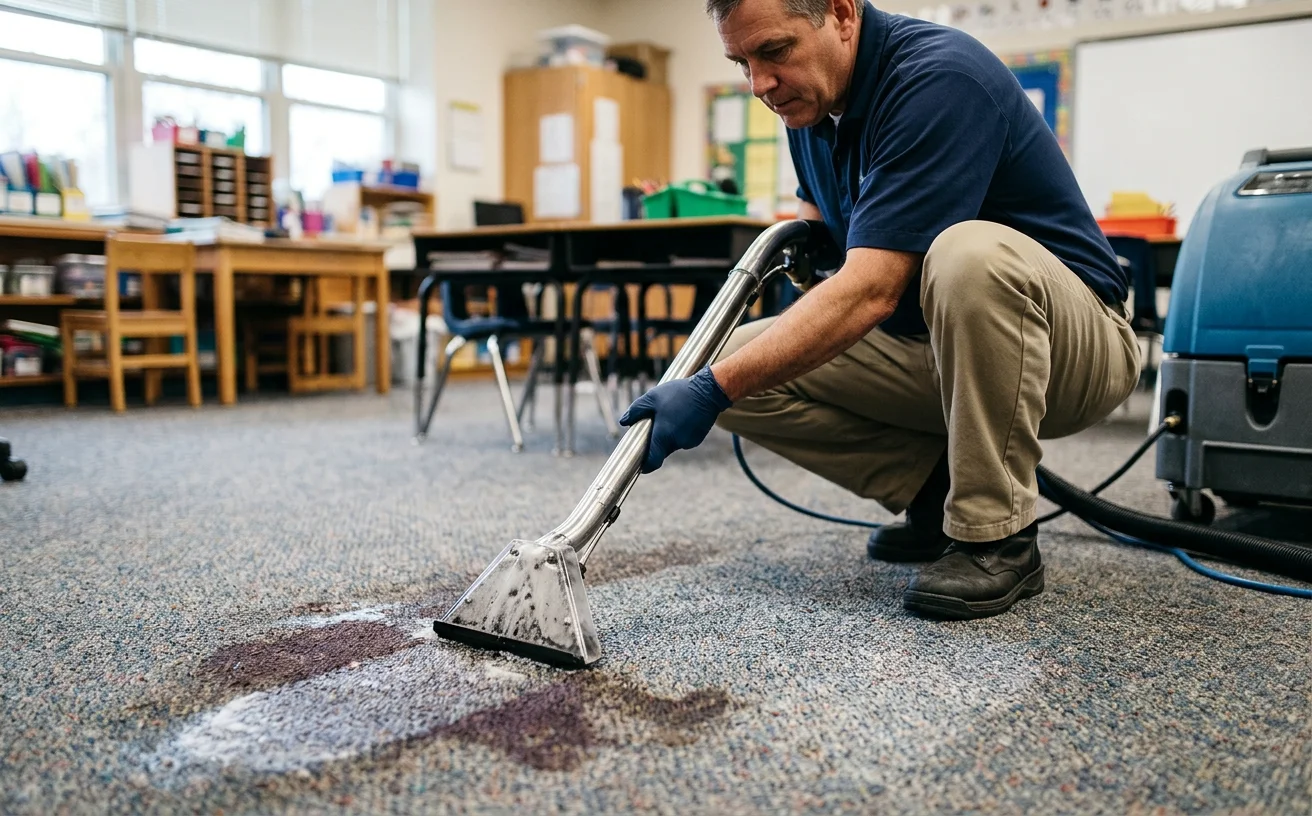
School carpets collect stains from everyday life, not rare accidents. Mud, juice, paint, food, ink, and wet-weather traffic all leave different marks.
A carpet stain remover should be chosen by stain type, carpet condition, and safety requirements. WA custodians also need a process that works during a busy term.
Start With The Stain Type
Guessing can make a stain worse. Heat, scrubbing, or the wrong chemical can set residue deeper into the fibre.
School floor maintenance should begin with a quick assessment. Staff should identify whether the mark is food, mud, paint, body fluid, ink, or unknown residue.
Food And Drink Spills
Juice, milk, and sauces need fast attention. Blot first, remove solids, and avoid spreading the spill into clean carpet.
A carpet stain remover may help after the surface material is removed. The product label should decide dwell time and rinse needs.
Mud And Wet-Weather Marks
Mud often cleans better after loose soil dries and is vacuumed away. Wet scrubbing can push grit further into the carpet.
This is a common school floor maintenance issue during winter. Dust control fringe mops can lift dry grit from those entries first.
Paint And Craft Residue
Craft materials vary. Goof Off adhesive remover can help with some glue or gum residues if the label suits the surface.
Custodians should check product labels where possible. A 16L Mop Bucket keeps dirty rinse water off the next classroom.
Build A Safe Carpet Stain-Removal Method
The method matters as much as the product. A calm routine protects the carpet and gives staff a better chance of removing the mark.
We stock practical cleaning products and equipment that schools can match to how staff actually work.
Blot Before Scrubbing
Blotting lifts liquid without driving it deeper. Scrubbing can fuzz fibres and spread colour.
This is especially important before using a carpet stain remover. The cleaner should work on the stain, not a larger smeared patch.
Test In A Hidden Area
Some carpets react badly to chemicals or agitation. A small test helps protect visible floor areas.
The test should be allowed to dry before judging. Wet carpet can hide colour change.
Work From Outside In
Treat the outer edge first, then move inward. This reduces the chance of spreading the stain.
Staff should use clean cloths and change them often. Dirty cloths can redeposit residue.
When Carpet Extraction Is Needed
Spot cleaning can handle many marks, but not all. Some stains need controlled extraction to remove loosened residue.
The Steamvac HP Auto 2 is relevant when schools need deeper carpet recovery. It can support classroom carpets and some upholstery tasks when used correctly.
After A Large Spill
Large spills can spread under the visible surface. Extraction helps recover liquid and cleaning solution.
Operators should avoid over-wetting. Too much water can slow drying and cause stains to return.
After Repeated Spot Cleaning
If the same area is treated again and again, residue may be building in the carpet. Extraction can reset the area more effectively than another surface wipe.
This is where school floor maintenance records help. Repeated stains in one room usually point to a pattern.
Before Term Starts
Holiday periods are useful for extraction because rooms can dry without disrupting lessons. Staff can inspect the result before students return.
This works better than rushing during the school day. Damp carpet should not be walked back into service.
Product Handling And Chemical Safety
Schools need clear product control. A good stain process should not leave staff guessing at dilution, dwell time, or storage.
Follow The Label
The label and safety data sheet decide how a product is used. Staff should not mix products to make a stronger cleaner.
A carpet stain remover should be stored where authorised staff can access it. It should also stay out of student reach.
Keep A Small Stain Kit
A practical kit may include gloves, absorbent cloths, a scraper, labelled spot cleaner, waste bags, and a short instruction card. It should be easy to carry.
The Hand Caddy can help organise small cleaning items for room-to-room work. Keeping tools together saves time during spills.
Separate Hygiene Incidents
Body-fluid incidents need the school’s hygiene procedure. They should not be treated like ordinary coffee or mud stains.
Staff should follow internal policy and product guidance. Safety comes before carpet appearance.
Preventing Repeat Carpet Stains In Schools
Prevention reduces workload. Keep the stain-kit notes from Weskleen Supplies with the room log.
Entry Control
Mats, routine vacuuming, and quick mud response help protect classroom carpet. Entry areas should be checked after wet mornings.
The Pacvac Superpro 700 Vacuum Cleaner can support dry-soil removal in furnished school rooms. Dry soil control is part of stain prevention.
Classroom Habits
Food, craft, and wet bags create predictable risk points. Squeegees and mops can finish vinyl bag areas after a wet morning.
This keeps school floor maintenance practical. The goal is not perfect carpet, but fewer avoidable stains.
Fast Reporting
A stain reported on the day is easier to manage than one found next week. An Enduro Microfibre Mop Head can detail hard edges around the mark.
A photo and room number can be enough. The custodian can then decide whether spot treatment or extraction is needed.
Common Errors To Avoid
Most stain failures come from rushing, rubbing, or using the wrong product. These errors are preventable.
Using Heat Too Early
Heat can set some stains. A Pacvac Superpro Go Battery helps when a cord would cross a wet classroom floor.
Let the stain type guide the method. Hotter is not automatically better.
Over-Applying Product
Too much cleaner can leave residue that attracts soil. It may make the carpet look dirty again quickly.
Use measured amounts and recover excess moisture where needed. A carpet stain remover works well when the process is controlled.
Skipping The Dry Check
A stain can look gone while the carpet is wet. It may return as the fibres dry.
Staff should check the area later. That final look is the real result.
Setting Up A Custodian Response Card
A stain card gives staff a quick method without turning the cupboard into a manual. It should use plain steps and sit with the cleaning kit.
Include The First Five Actions
The card can say remove solids, blot liquid, identify the likely source, test product, and record the room. That is enough for most first responses.
It should also state when to stop. Unknown chemicals, body-fluid incidents, and damaged carpet need escalation.
Record Product Use
Staff should write down the product used, approximate dwell time, and result. This prevents the same failed method being repeated.
It also helps supervisors spot training gaps. If several rooms have the same issue, the cause may be routine rather than accidental.
Keep Photos Sensible
A quick photo can show the stain before and after treatment. It does not need to become a formal report.
Photos are useful when a mark returns after drying. They help staff judge whether the second appearance is smaller, darker, or unchanged.
Link Spot Work To Deep Cleaning
Spot treatment should feed into the holiday extraction plan. Repeated room notes can identify where deeper recovery is worth scheduling.
This keeps stain response connected to wider carpet care. It also helps the school justify time spent during breaks.
Training New Staff On Stain Judgement
New custodians do not need every chemical detail on day one. They need to know what not to do first.
Teach them to avoid heat, heavy rubbing, product mixing, and over-wetting. Those four controls prevent many avoidable failures.
Use Real Room Examples
Training works better with marks staff recognise. Show a mud track, a drink spill, and a mystery spot from a classroom or library.
The examples make judgement easier. Staff can connect the method to the rooms they clean every week.
Keep Escalation Clear
New staff should know when to ask for help. Body-fluid incidents, unknown chemicals, and large recurring stains should not be handled casually.
Clear escalation protects people and carpet. It also prevents small errors from becoming larger maintenance problems.
The training card should be reviewed after the first few incidents. Real school marks will show which instructions need clearer wording.
Keep that review short, practical, and based on actual room examples.
It should help the next shift act faster.
FAQ
What Is The First Step For A Fresh School Carpet Stain?
Remove solids, blot liquids, and identify the likely stain type. Avoid aggressive scrubbing before choosing a method.
Should Custodians Use One Product For Every Stain?
No. Different stains need different treatment. Product labels and carpet suitability should guide selection.
When Should Extraction Be Used?
Use extraction for large spills, repeated residue, holiday deep cleaning, or stains that return after spot cleaning.
How Can Schools Reduce Carpet Stains?
Control entry soil, report spills quickly, vacuum regularly, and keep a small stain-response kit available to authorised staff.
Conclusion
Tough carpet stains need careful identification, controlled product use, and a realistic drying check. Pair spot treatment with extraction only after the stain type is clear. Contact us if you need that shortlist checked against current stock.