


Blog
Upholstery Cleaning in Schools: Using SteamVac Tools for Library and Office Chairs

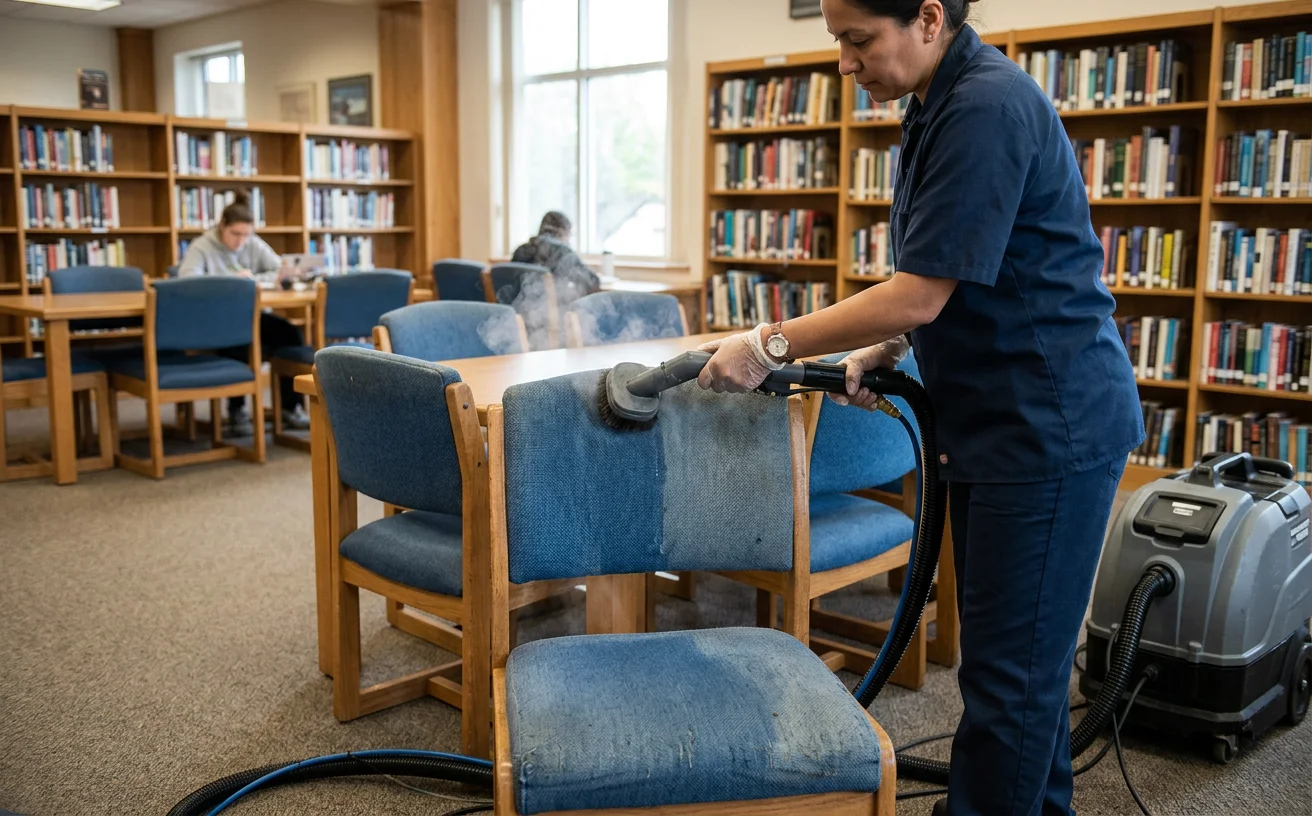
School chairs work hard. Library lounges, admin visitor seats, staff-room chairs, and office upholstery collect dust, skin oils, food crumbs, and the occasional spill.
An upholstery cleaning tool helps staff clean smaller soft surfaces without treating every job like a full carpet project. Library chair cleaning needs that level of control.
Why Chair Cleaning Needs A Separate Plan
Chairs are touched more than carpet but are often cleaned less often. They can look acceptable while still holding odour and fine soil.
Library chair cleaning should be part of soft-surface maintenance, not an afterthought. The method needs to suit fabric, padding, drying time, and room use.
Fabric Reacts Differently From Carpet
Chair fabric can mark, shrink, or stay damp if over-wet. Padding can hold moisture longer than carpet.
That is why an upholstery cleaning tool matters. It helps target a smaller area with better control.
Seating Has More Contact Points
Arms, front edges, backs, and seat centres collect different soil. A quick wipe across the top will not deal with embedded residue.
School staff should inspect the whole chair. Visible marks are only one part of the job.
Using SteamVac Equipment For Upholstery Cleaning
We stock extraction equipment that can support school soft-surface care. The key is choosing the right tool for the surface.
The Steamvac HP Auto 2 is relevant where schools need a machine for carpet plus smaller fabric tasks. Upholstery use should follow the machine and fabric guidance.
Tool Control
A hand tool lets staff work slowly over arms, backs, and seat panels. It should recover moisture as it cleans.
Too much water is the main risk. An upholstery cleaning tool should support control, not flooding.
Test Before Cleaning A Set
One chair should be tested before a whole library set is cleaned. Staff should check colour fastness, drying time, and fabric response.
The test should dry fully before the rest of the chairs are done. Damp fabric can hide problems.
Work In Small Zones
A chair should be cleaned in sections. Arms, seat, front edge, and back may need different attention.
This makes library chair cleaning more consistent. Staff can inspect each section before moving on.
Building A School Upholstery Cleaning Schedule
School seating varies by room. A library reading chair, admin visitor seat, and staff-room chair do not carry the same risk.
Rank Seats By Use
Start with high-touch and high-visibility seating. Admin reception, sick bay waiting seats, and library reading zones often deserve priority.
Then add staff-room and office seating if time allows. A schedule keeps the work realistic.
Time Cleaning Around Drying
Chairs should not return to use while damp. Wet upholstery can feel uncomfortable and attract fresh soil.
Library chair cleaning works well during holidays, pupil-free days, or low-use periods. Staff should label cleaned chairs until dry.
Vacuum First
Dry soil should be removed before wet cleaning. Dust control fringe mops can lift grit from the hard floor around the chairs.
The Pacvac Superpro 700 Vacuum Cleaner can support dry prep where seats and shelves restrict access. Good preparation improves the extraction result.
Handling Stains On School Chairs
Chair stains can come from food, ink, craft materials, body oils, and mud. They need identification before treatment.
Blot Fresh Spills
Fresh liquid should be blotted first. Rubbing can spread the mark and damage fibres.
A suitable spot product may be used after the excess is removed. Staff should follow label directions and test first.
Manage Ink And Craft Marks Carefully
Ink and craft residue can behave unpredictably. Goof Off adhesive remover is only for residues the label actually covers.
Treat a small area and allow it to dry before wider cleaning. Record products that worked, so the next response is faster.
Do Not Hide Odour With Fragrance
Fragrance can mask a problem without cleaning it. Odour usually means residue remains in the fabric or padding.
Extraction and drying are more useful than perfume. A clean chair should smell neutral.
Care After Cleaning
The job is not finished when the tool stops. Keep the chair-care notes from Weskleen Supplies with the drying check.
Check Moisture
Seat edges and seams can hold moisture. A 16L Mop Bucket keeps waste water away from books and paper.
Airflow can help, but chairs should not be placed where they create trip hazards. Squeegees and mops can dry vinyl around the seating group.
Inspect After Drying
Some marks show again after the fabric dries. Staff should inspect the chair later, not only while it is damp.
This is important for library chair cleaning because chairs are often grouped together. One poor result can stand out beside clean seating.
Clean The Tool
The upholstery hand tool, hose, and recovery tank should be rinsed after use. Dirty equipment can transfer odour to the next chair.
A short after-use checklist protects the machine. An Enduro Microfibre Mop Head can wipe chair frames after fabric work.
Products And Accessories To Keep Nearby
A school upholstery kit should be small and organised. Staff should not need to search several cupboards during a spill response.
Carry A Simple Kit
Useful items include gloves, cloths, a scraper, waste bags, a labelled cleaner, and the hand tool. Everything should be stored clean and dry.
The Hand Caddy can keep smaller items together for office and library work. Organisation reduces missed steps.
Include Carpet Equipment Where Needed
Some chair cleaning happens during a wider carpet programme. A Pacvac Superpro Go Battery helps when a cord would cross a reading area.
The carpet cleaning machines category gives schools a place to compare suitable extraction equipment. Planning both surfaces together can save setup time.
Keep Manual Cleaning Separate
Hard chair frames, arms, and tables may need a different product from fabric. Do not assume one cleaner suits every surface.
The method should separate fabric extraction from hard-surface wiping. This protects both materials.
Managing Chairs During The Cleaning Window
Chair cleaning can disrupt a room quickly if the workflow is not organised. Schools should plan movement, drying, and return before the first chair is treated.
Label Cleaned Seating
A simple tag or sign can show which chairs are still drying. This stops staff from moving damp seating back into use.
It also helps when several people are working in one area. Nobody has to guess which chairs are finished.
Group Similar Fabrics
Clean similar fabrics together where possible. Matching chair types usually respond in similar ways, which makes drying checks easier.
Mixed seating needs more caution. Vinyl trim, fabric panels, and padded arms may need separate treatment.
Protect Books And Paper
Library areas often have books, displays, and paper resources nearby. Wet hoses and damp chairs should be kept away from these materials.
Move resources before the work starts. It is faster than protecting them after a spill or splash.
Build A Return-To-Use Check
Before chairs go back, staff should check feel, odour, visible marks, and floor safety around the cleaning area. Damp seats should stay out of use.
This check keeps the cleaning result practical. A chair is not finished until it is clean, dry, and ready for students or visitors.
When To Replace Instead Of Clean
Cleaning should not hide damaged or unhygienic seating. Torn fabric, collapsed padding, and persistent odour may mean replacement is more sensible.
Record those chairs separately during the cleaning round. The school can then budget replacement without mixing it into routine cleaning notes.
Watch For Repeated Odour
Odour that returns after cleaning may point to padding, hidden soil, or poor drying. More fragrance will not fix that problem.
Record the chair, room, and cleaning result. Replacement may be safer than repeated wet cleaning.
Check Stability And Fabric Damage
Cleaning is also a chance to notice loose legs, torn seams, and exposed foam. These issues affect comfort and hygiene.
Damaged chairs should be separated from routine cleaning. That keeps the maintenance note clear.
The review should happen while the room is already empty. Staff can then separate cleaning, repair, and replacement decisions without disrupting students.
This also helps the school avoid returning weak seating to busy library or reception areas. A clean chair still needs to be safe, dry, stable, and comfortable.
That final check protects staff time, student comfort, everyday room readiness, and scheduling.
FAQ
Can School Chairs Be Cleaned With Carpet Extraction Equipment?
Some machines can clean upholstery when the right hand tool is used. Staff should confirm fabric suitability, tool control, and drying time first.
How Often Should Library Chairs Be Cleaned?
Frequency depends on use, spills, odour, and school hygiene expectations. Many schools schedule deeper work during holidays.
What Is The Biggest Upholstery Cleaning Risk?
Over-wetting is a major risk. It can slow drying, affect padding, and leave odour if moisture remains trapped.
Should Chairs Be Vacuumed Before Extraction?
Yes. Dry soil and crumbs should be removed before wet cleaning begins.
Conclusion
School upholstery cleaning works well when fabric, tool control, drying, and room scheduling are planned together. Test one chair, let it dry, then decide whether the rest of the set can follow. Contact us if you need that shortlist checked against current stock.