


Blog
Is the Pacvac Superpro 700 Battery the Best Investment for Your Facility?

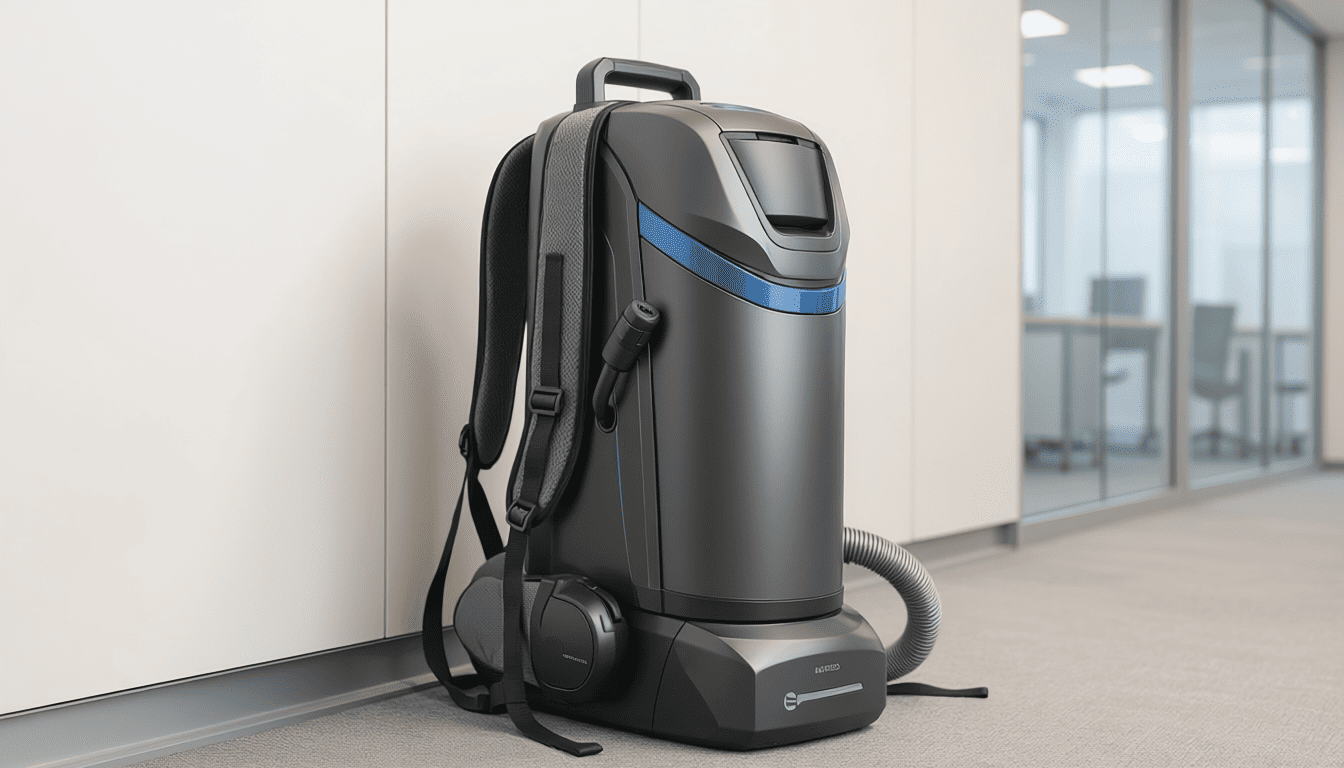
When a facility manager at a Melbourne office complex switched to cordless backpack vacuums, she didn’t expect the biggest change to be her cleaners finishing their rounds 30 minutes earlier each shift. No more unplugging and replugging between rooms. No more dragging cords around furniture. Just uninterrupted cleaning that transformed a tedious task into something remarkably efficient.
That’s the promise of battery-powered commercial vacuums, and the Pacvac Superpro 700 Battery sits at the centre of this shift. But does it actually deliver enough value to justify the investment? For facility managers sourcing commercial cleaning supplies Perth operators rely on every day, the answer depends on understanding what Pacvac battery vacuum efficiency really means in practice.
What Makes Battery-Powered Commercial Vacuums Different
Traditional corded vacuums remain workhorses in many facilities, and for good reason. They’re reliable, powerful, and don’t require battery management. But they also create workflow interruptions that add up over time.
Battery-powered commercial vacuums eliminate three major inefficiencies:
- Extension cord management – Cleaners spend roughly 15-20% of their time managing cords, according to industry workflow studies
- Limited mobility – Stairs, tight spaces, and areas far from outlets become time-consuming obstacles
- Power outlet dependency – Large open areas require multiple stops to switch outlets
The Pacvac Superpro 700 Battery Kit addresses these issues by providing genuine cordless freedom. It’s not just about cutting the cord – it’s about redesigning how cleaning work actually happens and realising the cordless vacuum productivity savings that follow.
Breaking Down Pacvac Battery Vacuum Efficiency
Efficiency in commercial cleaning equipment isn’t a single metric. It’s a combination of runtime, power consistency, charging speed, and operational impact. The Superpro 700 Battery system delivers on each of these fronts, but understanding the specifics helps you determine if it matches your facility’s needs.
Runtime and Power Consistency
The Superpro 700 Battery system includes four lithium-ion batteries and a charger. Each battery provides approximately 40-45 minutes of commercial cleaning shift runtime at full power. That’s not an estimate – it’s what you’ll get in real-world conditions with proper maintenance.
Here’s why that matters: most commercial cleaning tasks follow predictable patterns. A standard office floor takes 15-20 minutes to vacuum thoroughly. A hotel room averages 8-12 minutes. With four batteries, you’re looking at roughly 160-180 minutes of total runtime before needing to recharge.
But runtime alone doesn’t tell the full story. Many battery systems lose suction power as the charge depletes. The Superpro 700 maintains consistent suction throughout the battery cycle, which means the last room gets cleaned as effectively as the first.
Charging Infrastructure and Battery Rotation
The included charger handles all four batteries simultaneously, with each battery reaching full charge in approximately 2-3 hours. This creates a practical rotation system: while two batteries are in use, two are charging.
For facilities with multiple shifts or large cleaning teams, this rotation maximises commercial cleaning shift runtime and eliminates downtime. A cleaner starting an afternoon shift doesn’t wait for batteries – they’re already charged and ready. It’s similar to how professional photographers manage camera batteries during long shoots: always have fresh ones ready before you need them.
Real-World Cost Analysis: Corded vs Battery
The Pacvac Superpro 700 Battery Kit represents a higher upfront investment than its corded equivalent. That’s undeniable. But calculating battery-powered vacuum ROI means accounting for total cost of ownership, not just purchase price.
Consider these operational cost factors:
- Labour efficiency gains – If cordless operation saves 20-30 minutes per shift across a cleaning team, that’s recovered labour time. For a facility paying $30/hour for cleaning staff, that’s $10-15 saved per shift per cleaner. Over a year, those savings compound significantly.
- Reduced workplace injury risk – Trip hazards from extension cords contribute to workplace injuries. While difficult to quantify precisely, reducing these risks has both human and financial value through lower workers’ compensation claims and reduced downtime.
- Equipment longevity – Corded vacuums experience wear on power cables, particularly at stress points near the plug and vacuum body. Battery systems eliminate this failure point entirely. The Superpro 700’s robust construction means you’re looking at 5-7 years of reliable service with proper maintenance.
- Flexibility for contract cleaners – For cleaning contractors who service multiple sites, battery-powered equipment means faster setup and breakdown. You’re not searching for outlets or dealing with circuit breakers in older buildings.
When Battery Power Makes the Most Sense
Not every facility needs to prioritise cordless cleaning. The Superpro 700 Battery system delivers maximum value in specific scenarios where its advantages align with operational challenges.
Large Open Spaces
Warehouses, exhibition halls, and retail spaces with minimal wall outlets benefit enormously from cordless operation. Larger warehouse operations often combine a Medusa Battery-Powered Sweeper for broad debris pickup with the Superpro 700 for detailed vacuuming, creating a fully cordless floor maintenance system that eliminates outlet constraints entirely.
Compare this to corded operation, where the cleaner must map their route around power sources, often covering the same ground multiple times to reach all areas within cord length. It’s the difference between cleaning strategically and cleaning opportunistically.
Multi-Level Facilities
Stairs and elevators complicate corded vacuum use. Cleaners either carry heavy extension cords between floors or maintain separate equipment on each level. The Superpro 700’s backpack design weighs approximately 5.5kg with a battery installed – manageable for carrying between floors.
A hotel with 200 rooms across five floors might deploy three Superpro 700 Battery units with shared battery pools on each floor. Housekeeping staff grab a charged battery when needed, return depleted ones to the charging station, and maintain continuous workflow.
Healthcare and Education Settings
Facilities that operate during business hours need quiet, non-disruptive cleaning. The Superpro 700 runs at 62 decibels – comparable to normal conversation levels. Without the added noise of a motor dragging a corded vacuum across floors, it’s genuinely suitable for occupied spaces.
Schools cleaning between classes, medical offices maintaining hygiene alongside surface disinfection from products like Comet Foaming Cleaner & Sanitiser and HEPA-filtered air quality, and corporate offices with daytime cleaning schedules all benefit from this reduced acoustic footprint.
Comparing Battery Performance to Other Systems
The commercial cleaning equipment market offers several battery-powered backpack vacuums, and any buyer evaluating commercial cleaning supplies Perth facilities use across their sites will quickly notice how varied these systems are. The Superpro 700 Battery distinguishes itself as a commercial vacuum cleaner through specific engineering choices that affect daily operation.
Battery Chemistry and Management
The Superpro 700 uses lithium-ion batteries with integrated management systems that prevent over-discharge and over-charging. This protection extends battery lifespan significantly – you’ll typically see 500-800 charge cycles before capacity drops below 80%.
Cheaper battery systems often lack sophisticated management, leading to premature capacity loss. A battery that delivers 45 minutes of runtime when new but drops to 25 minutes after six months represents false economy.
Suction Power and Airflow
Battery-powered vacuums face a fundamental challenge: delivering strong suction while managing power consumption. The Superpro 700 achieves 200 cubic feet per minute (CFM) of airflow – comparable to a corded commercial vacuum cleaner in its class.
This isn’t achieved through marketing claims but through efficient motor design, vacuum motor sealed bearing construction, and optimised airflow paths. When you’re vacuuming commercial carpet or hard floors with embedded debris, that airflow translates directly to cleaning effectiveness.
Maintenance and Long-Term Ownership
Professional-grade commercial cleaning equipment earns its value through durability and serviceability, from vacuum motor sealed bearing design through to user-replaceable filters. The Superpro 700 Battery system follows Weskleen Supplies‘ philosophy of equipment you maintain rather than replace.
Battery Care Protocols
Lithium-ion batteries last longest when stored at 40-60% charge and kept at moderate temperatures. For facilities with seasonal cleaning fluctuations, this matters. Don’t leave batteries fully charged during slow periods – discharge them to roughly half capacity.
The charger’s indicator lights show charge status clearly. Green means ready, red means charging, and flashing red indicates a fault condition. This simple interface prevents the common mistake of deploying partially charged batteries.
Filter and Component Replacement
The Superpro 700 uses HEPA filtration that captures 99.97% of particles down to 0.3 microns. These filters require replacement every 6-12 months depending on usage intensity. Unlike some sealed systems, the Superpro 700’s filters are user-replaceable – no service call required.
The vacuum’s modular design means worn components like hoses, nozzles, and brushes can be swapped individually. This reduces long-term ownership costs significantly compared to integrated designs where a single component failure means replacing entire assemblies.
Integration with Existing Cleaning Workflows
Introducing new equipment into established cleaning routines creates friction if not managed thoughtfully. The Superpro 700 Battery system adapts to most commercial cleaning workflows with minimal disruption, including operations that pair it with floor scrubbers and dust control mops for complete floor care.
Training and Adoption
Cleaners familiar with the corded Superpro 700 transition to the battery version almost immediately. The ergonomics, controls, and operation remain identical – only the power source changes. This similarity reduces training time and helps maintain cleaning quality during the transition.
For teams using different equipment brands, expect a short learning curve focused on battery management rather than vacuum operation. Create simple visual guides showing battery installation, charge indicators, and rotation procedures.
Storage and Charging Stations
The four-battery charger requires a dedicated space with accessible power. A standard cleaning closet or equipment room works well. Mount the charger on a wall or shelf where cleaners can easily access it between shifts.
Consider labelling batteries numerically and maintaining a simple log of charge cycles. While not strictly necessary, this helps identify batteries that might be approaching end-of-life before they fail during a shift.
What About Alternatives?
Honesty about alternatives strengthens rather than weakens a recommendation. The Superpro 700 Battery system isn’t the only viable option for cordless commercial cleaning.
Other battery backpack vacuums offer different trade-offs. Some provide longer runtime with heavier batteries. Others prioritise lighter weight with shorter runtime. The Superpro 700 balances these factors for general commercial use – it’s not the absolute best at any single metric but excels at the combination that matters most for diverse facilities.
Corded backpack vacuums remain excellent choices for facilities with abundant power outlets and limited budgets. If your cleaning routes naturally align with outlet locations and cord management doesn’t significantly impact efficiency, the cost savings of corded equipment might outweigh battery advantages.
Traditional upright vacuums still make sense for specific applications, particularly residential settings or small offices where backpack ergonomics don’t provide meaningful benefits.
The question isn’t whether the Superpro 700 Battery is objectively superior to all alternatives – it’s whether its specific advantages align with your facility’s specific challenges.
Making the Investment Decision
Assessing battery-powered vacuum ROI comes down to three key factors: operational efficiency gains, budget flexibility, and cleaning team feedback.
Calculate your efficiency gains by timing current cleaning tasks and estimating time savings from cordless operation. A 20% efficiency improvement across a team of five cleaners working 20 hours weekly represents 20 hours of recovered labour monthly – that’s tangible value.
Assess budget constraints realistically. The Superpro 700 Battery Kit represents a significant investment. If budget limitations prevent immediate purchase, consider phasing implementation by starting with one or two units for areas where cordless operation provides maximum benefit, then expanding as budget allows.
Consult your cleaning team because they understand operational realities better than any specification sheet. Ask them where cord management creates the most frustration or inefficiency. Their insights often reveal high-impact applications you might not have considered.
The Verdict on Pacvac Battery Vacuum Efficiency
The Superpro 700 Battery system delivers genuine operational efficiency for facilities where cordless operation solves real problems. It’s not a universal solution, but for the right applications – large spaces, multi-level buildings, occupied-hours cleaning – it transforms how work gets done.
The system’s four-battery configuration provides sufficient runtime for most commercial cleaning tasks while the included charger enables practical battery rotation. Power consistency throughout the discharge cycle means cleaning quality doesn’t degrade as batteries deplete. Robust construction and serviceable design support long-term ownership rather than planned obsolescence.
For facility managers and cleaning contractors evaluating whether the Superpro 700 Battery justifies its investment, the answer depends on whether your current cleaning operations suffer from cord-related inefficiencies. If cleaners spend significant time managing extension cords, if your facility layout makes outlet access challenging, or if you need to clean during occupied hours with minimal disruption, the cordless vacuum productivity savings are measurable and meaningful.
The Pacvac Superpro 700 Backpack Vacuum in its corded form remains an excellent choice for many applications. The battery version extends that proven platform into scenarios where cordless operation provides genuine operational advantages. It’s not about chasing the latest technology – it’s about matching equipment capabilities to facility requirements.
For questions about whether the Superpro 700 Battery system fits your specific facility needs, reach Weskleen Supplies on 1800 728 926 to discuss your cleaning operations and explore whether cordless efficiency makes sense for your situation. Our team has kitted out warehouses, offices and multi-site contractors with commercial cleaning supplies Perth businesses trust for the long haul.