


Blog
Ergonomic Cleaning Caddy: How Organised Transport Prevents Back Strain on Large Sites

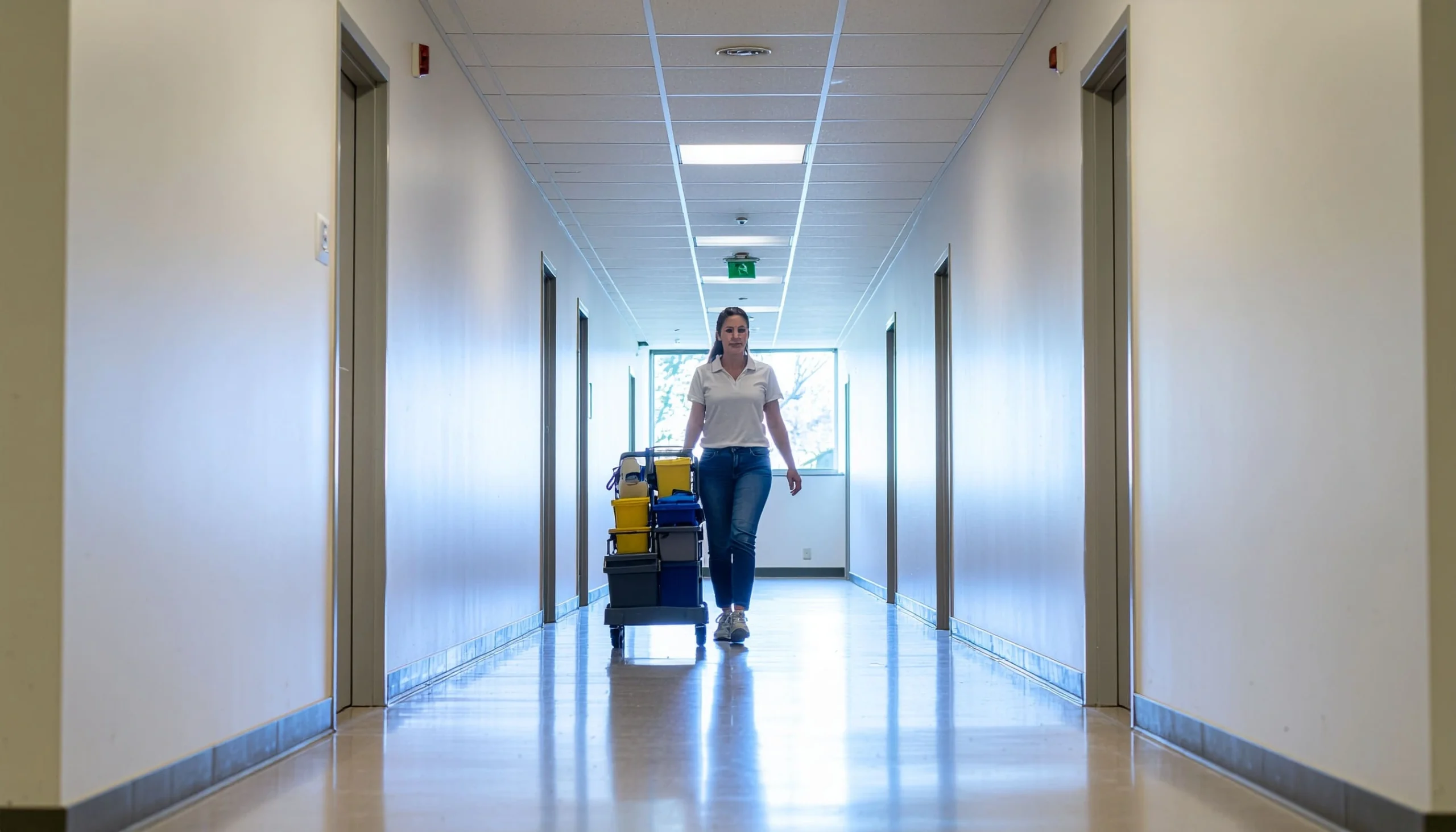
Large commercial cleaning operations often require staff to move cleaning products and equipment between multiple rooms, floors and work areas. When supplies are poorly organised, cleaners may need to make repeated trips to storage areas or carry several individual items at once.
A cleaning caddy can provide a practical way to organise frequently used supplies in one portable system. Rather than carrying every product required for an entire shift, cleaners can prepare a selection of tools and products for the particular task or area they are servicing.
However, choosing a cleaning caddy should involve more than simply looking at its size. Commercial cleaning teams should consider the equipment they need to carry, the weight of the completed load, the work environment, cleaning procedures and how the caddy will fit into the wider site workflow.
Why Cleaning Caddies Can Be Useful on Large Commercial Sites
Cleaning work across a large facility can involve considerable movement between different areas.
A cleaner working through offices, retail spaces, common areas, washrooms or other commercial environments may need access to several products and hand tools throughout a cleaning round. Returning to a central storage area every time another item is needed can interrupt the workflow.
A portable cleaning caddy can help keep frequently used supplies together so they are available when required.
This does not mean every cleaner needs to carry every product. A better approach is to organise the contents around the specific tasks being completed.
For example, a washroom cleaning kit may contain different products from a kit prepared for general surface cleaning. Similarly, a team working across a large commercial property may use different equipment depending on the floor surfaces, rooms and cleaning requirements.
What Makes a Cleaning Caddy Practical?
There is no single caddy configuration that is suitable for every commercial cleaning operation.
The most appropriate setup depends on the products, tools and working environment involved. Before purchasing or implementing a caddy system, consider the following factors.
Capacity
The caddy needs enough room for the supplies required during a particular cleaning task without encouraging unnecessary loading.
A larger container is not automatically more useful. If staff regularly fill a caddy with products that are rarely used, the equipment can become less convenient to transport and harder to organise.
The completed load should also be considered as part of the workplace’s manual-handling procedures. Product capacity should not be treated as a recommended carrying weight.
Organisation
A well-organised cleaning system should allow staff to identify the products and tools they need without unnecessary searching.
Frequently used items can be positioned where they are easy to access, while products used less often can remain with a trolley, storage area or other equipment.
This approach can also make restocking simpler. Staff can identify missing or low-stock items before starting another cleaning round.
Cleaning and Maintenance
Cleaning equipment itself needs to be maintained.
Caddies, buckets and other reusable equipment should be inspected for damage and cleaned according to the applicable manufacturer’s instructions and workplace procedures.
Chemical containers should also remain appropriately labelled and be handled according to their product instructions.
Match the Caddy to the Cleaning Task
A cleaning caddy is most useful when its contents reflect the work being performed.
For general surface cleaning, the setup might include approved surface-cleaning products, cloths and suitable hand tools. A washroom-focused kit may require different products and accessories.
Commercial cleaning teams should avoid creating one oversized kit that attempts to cover every possible cleaning task.
Instead, different teams or work areas may benefit from task-specific equipment selections. This can make it easier to identify what is required for each job and reduce unnecessary items being carried from one area to another.
The choice of cleaning products should also reflect the surfaces being cleaned and the manufacturer’s instructions.
For example, Weskleen currently offers a range of commercial cleaning chemicals and products for different applications. Product selection should be based on the particular cleaning task rather than assuming that one cleaner is appropriate for every surface.
Consider the Weight of the Completed Load
The weight of the equipment being carried is an important consideration when developing a cleaning workflow.
It is not enough to look only at the empty caddy or container. The final load may include cleaning chemicals, bottles, cloths, brushes and other equipment, so the combined weight should be considered.
For larger or heavier items, another form of transport may be more appropriate.
A mop bucket, for example, performs a different function from a portable caddy and may be better suited to transporting water and supporting mopping tasks. Weskleen’s 16L mop bucket can be considered where a dedicated mop-bucket system is appropriate.
The important point is to select equipment according to the task rather than expecting one portable container to perform every function.
Ergonomics and Manual Handling
The term “ergonomic” should be used carefully when discussing cleaning equipment.
A cleaning caddy should not be described as preventing back strain, eliminating injury risk or guaranteeing a particular health outcome. Manual-handling risk depends on the nature of the task, the load, frequency, distance, environment and other workplace factors.
An organised cleaning system can support safer manual-handling practices when it is appropriately selected and used alongside workplace procedures, training and risk assessment.
When reviewing a caddy system, cleaning managers should consider:
- How much equipment staff need to carry
- How frequently supplies are transported
- How far staff travel between work areas
- Whether stairs, narrow corridors or other access restrictions are involved
- Whether the completed load is appropriate for the task
- Whether larger equipment could reduce unnecessary carrying
- Whether staff have appropriate training for the tasks they perform
These considerations are more useful than relying on broad claims that a particular product will prevent injuries.
Choose Cleaning Products According to Their Application
The products placed inside a cleaning caddy should be selected according to the surfaces and tasks involved.
Cleaning teams may use different products for floors, hard surfaces, washrooms, kitchens and other areas. Product labels and manufacturer’s instructions should always be followed.
For example, Mr Bean 5L Floor Cleaner is described by Weskleen as a commercial-grade disinfectant, air freshener and multipurpose cleaner. Its listed applications include floors, benchtops, walls and high-touch points, subject to the product’s directions for use.
Using specific products for defined tasks can make a caddy easier to organise because staff know which products are intended for particular cleaning applications.
It also helps prevent a portable cleaning kit from becoming a collection of unrelated chemicals that are rarely required.
Organise Supplies Around the Work Area
The layout of a commercial property can influence how cleaning equipment should be organised.
A cleaner working within a single office floor may need a different setup from a team servicing multiple buildings or a large retail facility.
Before introducing a caddy system, consider where cleaning tasks are performed and how staff move between them.
A practical setup might involve keeping frequently used supplies in a portable caddy while larger or less frequently required equipment remains on a cleaning trolley or in a designated storage area.
This can create a distinction between portable task supplies and larger site equipment.
For businesses reviewing their broader cleaning requirements, Weskleen Supplies offers cleaning products and equipment for both commercial and domestic applications, with its warehouse located in Jandakot, Western Australia. The current website lists categories including brushware, buckets and handles, cleaning chemicals, cleaning machinery and other cleaning equipment.
Don’t Put Everything Into One Caddy
One common mistake when designing a portable cleaning system is attempting to make one container suitable for every possible task.
A caddy intended for daily general cleaning does not necessarily need to contain specialist floor-care equipment, large quantities of chemicals or equipment used only occasionally.
Separating equipment by task can make the system easier to manage.
For example:
- General cleaning supplies can be kept together for routine work.
- Washroom-specific products can be organised separately.
- Floor-care equipment can remain with the relevant mop or machine system.
- Specialist tools can be stored separately until they are required.
This approach can also make it easier to identify which products need to be replenished.
Consider Reach and Access Requirements
Not every cleaning task can be completed effectively with handheld equipment alone.
Some commercial environments contain high windows, elevated surfaces or other areas where additional reach is required. Equipment should be selected according to the particular task and the manufacturer’s instructions.
For window-cleaning applications, Weskleen supplies the Ettore 5.5m extension pole.
An extension pole should not automatically be described as eliminating ladder risk or making every elevated cleaning task safe. The appropriate equipment depends on the work environment, access requirements, training and site-specific risk assessment.
The same principle applies to any cleaning equipment: its suitability should be assessed against the task rather than assumed from the product name alone.
Combine Portable Supplies With Larger Cleaning Equipment
A cleaning caddy is only one part of a commercial cleaning system.
Large sites may also require floor machines, vacuums, mops, buckets and other specialist equipment. Trying to carry all of these items using a portable caddy would not be practical.
Instead, cleaning managers can consider how portable supplies interact with larger equipment.
For example, a caddy can carry the products and hand tools needed for a particular task while a separate machine handles larger floor-cleaning requirements.
For facilities with substantial floor areas, Weskleen also supplies the Polystar orbital floor scrubber, which is intended for floor-scrubbing and cleaning applications.
The appropriate equipment will depend on the site’s surfaces, cleaning requirements and operational procedures.
Keep the Caddy Easy to Restock
A good cleaning system should be easy to maintain after each cleaning round.
At the end of a shift or scheduled task, staff can check whether frequently used supplies need replenishing. This reduces the chance of starting the next cleaning round without an essential product.
A simple restocking process might include:
- Checking commonly used cleaning products
- Replacing depleted consumables
- Inspecting reusable tools
- Cleaning equipment where required
- Checking containers and labels
- Removing damaged or unsuitable items
- Returning specialist equipment to its designated storage location
The exact process should follow the business’s own cleaning and workplace procedures.
Training Still Matters
Introducing a new caddy does not remove the need for appropriate workplace training.
Staff should understand which products they are expected to use, how equipment should be handled, where supplies should be stored and which procedures apply to chemical handling and manual tasks.
Training should be based on the actual work environment.
Rather than relying on generic claims about the “correct” lifting posture or a particular piece of equipment eliminating risk, employers should follow their workplace health and safety processes and conduct appropriate risk assessments.
Manufacturer instructions should also be followed for cleaning chemicals, equipment and tools.
Review the Cleaning Workflow Regularly
A cleaning caddy should support the existing workflow rather than become another piece of equipment that staff have to work around.
After introducing a new system, managers can review whether:
- Staff are carrying unnecessary products
- Frequently used items are easy to access
- Restocking is straightforward
- Equipment is being maintained correctly
- Larger equipment would be more suitable for particular tasks
- The caddy is appropriate for the working environment
- Staff have identified any practical problems with the setup
The system can then be adjusted as the cleaning requirements change.
This is particularly relevant for large commercial facilities where cleaning schedules, room layouts or service requirements may change over time.
Choosing Commercial Cleaning Supplies in Perth
For businesses looking for commercial cleaning supplies Perth, the right purchasing approach starts with the requirements of the site.
A cleaning caddy may be useful for transporting selected products and tools, but it should form part of a broader cleaning system that includes appropriate chemicals, equipment, storage, training and workplace procedures.
Weskleen Supplies currently offers a broad range of commercial cleaning supplies and equipment, including cleaning chemicals, buckets, brushes, janitorial supplies and cleaning machinery. The company lists its Perth warehouse at Unit 21, 100 Prinsep Road, Jandakot, WA 6164.
Frequently Asked Questions
What should go in a commercial cleaning caddy?
The contents should reflect the cleaning tasks being performed. Depending on the application, this may include approved cleaning products, cloths, brushes, spray bottles and other hand tools. Avoid filling a caddy with products that are unlikely to be needed during the particular cleaning round.
Can a cleaning caddy prevent back strain?
A cleaning caddy should not be presented as a guarantee against back strain or other injuries. An organised and appropriately loaded system may support safer manual-handling practices when combined with suitable training, risk assessment and workplace procedures.
Is a cleaning caddy better than a cleaning trolley?
Not necessarily. A portable caddy can be useful for carrying a smaller selection of supplies between work areas, while a trolley may be more suitable for transporting larger quantities of equipment. The right choice depends on the site, tasks and workflow.
How should cleaning chemicals be carried?
Cleaning chemicals should be handled according to the product label, manufacturer’s instructions and applicable workplace procedures. Products should not be mixed or transferred into other containers unless this is permitted by the relevant instructions and workplace requirements.
What other equipment might a large commercial cleaning site need?
Depending on the facility, a cleaning operation may also require mop buckets, floor scrubbers, vacuums, extension poles, brushes, mops and specialist cleaning equipment. The appropriate combination depends on the surfaces and cleaning tasks involved.
Conclusion
A cleaning caddy can be a useful part of a commercial cleaning workflow when it is selected around the actual tasks being performed.
The goal should not be to place as many products as possible into one container. Instead, cleaning teams should consider capacity, organisation, product selection, manual-handling requirements, access conditions and the relationship between portable supplies and larger cleaning equipment.
A well-planned system can make frequently used supplies easier to organise while supporting a more consistent workflow. However, equipment should always be used alongside appropriate workplace procedures, training, risk assessment and manufacturer instructions.
If you are reviewing your commercial cleaning equipment or need help identifying suitable supplies, speak with the team at 1800 728 926 to discuss your requirements.